


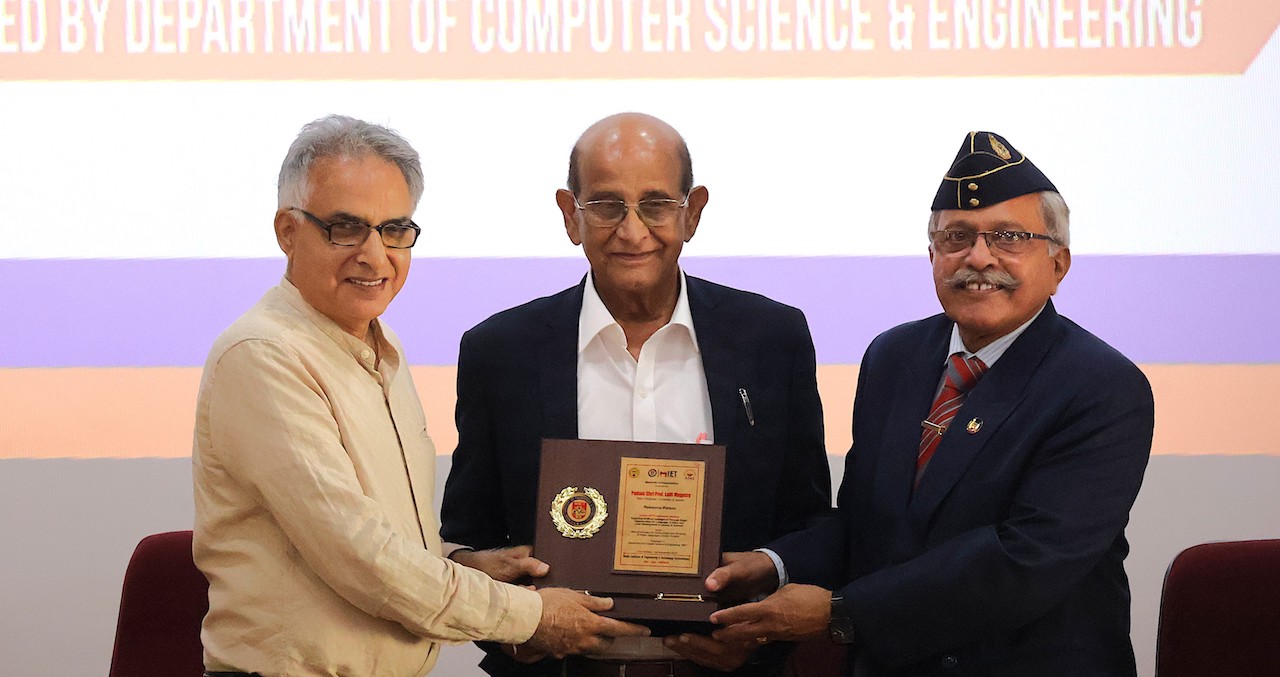
JAMMU: Model Institute of Engineering and Technology (MIET), Jammu (Autonomous), inaugurated a Two-Day AICTE-sponsored seminar titled “Exploring Artificial Intelligence through Dogri: Opportunities for Language, Culture, and Local Development in Jammu & Kashmir” under the VAANI (Vibrant Advocacy for Advancement and Nurturing of Indian Languages) scheme.
The event brought together distinguished academicians, researchers, and industry professionals to discuss the convergence of Artificial Intelligence and regional language empowerment, with a special focus on Dogri. Six eminent speakers addressed the seminar, including Padma Shri Prof. Lalit Magotra, Maj. Gen. (Retd.) S.K. Sharma, Prof. Devanand, Prof. Pawanesh Abrol (University of Jammu), Nipun Padha, CEO, MoMagic, and Neha Sharma, journalist, Duggar Malaati.
Maj. Gen. (Retd.) S.K. Sharma, in his welcome address, described the seminar as “a unique blend of technology and tradition,” calling AI-driven innovation a vital tool to “advance research and learning while preserving linguistic and cultural diversity.” He reaffirmed MIET’s commitment to strengthening AI applications in regional languages like Dogri, which he termed “the foundation of Jammu & Kashmir’s cultural identity.”
Day 1 Highlights
- Padma Shri Prof. Lalit Magotra opened the seminar, speaking on the significance of bringing Dogri into the digital domain and highlighting its linguistic richness. He stressed that technology can be a powerful medium for preservation and global outreach.
- Prof. Pawanesh Abrol delivered two sessions titled “Foundations of Artificial Intelligence (AI) – Explained in Dogri” and “Natural Language Processing and Speech Technology for Dogri.” He simplified core AI concepts in Dogri and emphasized the need for Dogri text corpora and open datasets to boost NLP and speech-based innovations for regional languages.
- Neha Sharma presented a talk on “AI for Cultural Preservation: Digitizing and Promoting Dogri Heritage.” She spoke about using AI to archive oral traditions, folk literature, and cultural narratives, helping Dogri heritage reach global audiences.
The day concluded with an open-house discussion focused on building a Dogri-centered AI ecosystem through collaborative research, community-led digitization efforts, and technological innovation.
Day 2 Agenda
Sessions on industry perspectives, pedagogical innovation, AI for regional development, and future frameworks for Dogri-based AI will be conducted by Nipun Padha, Prof. Devanand, and Maj. Gen. (Retd.) S.K. Sharma.
More than 50 research scholars and M.Tech students from prominent regional universities participated, gaining insights into using AI for Dogri preservation, translation tools, and developing Dogri-based conversational AI applications.
