


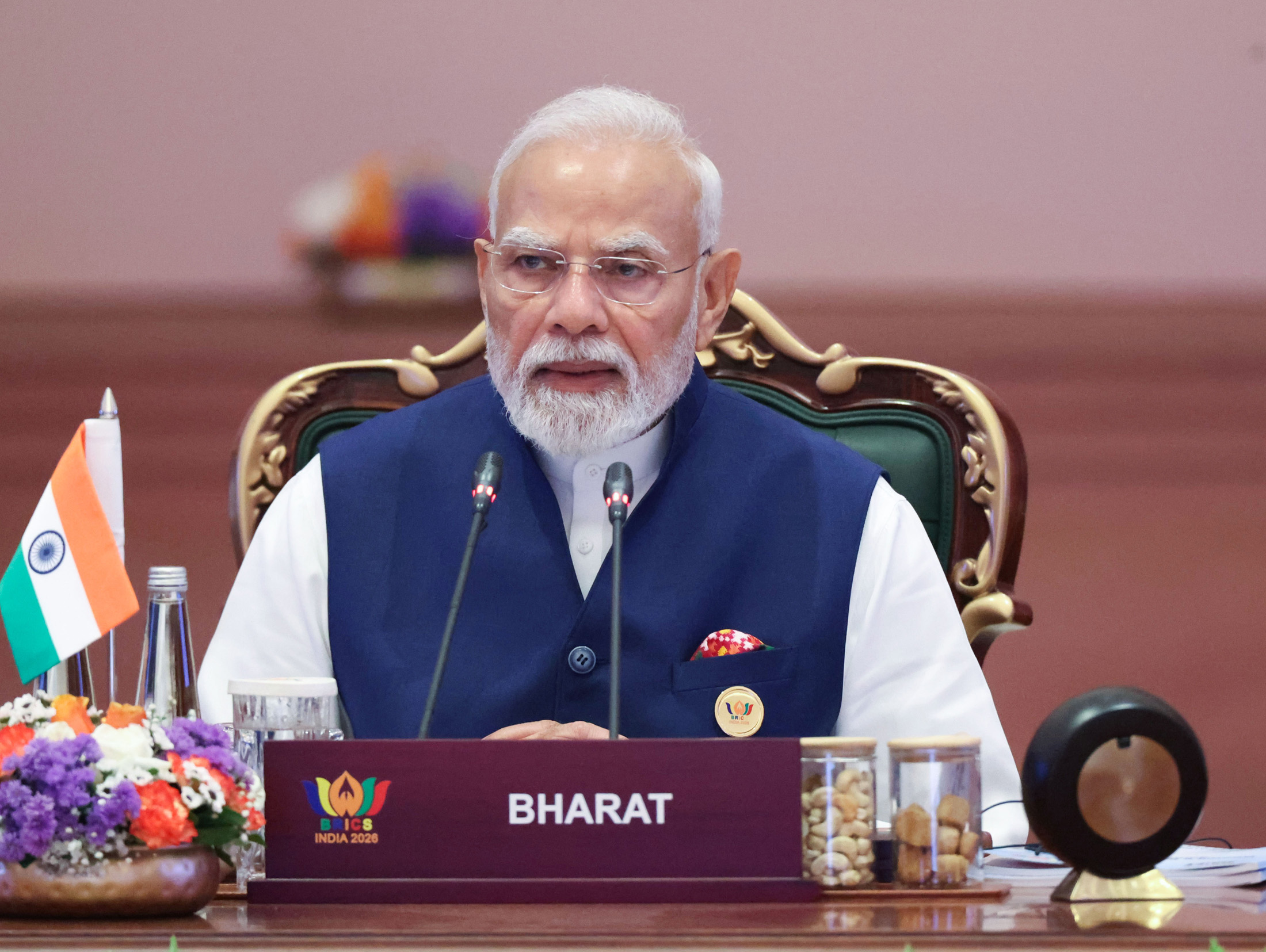
NEW DELHI: Prime Minister Narendra Modi on Sunday warned that the weaponisation of technology and critical minerals could hinder the shared progress of BRICS countries, calling for a more inclusive approach to the adoption of emerging technologies.
Addressing the open session on ‘Resilience, Innovation, Cooperation and Sustainability: Shaping the Future for Inclusive Global Growth’ on the second day of the BRICS Summit, Modi outlined a series of initiatives aimed at strengthening cooperation in technology, innovation, logistics and agriculture among member countries.
The Prime Minister said the proposed BRICS Logistic Supply Chain Cooperation Framework would help make supply chains more reliable and resilient. He also highlighted the BRICS Incubator Network, which will connect start-ups and incubators across member countries, and the proposed BRICS Startup Innovation Fund to promote innovative and scalable solutions.
On agriculture, Modi said the BRICS Network on Digital Agriculture would create new opportunities for farmers by aligning artificial intelligence, geospatial technology and digital public infrastructure with their actual needs.
“The weaponization of technology and critical minerals could hinder our shared progress; therefore, we have emphasised inclusivity in the adoption of technology,” Modi said.
The Prime Minister said the confidence of countries of the Global South in BRICS had grown because their voices were being heard, their experiences respected and solutions developed with their participation rather than merely for them.
He said the strength of BRICS lay in its diversity and cooperation and called for collective efforts to ensure that the grouping’s progress benefits humanity as a whole.
The remarks came a day after BRICS leaders unanimously adopted the New Delhi Declaration, which stressed the importance of developing reliable, responsible, diversified, resilient, fair, sustainable and just supply chains for critical minerals.
The declaration called for ensuring benefit-sharing, value addition and economic diversification in resource-rich countries, while reaffirming their sovereign rights over mineral resources and their authority to adopt measures in pursuit of legitimate public policy objectives.
It also recognised the crucial role of critical minerals in the development of low- and zero-emission energy technologies, energy security and resilient energy supply chains.
Modi described the outcome of the summit as a reflection of a BRICS that is “wider in reach and stronger in purpose.”
