


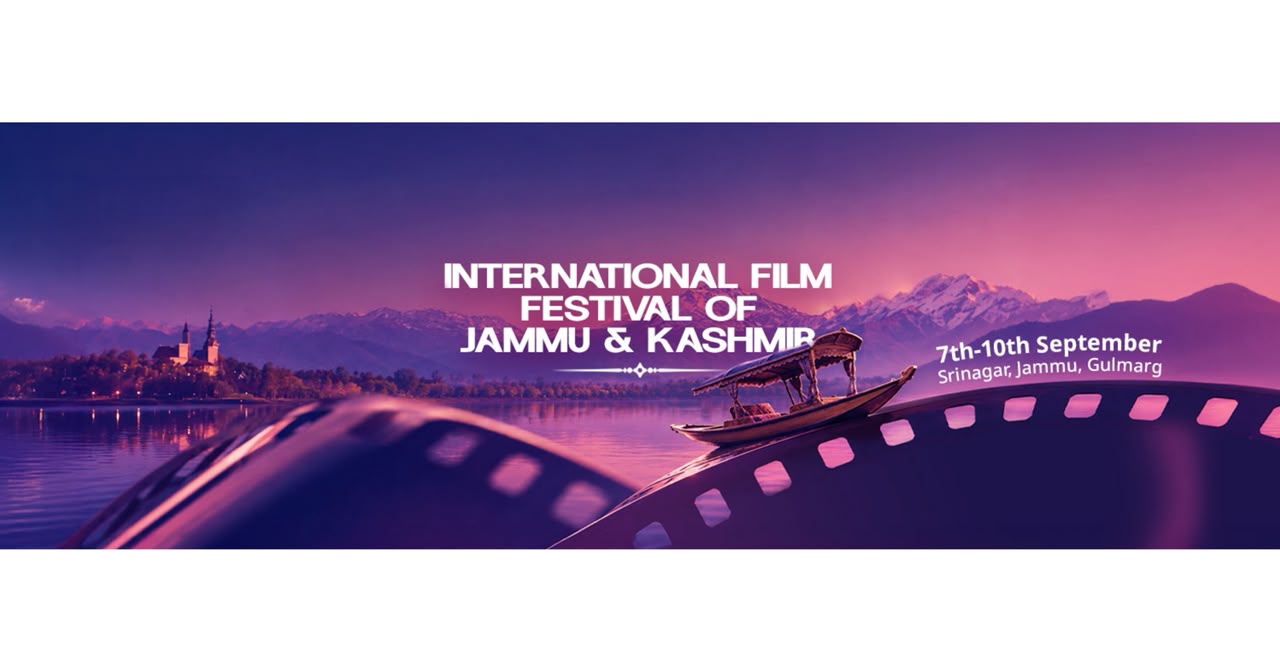
JAMMU: For decades, Kashmir occupied a distinctive place in the imagination of Indian cinema—its lakes, mountains, meadows and old-world landscapes providing the backdrop to some of Bollywood’s most memorable frames. Now, Jammu and Kashmir is attempting to turn the camera back on itself.
The Union Territory is set to host its first International Film Festival of Jammu and Kashmir (IFFJK) from September 7 to 10, in what the government describes as a significant step towards restoring the region’s historic relationship with the film industry and establishing J&K as an attractive destination for film production and cinema tourism.
The initiative received a significant political push on Friday when Chief Minister Omar Abdullah met Union Home Minister Amit Shah in New Delhi and briefed him on the inaugural festival and the government’s plans surrounding the event.
The festival, however, is being positioned as something larger than a four-day programme of screenings. The administration is seeking to build an ecosystem around cinema—bringing together filmmakers, actors, academicians, students, media professionals and audiences while creating opportunities for the region’s emerging creative community.
The scale of the response has already offered an indication of the international interest. The inaugural edition received 1,100 film entries from 92 countries, of which 135 films representing more than 40 countries have been shortlisted for screening.
For the administration, those numbers are not merely statistics. They represent an opportunity to place Kashmir once again on the global cinematic map.
From backdrop to destination
Speaking to media persons, Joint Director of the Department of Information and Public Relations (DIPR), J&K, Shahnawaz Bukhari said the festival was intended to help bring the film industry back to Kashmir while giving local students, filmmakers and media professionals direct access to established personalities from the world of cinema.
The central idea, he said, was to move beyond the traditional portrayal of Kashmir as merely a picturesque backdrop.
The government wants Jammu and Kashmir itself to become the “film frame”—a place where productions are conceived, filmed and supported by a sustainable local ecosystem.
“For the past few decades, people have stopped coming here due to some circumstances. Our attempt is that they get exposure here first hand,” Bukhari said.
The strategy also seeks to encourage Bollywood personalities and production houses to return to the Valley, rekindling a relationship that once made Kashmir one of the Hindi film industry’s most favoured outdoor locations.
“J&K government is trying to strengthen the natural connection between Bollywood and Kashmir. The rise of Bollywood was historically associated with films shot in Jammu and Kashmir,” Bukhari said.
A festival with a larger ambition
The Sher-e-Kashmir International Convention Centre (SKICC) in Srinagar will serve as the principal venue for the festival, while activities are also planned at INOX Srinagar. A day-long trip to Gulmarg has been included in the programme, giving visiting delegates an opportunity to experience one of the region’s most prominent tourism destinations.
The festival will feature film screenings alongside masterclasses, panel discussions and academic interactions. Prominent personalities from the film industry and academia are expected to participate, while students from local universities will have an opportunity to engage with established names from the industry.
For young audiences and aspiring filmmakers in J&K, organisers see the interaction as an important component of the festival—one that could expose local talent to new ideas, professional networks and opportunities beyond the region.
A separate category has also been created for films from Jammu and Kashmir, with entries from the region shortlisted by the jury. The winners will be announced at the festival’s award ceremony.
Building an annual institution
The administration is already looking beyond the inaugural edition.
Bukhari said the government intends to institutionalise the festival as an annual event, drawing inspiration from internationally recognised film festivals such as Cannes.
The ambition is therefore not simply to stage an event but to create an institution capable of bringing filmmakers, producers, artists and audiences to Jammu and Kashmir year after year.
The government has also appointed 25 JKAS officers as liaison officers to coordinate arrangements for VVIPs, dignitaries and delegates, reflecting the administrative importance attached to the event.
Cinema as a tourism strategy
The festival comes against the backdrop of a broader effort to strengthen Jammu and Kashmir’s tourism identity. Officials believe cinema can play a role that conventional tourism campaigns cannot—allowing audiences to encounter the region through stories, characters and landscapes before they ever arrive.
Bukhari said the festival was ultimately aimed at showcasing J&K’s tourism potential through cinema and creating a sustained platform capable of attracting filmmakers and industry professionals.
The proposition is straightforward: films can sell landscapes, but a thriving film ecosystem can sell a destination.
For Kashmir, which once featured prominently in the visual vocabulary of Hindi cinema, the first IFFJK is an attempt to reclaim that space.
If the inaugural edition succeeds in attracting filmmakers, audiences and industry investment back to the Valley, September’s four-day festival could become more than a celebration of cinema. It could mark the opening frame of a new chapter in Kashmir’s relationship with the camera.
