


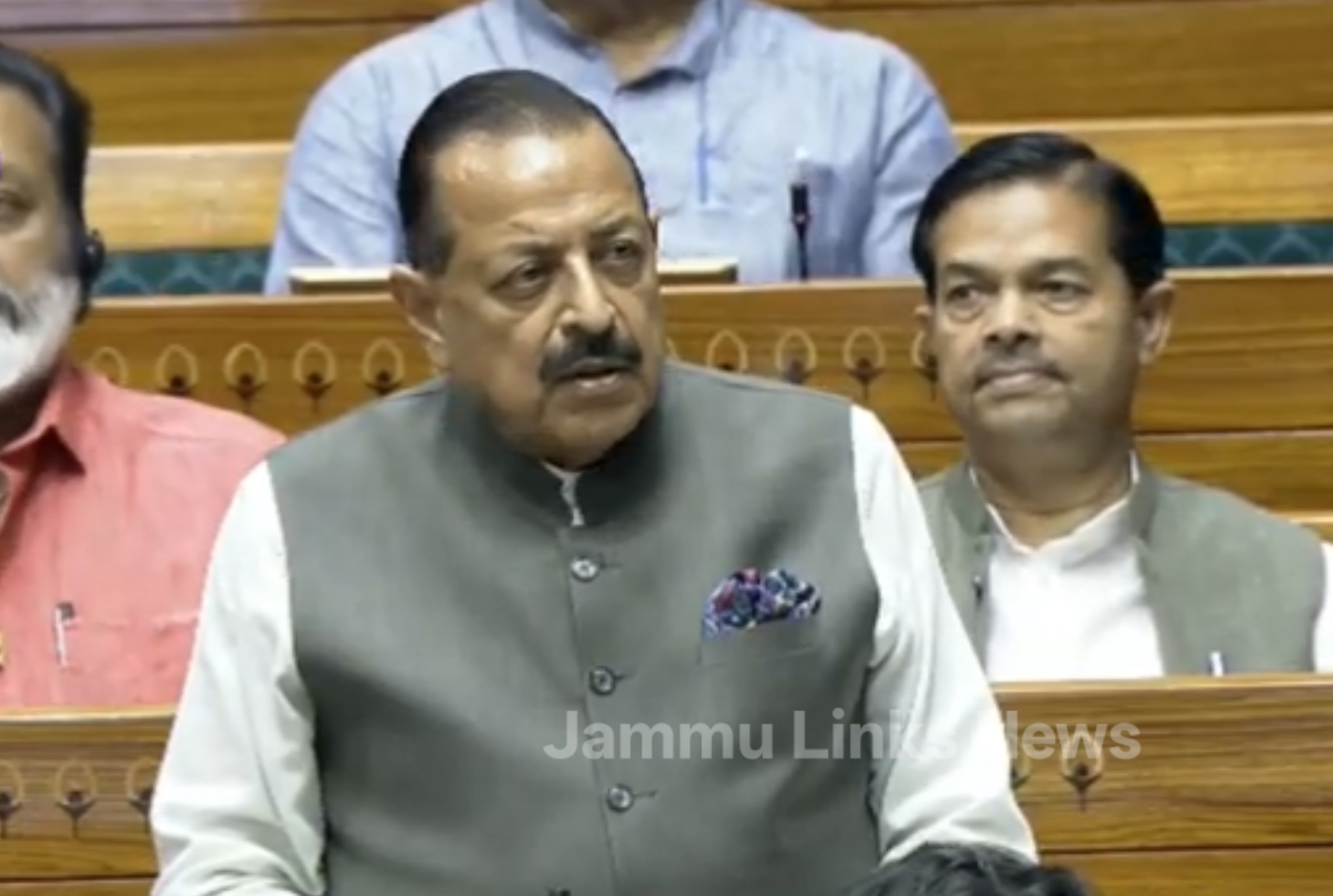
NEW DELHI: Union Minister of State for the Prime Minister’s Office Jitendra Singh on Tuesday described the Public Examinations (Prevention of Unfair Means) Amendment Bill, 2026, as a “milestone legislation,” saying it reflects the government’s commitment to protecting students and ensuring the integrity of public examinations.
Moving the Amendment Bill to the Public Examinations (Prevention of Unfair Means) Act, 2024, for discussion in the Lok Sabha amid the backdrop of widespread protests over the alleged NEET-UG paper leak, Singh said the legislation was aimed at making the law more stringent and ensuring speedy justice.
“This Bill is, in fact, an amendment to the earlier Public Examinations (Prevention of Unfair Means) Act, 2024, which was also brought by this government. It was perhaps the first legislation of its kind in independent India. The earlier Act and today’s amendment reaffirm this government’s deep commitment to safeguarding the welfare of students and the youth of this country,” Singh said.
He added that the legislation also reaffirmed Prime Minister Narendra Modi’s resolve “not to allow anyone to compromise with the future of the children of Mother India.”
Describing the proposed changes, Singh said the amendment seeks to strengthen punishment for those resorting to unfair means in public examinations. The minimum term of imprisonment is proposed to be increased from three years to five years, with the maximum punishment rising from five years to ten years.
The Bill also proposes increasing the maximum fine for offenders from ₹10 lakh to ₹50 lakh.
For service providers found involved in examination-related offences, the proposed amendment increases the maximum penalty from the existing level to ₹5 crore and extends the debarment period from conducting public examinations from four years to eight years.
In cases involving organised examination-related crimes, the Bill proposes raising the minimum imprisonment from five years to seven years, extendable up to ten years, while increasing the maximum fine from ₹1 crore to ₹10 crore.
The legislation also empowers the Centre to constitute a Special Task Force to investigate paper leaks and examination-related offences. A new Section 12A proposes mandatory completion of investigations within two months, designation of Courts of Session as Special Fast-Track Courts for day-to-day trials, completion of trials within three months of filing the charge sheet, and appointment of Special Public Prosecutors for every such court.
“The most important thing is to ensure speedy justice. We will have Special Fast-Track Courts established exclusively for cases dealing with unfair means in examinations. Investigations will have to be completed within two months, whether by a central agency or a Special Task Force,” Singh told the Lok Sabha.
During his speech, the minister also referred to several instances of alleged examination paper leaks during the Congress-led UPA government, arguing that the need for dedicated legislation had long been evident.
Listing cases including the Railway Recruitment Board examination in 2009, the All India Engineering Entrance Examination in 2011, the AIIMS entrance examination in 2012, the Maharashtra Secondary Certificate Examination in 2013 and several state-level recruitment examinations, Singh said the present government had acted to address a long-standing gap in the legal framework.
He also noted that although the idea of a common national testing agency had first been recommended in 1992 and reiterated by a committee during the UPA government in 2010, the National Testing Agency (NTA) was eventually established by the Narendra Modi government in 2017.
The Lok Sabha took up the Public Examinations (Prevention of Unfair Means) Amendment Bill, 2026, for discussion on Tuesday afternoon. Parliamentary Affairs Minister Kiren Rijiju informed the House that leaders of several parties, including the Congress, Samajwadi Party, DMK and NCP, had agreed to extend the scheduled six-hour debate by two hours.
