


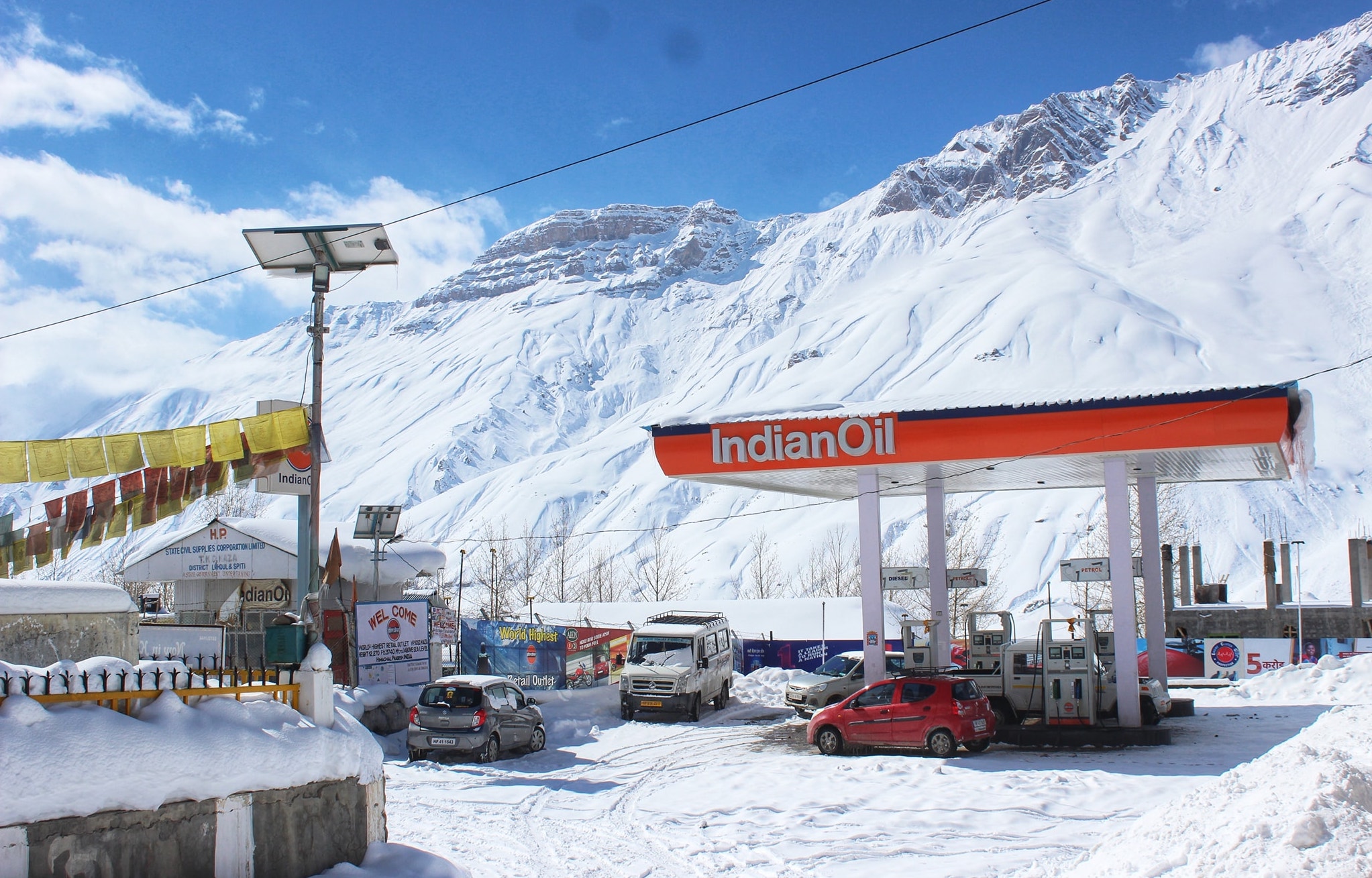
NEW DELHI: India’s petrol pump network has crossed the 1-lakh mark, nearly doubling over the past decade as state-owned fuel retailers rapidly expanded outlets to protect market share and extend fuel access across rural areas and highway corridors amid rising vehicle ownership.
As of the end of November, the country had 1,00,266 petrol pumps, making India the world’s third-largest fuel retail network after the United States and China, according to data from the Petroleum Planning & Analysis Cell (PPAC) of the Oil Ministry.
More than 90 per cent of the outlets are operated by public sector oil marketing companies, including Indian Oil Corporation (IOC), Bharat Petroleum Corporation Ltd (BPCL) and Hindustan Petroleum Corporation Ltd (HPCL). Among private players, Russia’s Rosneft-backed Nayara Energy is the largest retailer with 6,921 outlets, followed by the Reliance-BP joint venture with 2,114 stations and Shell with 346 outlets.
PPAC data shows that the number of petrol pumps has grown from 50,451 in 2015. Private operators accounted for 2,967 outlets, or nearly 5.9 per cent, that year. Their share has since increased to 9.3 per cent of the total network. Private participation in fuel retailing began in FY2004 with just 27 outlets.
India now ranks third globally in petrol pump numbers. While official data for the US is unavailable, a 2024 report estimated about 1,96,643 retail gas stations there. China had around 1,15,228 outlets last year, according to industry reports, with state-run Sinopec alone operating more than 30,000 stations.
Despite Sinopec’s scale, its network is smaller than that of India’s market leader IOC, which operates 41,664 outlets. BPCL follows with 24,605 stations, while HPCL has 24,418.
Rural outlets now account for nearly 29 per cent of the total network, up from 22 per cent a decade ago. Fuel stations have also evolved into multi-energy hubs, offering alternatives such as CNG and EV charging facilities alongside conventional petrol and diesel.
Industry officials note that private sector participation has remained limited due to indirect government control over fuel pricing. Although petrol and diesel prices were officially deregulated a decade ago, state ownership of oil marketing companies continues to influence pricing decisions.
Public sector retailers halted daily price revisions in November 2021, and in earlier periods sold fuel below cost, making private retailing commercially challenging. Additionally, rapid outlet expansion has reduced per-pump fuel throughput, pushing some stations on low-traffic routes into losses.
