


KATRA: Two young children born with a rare congenital inner-ear abnormality and profound hearing loss have undergone complex cochlear implant surgeries at Shri Mata Vaishno Devi Narayana Superspeciality Hospital, Katra, with both showing encouraging progress following the procedures.
The children were diagnosed with Incomplete Partition Type-I (IP-I), a rare inner-ear malformation in which the cochlea fails to develop its normal internal architecture. The condition can cause severe to profound hearing loss from an early age and can make cochlear implantation technically challenging because of an abnormal communication between the inner ear and the cerebrospinal fluid (CSF) spaces. This creates a recognised risk of a sudden CSF flow, known as a CSF gusher, during surgery.
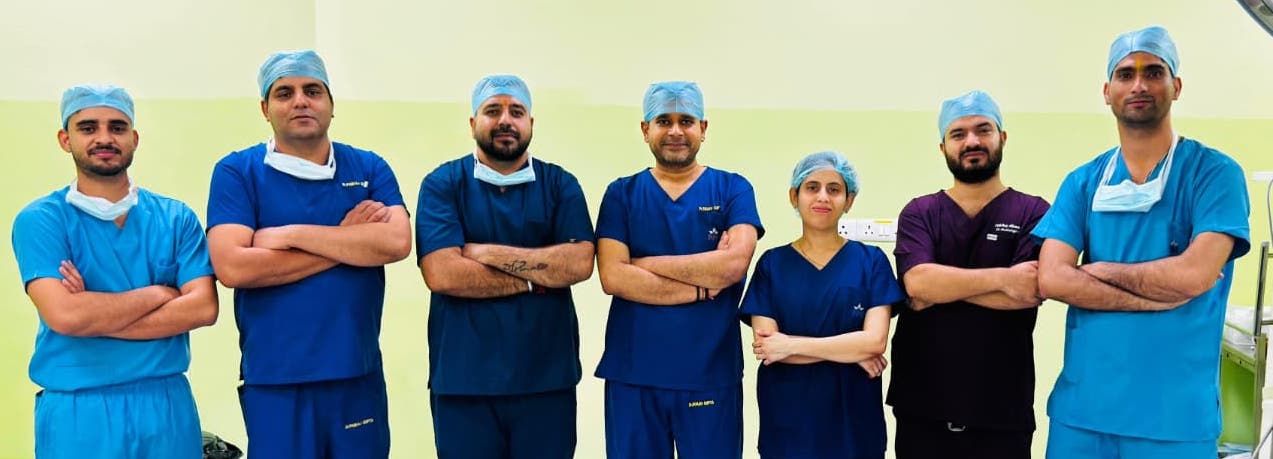
The procedures were performed by Dr. Rohan Gupta, Senior Consultant and Cochlear Implant Surgeon, assisted by Dr. Rimjhim Sharma, Assistant Professor, along with the hospital’s ENT and cochlear implant team. The surgeries were supported by the anaesthesia team led by Dr. Pankaj Gupta, with meticulous paediatric anaesthetic planning, monitoring and close coordination with the surgical team.
One of the children, a boy, underwent cochlear implantation at the age of 14 months. His family has expressed satisfaction with his steady and satisfactory progress. The child belonged to a below-poverty-line family and received financial support through a programme of the Shri Mata Vaishno Devi Shrine Board. The second child, a girl, underwent cochlear implantation at 17 months of age and is currently undergoing rehabilitation, with her family also reporting encouraging outcomes.
Both surgeries involved the anticipated risk of CSF gusher associated with IP-I, which was successfully managed by the surgical team. Complete electrode insertion was achieved in both cases, while intraoperative placement checks were carried out using X-ray and SmartNav technology. Both children had an uneventful post-operative recovery.
Dr. Rohan Gupta said IP-I was a rare and technically challenging inner-ear malformation requiring careful assessment and precise surgical technique. He said CSF gusher was a recognised complication in such cases and required prompt management during surgery, adding that both children were doing well and showing favourable outcomes.
Dr. Rimjhim Sharma said cochlear implantation provided children access to sound, but surgery was only the beginning of the hearing journey. She emphasised the importance of regular therapy, follow-up and active parental involvement to help children develop hearing, speech and communication skills.
The hospital’s cochlear implant programme has so far completed around 200 successful cochlear implant surgeries, including several complex cases. The programme provides continued aftercare through hearing assessments, implant mapping and rehabilitation to support children in deriving long-term benefits from the procedure.
The hospital also provides cochlear implant follow-up services through outreach centres in Jammu and Srinagar, enabling families to access specialised post-operative care closer to home. The next cochlear implant follow-up OPD in Srinagar is scheduled for October 6, 2026.
Dr. Yashpal Sharma, Executive Director, Shri Mata Vaishno Devi Institute of Medical Excellence, said the focus was not limited to advanced surgical treatment but also extended to continued care and rehabilitation. He said the programme, supported by the Shri Mata Vaishno Devi Shrine Board, was working to make specialised hearing care more accessible to children across Jammu and Kashmir.
Through early diagnosis, advanced cochlear implantation, rehabilitation and outreach-based follow-up, the hospital is expanding comprehensive hearing-care services for children with complex hearing disorders across the region.
