


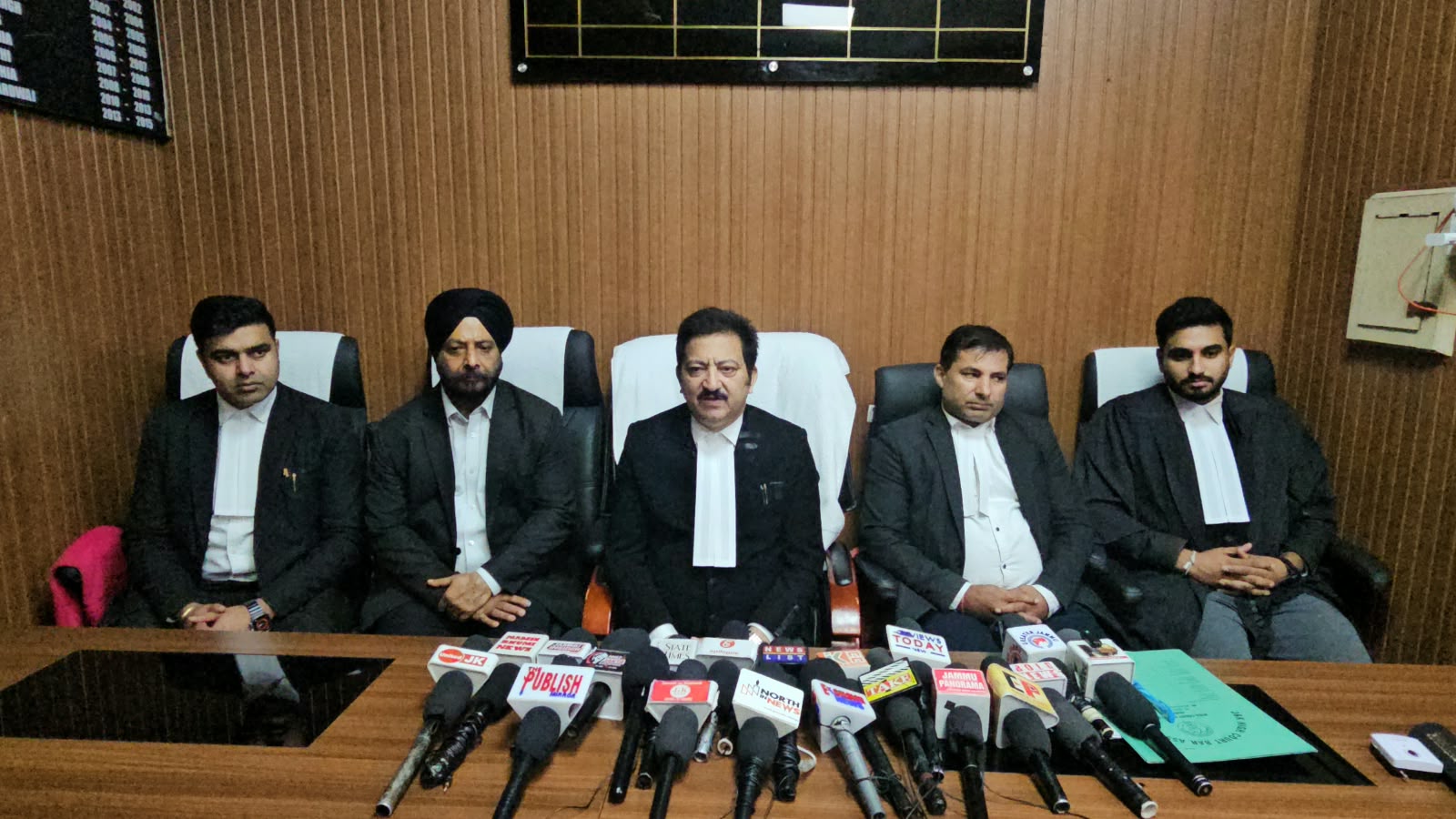
JAMMU: The Jammu & Kashmir High Court Bar Association, Jammu (Regd.) on Monday held a press conference to raise concerns over recent amendments and policy changes relating to the electronic traffic challan system under the Motor Vehicles law.
The Association acknowledged the importance of effective traffic regulation, road safety and enforcement of traffic laws, but expressed concern over the manner in which the new e-challan mechanism is being implemented and its potential impact on ordinary citizens, vehicle owners and drivers.
President K. Nirmal Kotwal, along with Vice-President S. Baldev Singh, General Secretary Pardeep Majotra, Joint Secretary Anshu Mahajan and Treasurer Rahul Aggarwal, said technological advancement in traffic enforcement must be accompanied by transparency, accountability, procedural fairness and adequate safeguards for citizens.
The Association pointed to practical difficulties that may arise from the automated generation and recovery of e-challans, particularly in cases where a citizen disputes the alleged traffic violation, the identity of the driver, the accuracy of an electronic record or the circumstances in which the challan was generated.
The JKHCBAJ maintained that an enforcement mechanism, irrespective of its technological sophistication, cannot operate outside the principles of natural justice and due process of law. It said citizens must have a meaningful and accessible opportunity to know the basis of an alleged violation, contest an incorrect challan, seek correction or review and obtain an effective remedy where an error has occurred.
The Association also highlighted difficulties that could be faced by people who are not technologically equipped or who may encounter problems accessing, understanding or contesting electronic challans. It stressed that digitisation should facilitate access to public services and justice rather than create additional barriers for citizens.
The Bar Association called upon the Government and concerned authorities to undertake a comprehensive review of the implementation framework and ensure adequate safeguards against erroneous or disputed challans. It also urged that the procedures for issuance, verification, adjudication and recovery of e-challans be made clear, transparent, accessible and consistent with principles of fairness and natural justice.
The Association clarified that its concerns were not against road safety or lawful traffic regulation, but were aimed at ensuring that enforcement remains lawful, proportionate, transparent and citizen-centric, with technological mechanisms operating in conformity with the constitutional and legal rights of citizens.
The JKHCBAJ said the legal fraternity has an important role in bringing issues affecting public rights to the attention of the authorities and the public. It added that the Association would continue to examine the legal and practical implications of the new regime and take appropriate steps as may be warranted in the interest of justice and protection of citizens’ rights.
