


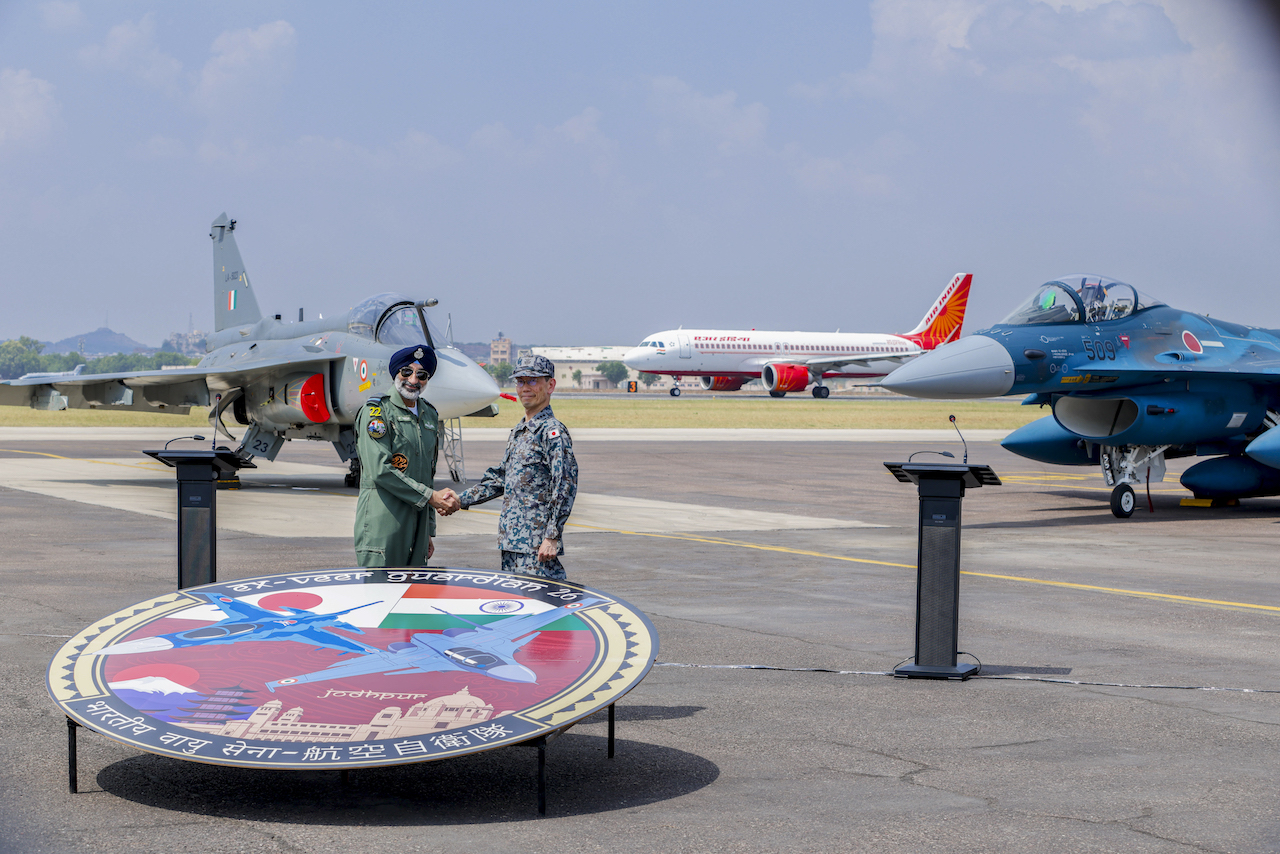
JODHPUR: The operation of Japanese fighter aircraft from Indian soil for the first time marks a significant milestone in the defence partnership between India and Japan, Air Chief Marshal A P Singh said on Sunday during the ongoing bilateral air exercise Veer Guardian-2026.
The 14-day exercise, being conducted at Air Force Station Jodhpur from September 9 to 22, involves frontline aircraft of the Indian Air Force, including the indigenous Tejas, Su-30MKI and Rafale, alongside F-2A fighters of the Japan Air Self-Defense Force (JASDF).
Japanese Air Self-Defense Force Chief of Staff General Takehiro Morita said the deployment of Japanese fighters to India had taken bilateral defence cooperation beyond exercises and demonstrated the two countries’ ability to deploy air assets across the Indo-Pacific region.
As part of the exercise, Morita flew a sortie in a Tejas with an Indian pilot, while Air Chief Marshal Singh flew solo in another Tejas. The two air chiefs also exchanged badges as a gesture of mutual respect and partnership.
Speaking at a press conference after the sorties, Air Chief Marshal Singh said the presence of Japanese fighters on Indian soil for the first time represented a major milestone in the bilateral relationship. He said the exercise reflected the deepening strategic partnership between the two countries, founded on mutual respect, professional trust and a shared commitment to peace and stability.
“When we do exercises together, we learn from each other. We fly together. We train together. So both sides improve together,” Singh said, adding that such engagements provide an opportunity to understand each other’s operational practices and enhance capabilities.
General Morita said the advanced training would strengthen mutual understanding, build trust and deepen practical cooperation between the two air forces. He described the Tejas as a symbol of India’s technological innovation and the Make in India initiative, acknowledging the efforts of personnel from the armed forces and industry involved in its development.
The two sides are conducting advanced operational missions and professional exchanges during the exercise, covering areas such as mission planning, engineering and aerospace safety.
On India’s indigenous fighter aircraft programme, Air Chief Marshal Singh said a large number of Tejas aircraft had been ordered, although some deliveries had been affected by global supply-chain challenges. He said development of the Tejas MK-2, an advanced medium combat aircraft, would take India’s defence aviation industry and research and development capabilities to “much higher heights”.
