


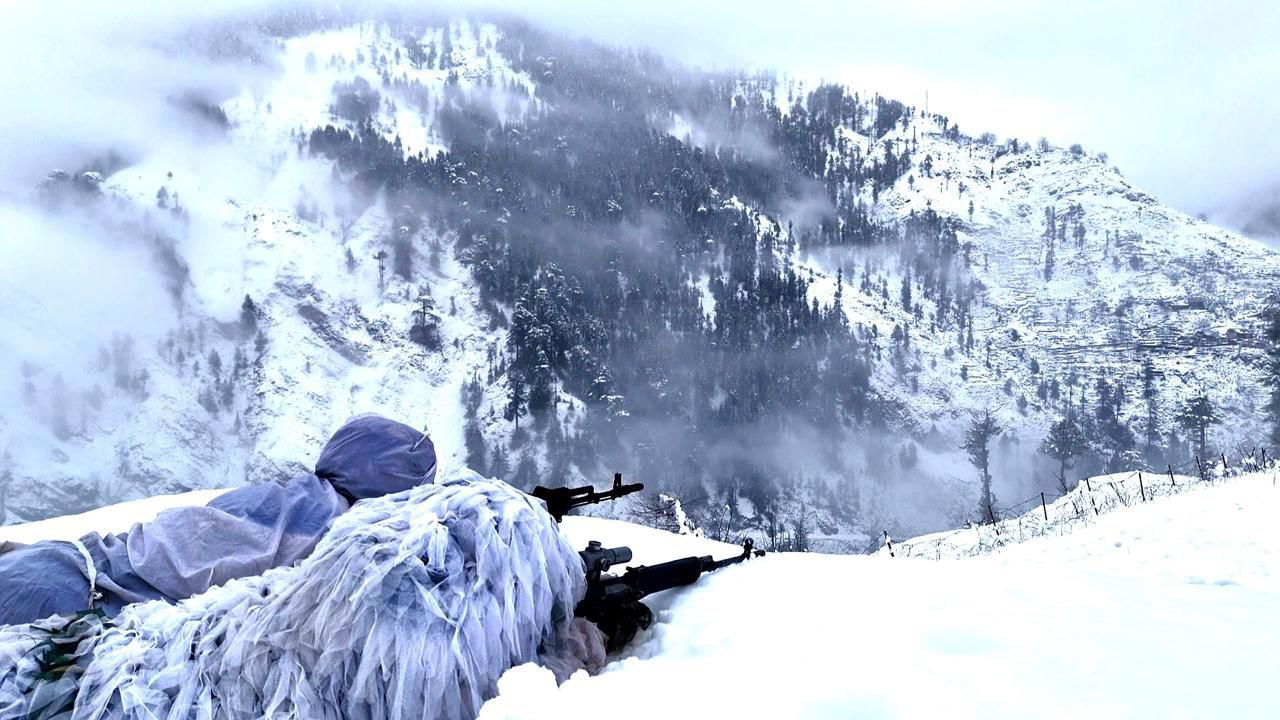
JAMMU: Amid freezing temperatures and treacherous terrain, the Indian Army has intensified counter-terrorism operations across Kishtwar and Doda districts of Jammu and Kashmir to hunt down Pakistani terrorists attempting to exploit the harsh winter for concealment, defence sources said on Saturday.
Traditionally, the onset of the 40-day Chillai Kalan—the harshest phase of winter from December 21 to January 31—brings a temporary lull in militant activity as heavy snowfall cuts off communication routes and isolates mountainous areas. This winter, however, has witnessed a decisive shift in operational strategy.
Instead of scaling back, the Army has adopted a proactive winter posture, establishing temporary bases and surveillance posts deep inside snow-bound regions to sustain pressure on potential terrorist hideouts. Troops are operating in sub-zero temperatures with limited visibility, regularly patrolling high-altitude ridgelines, valleys and dense forests to deny terrorists any sanctuary.
Defence sources said intelligence assessments indicate the presence of around 30–35 Pakistani terrorists in the Jammu region. Recent inputs suggest that sustained counter-terror operations and drying local support have forced these groups to retreat deeper into uninhabited middle and higher mountain ranges in search of temporary winter hideouts.
Reports indicate that the remaining terrorists are attempting to coerce villagers for shelter and food, though their support base among locals and overground workers has sharply declined. Continuous vigilance in lower altitudes has further restricted their movement, limiting their ability to regroup or plan attacks.
A key feature of this winter’s operations is a high level of inter-agency coordination. The Army is leading synchronised operations involving the Jammu and Kashmir Police, CRPF, Special Operations Group (SOG), civil administration, forest guards and Village Defence Guards (VDGs), ensuring seamless intelligence sharing and operational efficiency.
Intelligence from multiple agencies is being collated to develop precise situational assessments of terrorist movement and hideout patterns. Verified inputs are followed by coordinated joint operations, improving response time and maximising tactical impact.
Security forces are simultaneously operating across valleys, mid-altitude zones and high ridges to block movement corridors and disrupt logistics and communication networks. Each operation is followed by sustained surveillance, forming part of a “surveillance–sweep–surveillance” cycle that underpins the Army’s evolving winter doctrine.
Specially trained winter warfare units, skilled in high-altitude survival, snow navigation and avalanche response, have been deployed in key sectors. Advanced technology, including drones, ground sensors and surveillance radars, is being used to detect movement, track heat signatures and monitor potential routes, even in extreme weather conditions.
According to defence sources, the focus this winter is twofold: eliminating residual terrorist pockets and confining militants to inhospitable high-altitude zones, thereby neutralising their operational capability.
Even during Chillai Kalan, when mountain activity traditionally slows, security forces remain on high alert, maintaining relentless pressure to prevent terrorists from using winter as a shield.
