


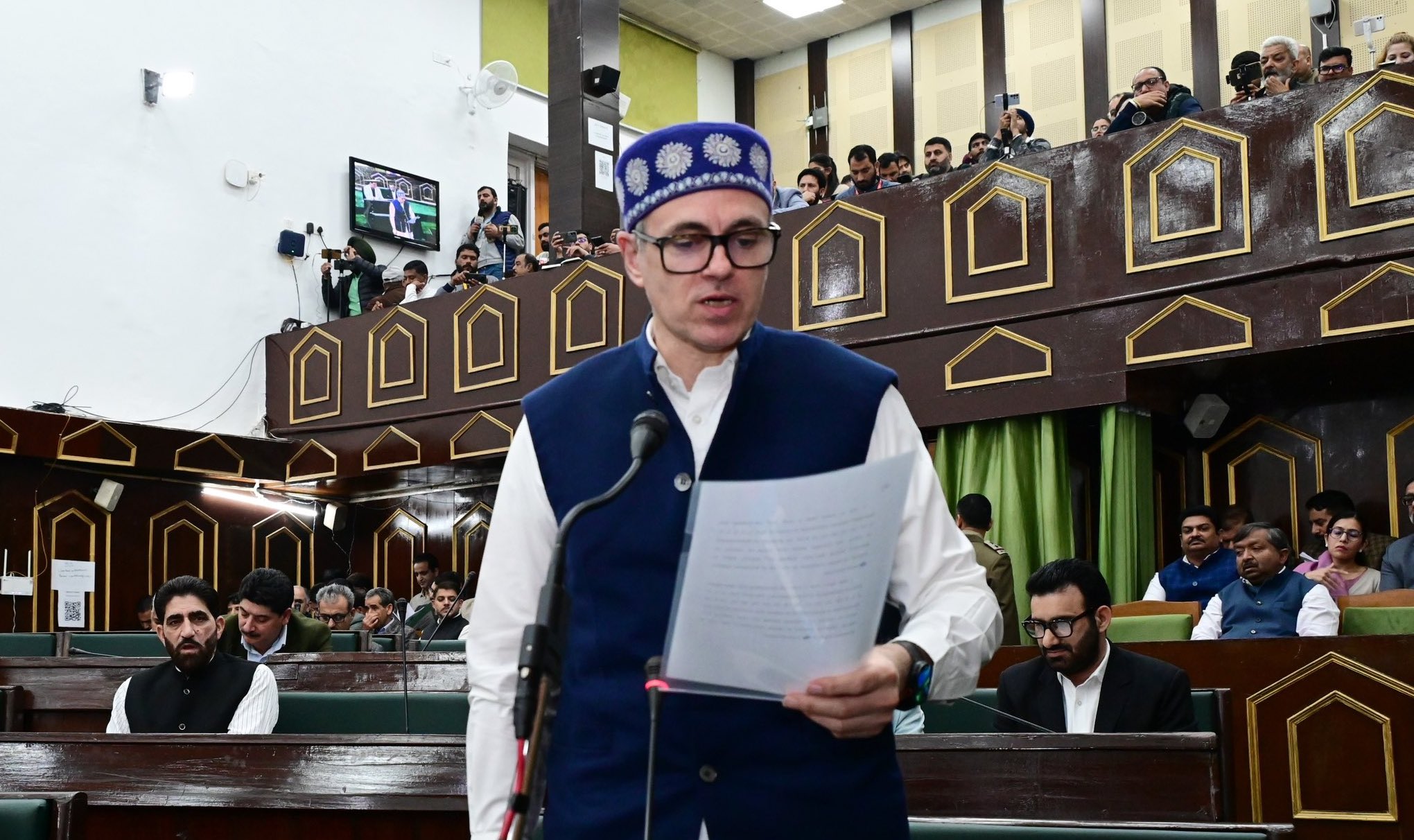
JAMMU: Chief Minister Omar Abdullah on Thursday said that all tourist destinations currently closed in Jammu and Kashmir are expected to reopen by May, as the government continues efforts to fully revive the sector after the April 22, 2025 Pahalgam terror attack.
Replying to the discussion on Demands for Grants in the Legislative Assembly, the Chief Minister said the government adopted a “step-by-step” approach to restore confidence in the tourism industry at a time when many believed visitors would stay away from the Union Territory for years.
He said the administration engaged closely with stakeholders, undertook sustained outreach and gradually resumed tourism activities despite restrictions at several destinations. “We had to tell tourists that they could visit Kashmir but not go to certain places like Doodhpathri or Yousmarg. Even in some areas, movement was restricted beyond designated points. Despite these constraints, we slowly brought tourism back on track,” he said.
Abdullah noted that hotels in winter destinations such as Gulmarg and Sonamarg are now operating at full capacity, while Srinagar is witnessing significant tourist footfall, indicating a steady recovery.
He said discussions have taken place with the Centre regarding the reopening of the remaining closed destinations. “There are certain constraints, but you can assume that by May, all these destinations will reopen,” he told the House.
Alongside reopening existing sites, the Chief Minister announced plans to develop nine new tourist destinations to diversify the tourism base. He said the proposal, initially planned under multilateral funding, faced hurdles at the final stage. The government is now working with the Centre to develop these destinations under a centrally funded scheme. The names of the new sites will be announced in due course, he added, assuring that Jammu will receive its fair share of tourism projects.
Highlighting infrastructure gaps, Abdullah said that while destinations like Pahalgam, Gulmarg and Sonamarg are naturally beautiful, they lack adequate basic amenities such as toilets and other facilities. Addressing these shortcomings, he said, is a key priority.
The Chief Minister stressed that attracting first-time visitors is relatively easy, but ensuring repeat tourism is the real measure of a strong and sustainable industry. “Our focus now is on encouraging tourists to return,” he said.
In Jammu, he noted that projects such as Jammu Lake and the Riverfront are nearing completion. He said the government intends to extend the Riverfront project to its full planned length, drawing inspiration from the Sabarmati Riverfront model in Ahmedabad, to enhance the city’s appeal.
Abdullah also underlined the potential of leveraging the annual influx of over one crore pilgrims visiting the Mata Vaishno Devi shrine. “If we can retain even 10 per cent of them for six or seven days by promoting border tourism, pilgrimage tourism, golf tourism or destinations like Bhaderwah, it can significantly transform Jammu’s economy,” he said.
He added that tourism in Kashmir is no longer limited to the summer season, with winter tourism gaining momentum and attractions such as the Tulip Garden boosting early-season arrivals. To address relatively lean months like October and November, the government developed the Bagh-e-Gul-e-Dawood (Chrysanthemum Garden), which he said has been successful and will be further strengthened.
Emphasising balanced growth, the Chief Minister said the government aims to develop at least one tourist destination in every area, expand infrastructure, and market these locations effectively, while acknowledging that visitor preferences ultimately determine success.
