


NEW DELHI: India said that it is assessing the implications of a defence agreement among Pakistan, Saudi Arabia and Turkiye for the country’s national security as well as regional peace and stability.
The three countries signed the Makkah Joint Defence Agreement on August 7 after Pakistan Prime Minister Shehbaz Sharif, Saudi Crown Prince Mohammed bin Salman and Turkiye’s President Recep Tayyip Erdogan held talks.
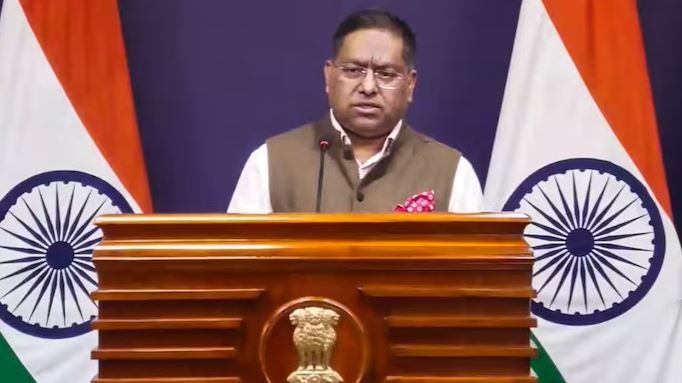
“As far as this agreement is concerned, we are examining its implications both from the perspective of India’s national security and considerations of regional peace and stability,” External Affairs Ministry Spokesperson Randhir Jaiswal said at his bi-weekly media briefing.
“India remains fully committed to safeguarding its national interests and will take all necessary measures in this regard,” he said.
Jaiswal also said that India continued to closely follow “all developments in the West Asia conflict.” A joint statement issued by Pakistan, Saudi Arabia and Turkiye on Friday said the Makkah Joint Defence Agreement builds on shared strategic interests and longstanding defence cooperation.
“The agreement is intended to strengthen collective deterrence against any act of aggression, and stipulates that any armed attack against any one of the three states shall be regarded as an attack against them all,” it said.
“It further provides for the enhancement of all aspects of defence cooperation among the three states,” the joint statement said.
Jaiswal also responded to a separate question on events organised in different part of the world to mark the “independence” of Pakistan’s Balochistan province and the violent protests in Pakistan-occupied Kashmir (PoK).
“We continue to follow developments across the world. At the same time, I would like to highlight that we have seen the kind of human rights violations that were committed in PoK and other parts of that country,” he said.
“We call on the international community to hold Pakistan accountable for its misdeeds, abuses and flagrant violation of human rights, including of all its people,” he added.
Jaiswal said large-scale protests in PoK led to a situation where “public discontent was answered with bullets, blackouts, repression and oppression”.
“We are where we were earlier. I need not emphasise which country is responsible for cross-border terrorism and which is the epicentre of terrorism, and where the action lies for stopping cross-border terrorism,” he said.
