


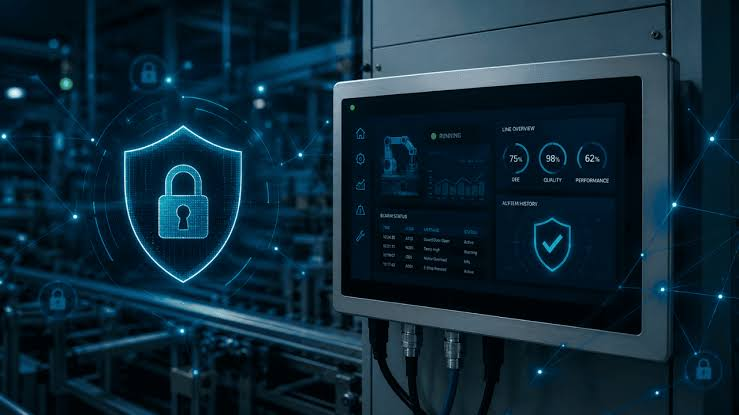
A cyberattack on an office network may block email, expose data, or interrupt business software. In an industrial facility, the same attack can stop production or affect physical equipment. It may also create safety and environmental risks.
This leads to an important question: Why does industrial cyber security need a different approach from standard IT security? Industrial protection must consider machines, control systems, process safety, and continuous operations alongside data. Let’s understand the key differences and the controls needed to manage them.
How Does Industrial Cyber Security Differ From IT Security?
IT and operational technology systems are increasingly connected, but they still serve different purposes. IT security mainly protects business information and applications. Industrial cyber security must also protect physical processes, equipment, people, and operational continuity.
| Area | IT Security | Industrial Cyber Security |
| Priority | Protect data and applications | Protect safety and operations |
| Assets | Computers, servers, and databases | Controllers, sensors, and machinery |
| Attack Impact | Data loss or service disruption | Downtime, damage, or safety risks |
| Downtime | Planned shutdowns are often possible | Continuous processes limit shutdowns |
| System Lifecycle | Systems receive frequent updates | Equipment may operate for decades |
| Response | Affected devices can be isolated | Isolation must consider process safety |
How Can Industrial Facilities Strengthen Cyber Protection?
Effective protection requires technology, operational knowledge, and clear security procedures. Five practices can help facilities build a stronger industrial cybersecurity program:
- Map Assets and Dependencies
Teams should identify controllers, servers, engineering workstations, networks, sensors, and connected devices. They must also understand which production processes rely on each asset.
This shows which systems need the strongest protection and which failures could create the greatest operational impact.
- Separate Business and Industrial Networks
Network segmentation limits unnecessary communication between information technology and operational technology systems. It can also restrict how far an attacker moves after gaining access.
Controlled gateways should manage the data shared between different network zones.
- Control User and Vendor Access
Employees, contractors, and vendors should receive access based on their roles. Strong authentication, account reviews, and time-limited permissions can reduce unnecessary exposure.
Remote connections also need monitoring because they may provide a direct route to sensitive industrial equipment.
- Monitor Changes and Unusual Activity
Continuous monitoring can reveal unexpected network traffic, configuration changes, failed login attempts, or abnormal device behavior. However, alerts must be reviewed with enough process knowledge to avoid unsafe responses.
This is where industrial cybersecurity requires close coordination between cybersecurity specialists and operational engineers.
- Prepare Safe Recovery Plans
Incident plans should explain how teams will isolate affected systems, protect employees, maintain essential processes, and restore normal operations. Backups and recovery procedures must also be tested regularly.
A plan that protects data but ignores machine behavior may create additional disruption during an emergency.
Protect Industrial Operations With the Right Approach
IT and industrial systems now exchange more data than ever before. However, their risks, priorities, and operating conditions remain different. Effective industrial cybersecurity must protect production, equipment, people, and information without creating unsafe interruptions.
It also requires regular assessments, controlled access, continuous monitoring, and tested recovery plans. By collaborating with a reputable electric brand, industrial organizations can combine automation knowledge with cybersecurity expertise. This creates stronger protection while preserving safety, reliability, and operational continuity.
