


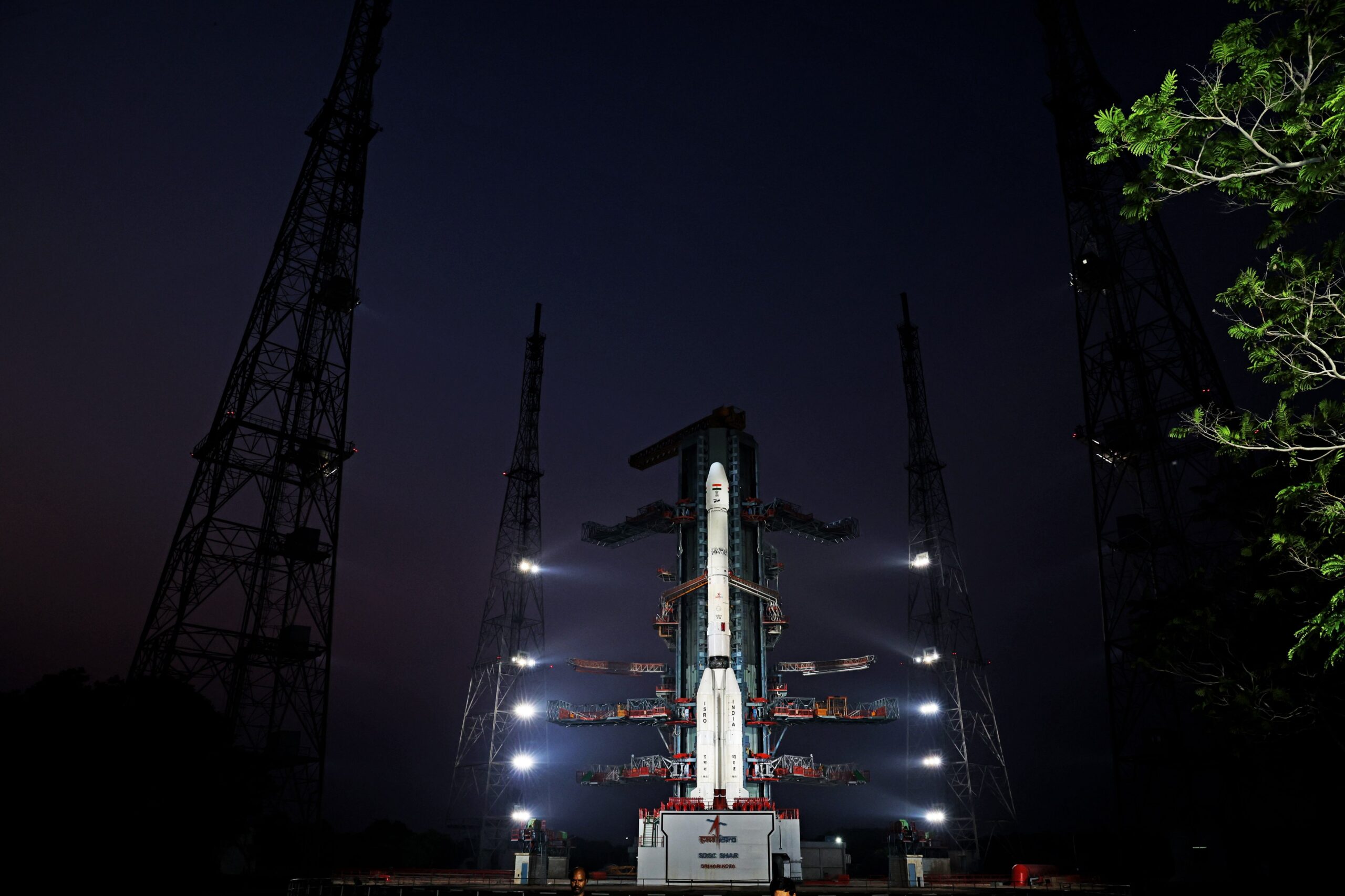
NEW DELHI: The Indian Space Research Organisation (ISRO) on Friday successfully launched its next-generation navigation satellite, NVS-03, aboard the GSLV-F18 rocket from the Satish Dhawan Space Centre in Sriharikota, marking another significant step towards strengthening India’s independent satellite-based navigation capabilities.
The satellite successfully separated from the launch vehicle and was injected into its intended Geosynchronous Transfer Orbit (GTO), ISRO confirmed.
NVS-03 is the third satellite in ISRO’s next-generation navigation satellite series, designed to ensure continuity and improve the reliability of navigation services under the Indian Regional Navigation Satellite System (IRNSS), popularly known as Navigation with Indian Constellation (NavIC).
The satellite carries an indigenous atomic clock alongside procured atomic clocks and incorporates the L1 navigation signal in addition to the existing L5 and S-band signals. These enhancements are expected to expand NavIC’s capabilities and improve the availability of navigation services.
According to ISRO, NavIC is designed to provide coverage across India and an area extending approximately 1,500 kilometres beyond the country’s geopolitical boundary, supporting a range of positioning, navigation and timing applications.
The launch also drew the attention of school students, who witnessed the event and expressed excitement over India’s growing achievements in space technology.
Speaking to ANI, a student described the experience as a moment of pride and highlighted the importance of developing an indigenous navigation system to reduce dependence on foreign technologies such as the United States’ Global Positioning System (GPS).
The student said NavIC would enable India to develop and strengthen its own navigation capabilities, underscoring the significance of self-reliance in advanced space technology.
The GSLV-F18 mission marks the 20th flight of India’s Geosynchronous Satellite Launch Vehicle (GSLV). The successful deployment of NVS-03 is expected to reinforce the country’s indigenous navigation infrastructure and advance efforts to ensure greater technological independence in satellite-based navigation services.
