

PATNA: Bihar is preparing to integrate Artificial Intelligence (AI) across its healthcare delivery system, with the state government drawing up an ambitious roadmap to make medical services more accessible, efficient and transparent, particularly in rural and underserved areas.
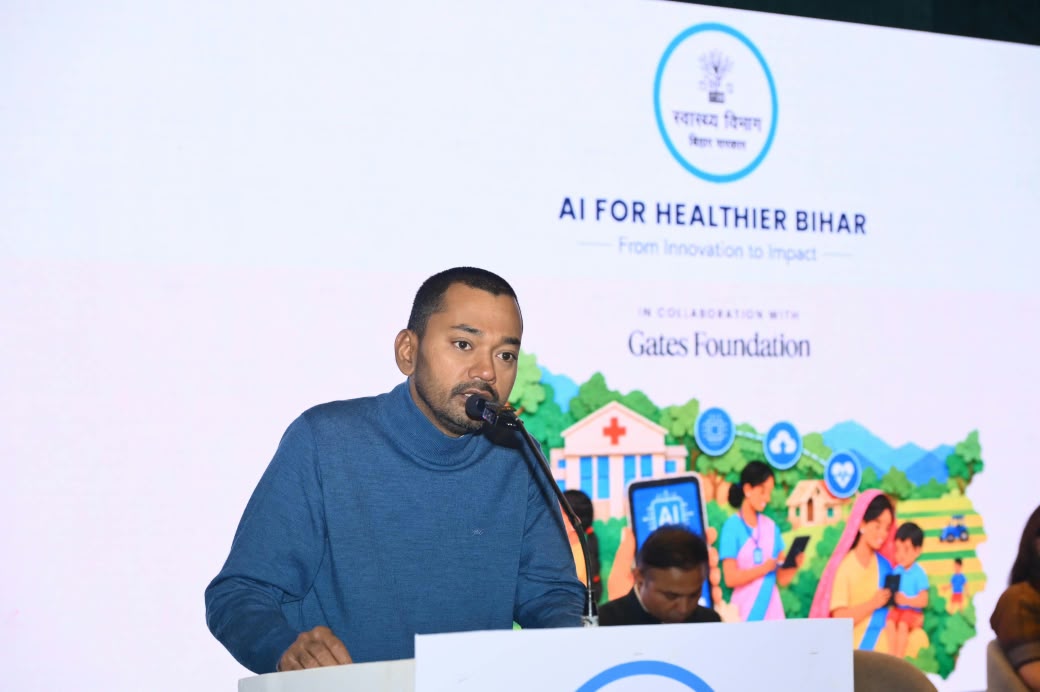
The vision was outlined by Health Minister Nishant during a one-day workshop titled ‘AI for a Healthier Bihar: From Innovation to Impact’, organised by the Bihar Health Department in collaboration with the Gates Foundation at Hotel Taj City Centre in Patna.
Addressing the gathering, the minister emphasised that expanding hospital infrastructure alone was not sufficient and that modern technology must be integrated into healthcare delivery to ensure quality medical services reach economically weaker sections, including people living in remote villages.
The proposed AI-driven transformation will cover several critical areas, including medicine supply management, diagnostic services, doctors’ availability, telemedicine, hospital bed management and emergency ambulance operations.
The minister said AI could help address the shortage of doctors, improve access to specialist consultations in rural areas and strengthen monitoring of government healthcare institutions. He stressed the importance of early disease detection, accurate diagnosis and timely treatment to bring rural healthcare services closer to urban standards.
Highlighting the role of technology in medicine supply management, Nishant said AI-based systems could help forecast medicine requirements, monitor stocks and identify irregularities in the supply chain. Barcodes, QR codes, batch numbers and clinical data could also be used to verify medicine authenticity and track supplies.
The government is also exploring the integration of AI with diagnostic facilities, including X-rays, CT scans, MRI and ultrasound services. The minister explained that AI-assisted analysis of X-rays conducted at rural health facilities could help identify preliminary signs of diseases such as tuberculosis and cancer, allowing patients to undergo further investigations and receive treatment without unnecessary delays.
He also called for an audit of diagnostic equipment installed at medical college and district hospitals to assess their availability, utilisation and operational status.
To improve access to specialist healthcare, the government plans to strengthen AI-enabled telemedicine services. The initiative is expected to connect patients at rural health centres with specialist doctors, reducing the need for economically weaker families to travel to major cities for medical consultations.

Another major focus is the development of a digital hospital bed management system providing real-time information about vacant and occupied beds in general wards, Intensive Care Units (ICUs), High Dependency Units (HDUs) and other critical care facilities.
Referring to discussions with the Director of IGIMS, the minister said a technology-based platform should be developed to make bed availability information accessible both within hospitals and online through mobile phones.
Such a system could help referring hospitals identify suitable destinations for critically ill patients before transferring them, avoiding delays caused by a lack of available beds or specialist doctors.
In a significant announcement, Nishant also revealed plans to introduce AI-enabled smart ambulances in Bihar, with an initial pilot project involving two to four vehicles.
The proposed ambulances will be equipped with digital ECG machines, blood pressure, pulse and oxygen monitoring systems, GPS-based live tracking and digital connectivity with hospitals. AI-assisted patient assessment and video consultations with specialist doctors will also be incorporated.
The system will enable medical reports generated during transportation to be transmitted to receiving hospitals in advance, allowing emergency teams to prepare for treatment before the patient’s arrival.
The minister said discussions had already been held with the Director of IGIMS and technical experts regarding the proposed initiative.
He further stressed the need to integrate smart ambulances with trauma centres and super-speciality hospitals. By feeding patients’ vital parameters, including blood pressure, pulse and oxygen saturation, into an AI-based platform, emergency teams could obtain an initial assessment of a patient’s condition and identify hospitals equipped with vacant trauma beds, ICU facilities, CT scans, MRI services and relevant specialists.
The proposed system could also help ambulance personnel select the most appropriate hospital and share advance medical information with its emergency department.
The minister said the objective was to ensure that hospitals could prepare for emergency cases even before patients arrived, particularly during road accidents and other critical situations.
He reiterated that AI adoption should go beyond technological innovation and deliver tangible improvements in healthcare services for ordinary citizens, making the state’s medical infrastructure more responsive, transparent and accessible.
The workshop was attended by Bihar Health Secretary Kumar Ravi, Archana Vyas, Director of the Gates Foundation’s India office, representatives of the foundation, technology and innovation experts from India and abroad, besides Health Department officials, doctors, nurses, technicians, ANMs and ASHA workers.
