


Banks, hospitals, telecoms and governments hold records about every citizen, and AI will want them all. This article shows heads of state, boards, investors and stakeholders what they can offer the humans behind those records. Band-Based Archive Triage (BBAT), built on the 0 to 1 scale of the 0→1 Doctrine, reads only labels and is designed to delete what no rule needs, honour holds and consent, and let only ranges leave.
| BEFORE THE OFFERSThe 0→1 Doctrine, a filed invention, places any need and any ability as ranges on one line from 0 to 1, and lets AI act only where they overlap and every required check passes. BBAT, filed separately, applies the same scale to stored records, new or old. It reads only their labels and marks each record keep, delete or use. |
THE MEMORY EVERY STATE KEEPS
A country’s banks, hospitals, tax offices and telecom firms hold decades of records about its people, in clouds, data lakes, warehouses and backups. Many are never opened again, yet they stay exposed to leaks, and AI agents may soon search them faster than any team can follow. The question for those in charge is no longer only who may read these records, but what each citizen can be promised about them.
OFFER 1 · DELETED ON TIME, WITH PROOF
Take a bank customer’s identity-check file, ten years old, kept under a seven-year rule and unused for eighteen months. BBAT reads its labels, never its content, places its age and last use against the legal limit on the 0 to 1 scale, and marks it for deletion. The outcome is sealed in a receipt, signed with methods built to resist future quantum computers, that an auditor can verify years later.
What can be offered: no record kept once no applicable rule requires it.
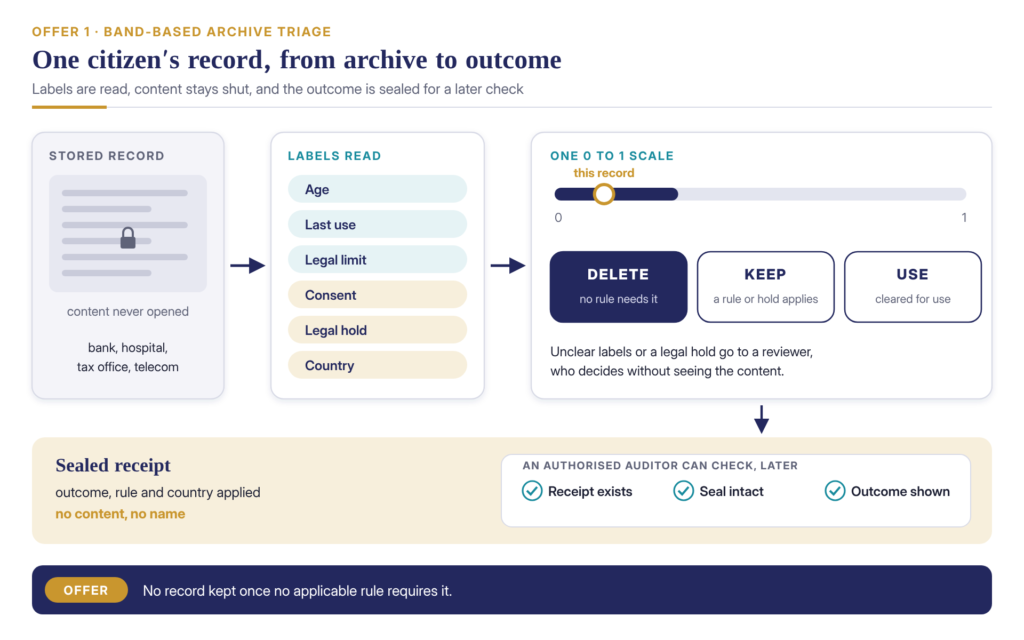
Figure 1. One citizen’s record: labels in, an outcome out, and a sealed receipt.
OFFER 2 · THE LAW OF EVERY LAND
Many records fall under more than one country’s rules. BBAT reads each country label, and no record is deleted while any of those rules still requires it to be kept; the receipt records which rule decided. A record under legal hold always goes to the Human Override Pathway (HOP), where an authorised reviewer decides without seeing what it says.
What can be offered: every applicable law respected, at home and abroad.
OFFER 3 · CONSENT THAT COUNTS
Many records are held by law, not by consent. Where a step does rest on consent, PACE (Permission and Authorisation Change Evaluation Module) checks before it whether consent has been withdrawn, has expired or is no longer valid, and pauses the step if so. A record with unclear labels is not guessed at; it waits for clarification or a reviewer.
What can be offered: where consent is the basis, a refusal honoured at the next step.
OFFER 4 · NOBODY PICKED OUT
When a record is cleared for use, the work happens inside a Trusted Execution Environment (TEE), a locked area of a chip in infrastructure the holder controls. Only a range on the 0 to 1 scale may leave, after a Hardware Attestation Certificate (HAC) confirms the working copy was deleted under Delete-Before-Share. Groups too small to hide anyone are refused, narrow ranges are widened, and each range is tested against outside data.
What can be offered: use without exposing the record.
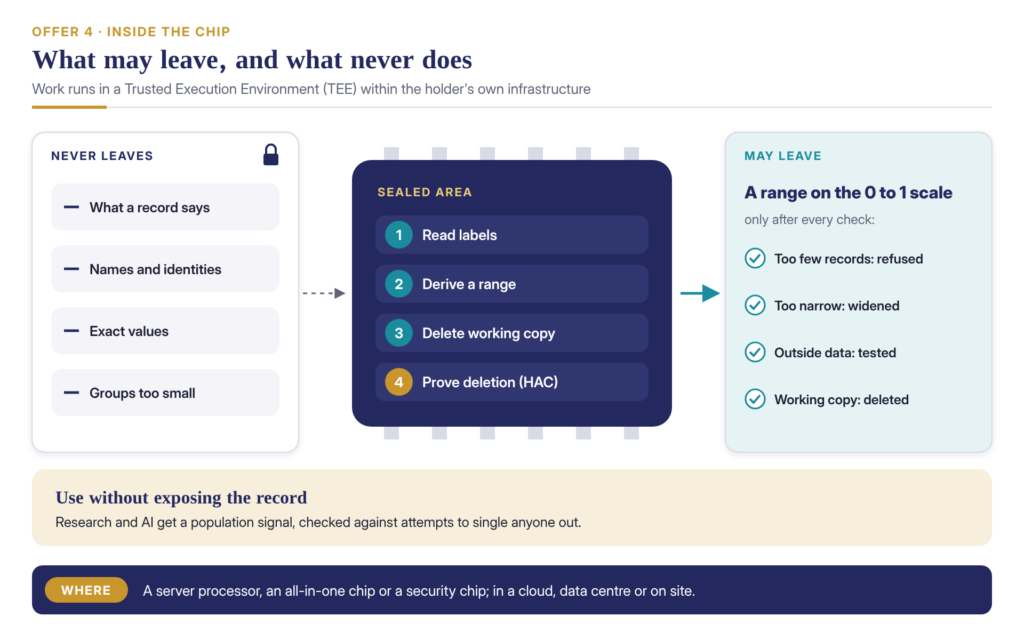
Figure 2. What may leave the chip, and what never does.
OFFER 5 · PUBLIC GOOD WITHOUT A NAME
Ten years of de-identified patient outcomes can become a population signal for medical research through Band-Derived Training Signals (BDTS), checked against attempts to rebuild any single record from it. The same route can help train fraud-detection models across many bank accounts. Several hospitals or banks can share signals, not records, to build one.
What can be offered: AI that learns from the population while each citizen stays private.
OFFER 6 · AI AGENTS KEPT IN VIEW
One request can look harmless while many together piece a person’s life back together. The Cross-Agent Aggregation Detector (CAAD) reads only sealed receipts, never records, and sends a case to human review when many AI agents draw too much from the same data.
What can be offered: a watch against quiet profiling by AI agents that leave receipts.
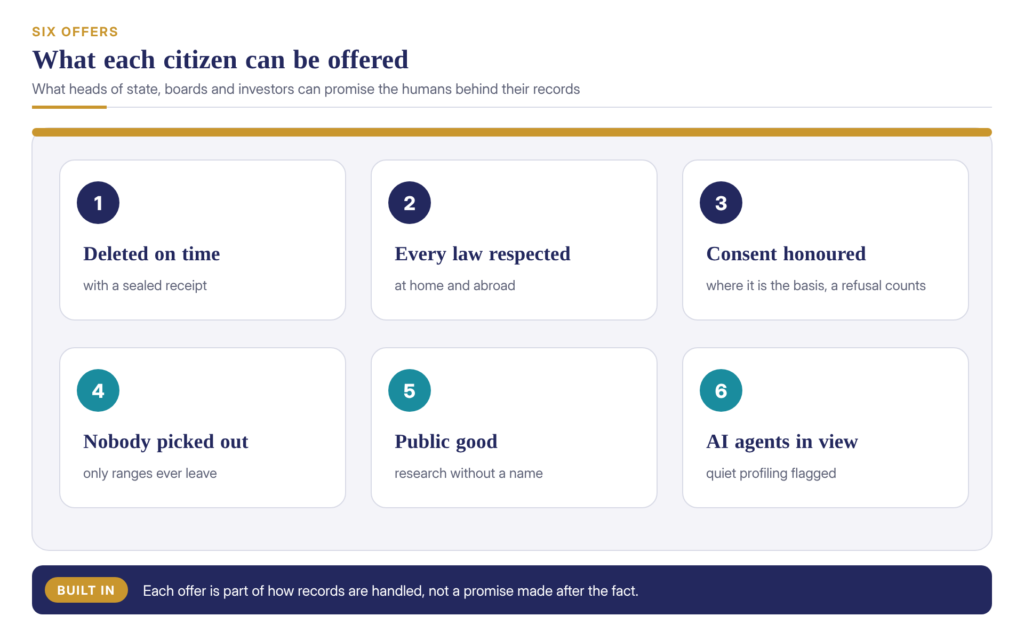
Figure 3. Six offers each citizen can be given.
WHAT A STATE GAINS
Records that no rule needs cost money to store and can still leak. BBAT compares storage use before and after each deletion, so savings are measured rather than assumed. Every outcome leaves a receipt that one auditor or several authorities can check, which can cut repeated reviews. Trust built this way can make a country’s data easier to use for research and safer to share with partners.
WHERE THE 0→1 DOCTRINE FITS
BBAT uses the 0 to 1 scale of the 0→1 Doctrine, an earlier filed invention. The Doctrine governs what AI does next: it lets AI act only where ranges overlap and every must-pass check clears, and seals each decision in an Actuation Compliance Receipt (ACR). Either works alone; together they cover a record at rest and AI in action.
WHEN SUPER INTELLIGENCE ARRIVES
AI agents already read and combine stored data, and artificial general intelligence (AGI) and super intelligence may follow. A smarter AI will ask for more records, more often. Where BBAT is in use, the answer depends on labels, laws and consent that people set, and is sealed in receipts that cannot be altered unnoticed.
HONEST LIMITS
BBAT works where record holders adopt it. Labels must be accurate, so doubtful ones go to a reviewer. Each country writes its own rules, and BBAT applies them; independent auditors should check the receipts. Signals are released only where lawful and useful, case by case, and BBAT adds to existing security rather than replacing it.
QUESTIONS DECISION-MAKERS ASK
| 01 Does a citizen need to do anything?Nothing new. The holders of their records carry out each step. | 02 Can a government use it on its own archives?Yes. Tax, health and civic archives can be sorted where they sit. |
| 03 Does it replace data protection law?It applies those laws; it does not write or replace them. | 04 How would a country start?With one archive and its retention rules, then wider. |
| 05 Is it only for large holders?Any holder, from a clinic to a ministry, can use it. | 06 Does sorting need the cloud?It can run in a cloud, a data centre or on site. |
CLOSING NOTE
Every state keeps a memory of its people. Before super intelligence enters it, each citizen can be offered three assurances: kept only as long as the law requires, used without exposing the record, deleted with proof.
This can be tested, live, via API, governed against ungoverned, side by side.
THE INVENTOR
Systems theorist, inventor, and serial entrepreneur Vatsal Soin holds grants in the US, Japan, India and more; filings span six continents; latest grant, AI footwear, August 2026. Inventions: footwear, apparel fit, Sharable Size Cards, digital twins, robotics, global governed data, archive triage, quantum-resilient cryptography, AI governance. SIM–RMIT and NTU alumnus. Every prior invention was a step; 0→1 is the destination.
SELECTED REFERENCES
Granted: US Patent 12,446,652 B2 · Japan Patent 7560909 · India Patents 454081 and 599317. Filed: PCT/IN2025/051943 · US 19/489,595 · India 202511115781 · Australia AU2022450649 · India 202611113867 (23 September 2026) · PCT/IN2026/052042 (1 October 2026).
DISCLAIMER
Informational only. Not certified. No endorsement implied. Not investment advice. Examples are illustrative, not field results. Vatsal Soin · © 2026 All Rights Reserved.
