


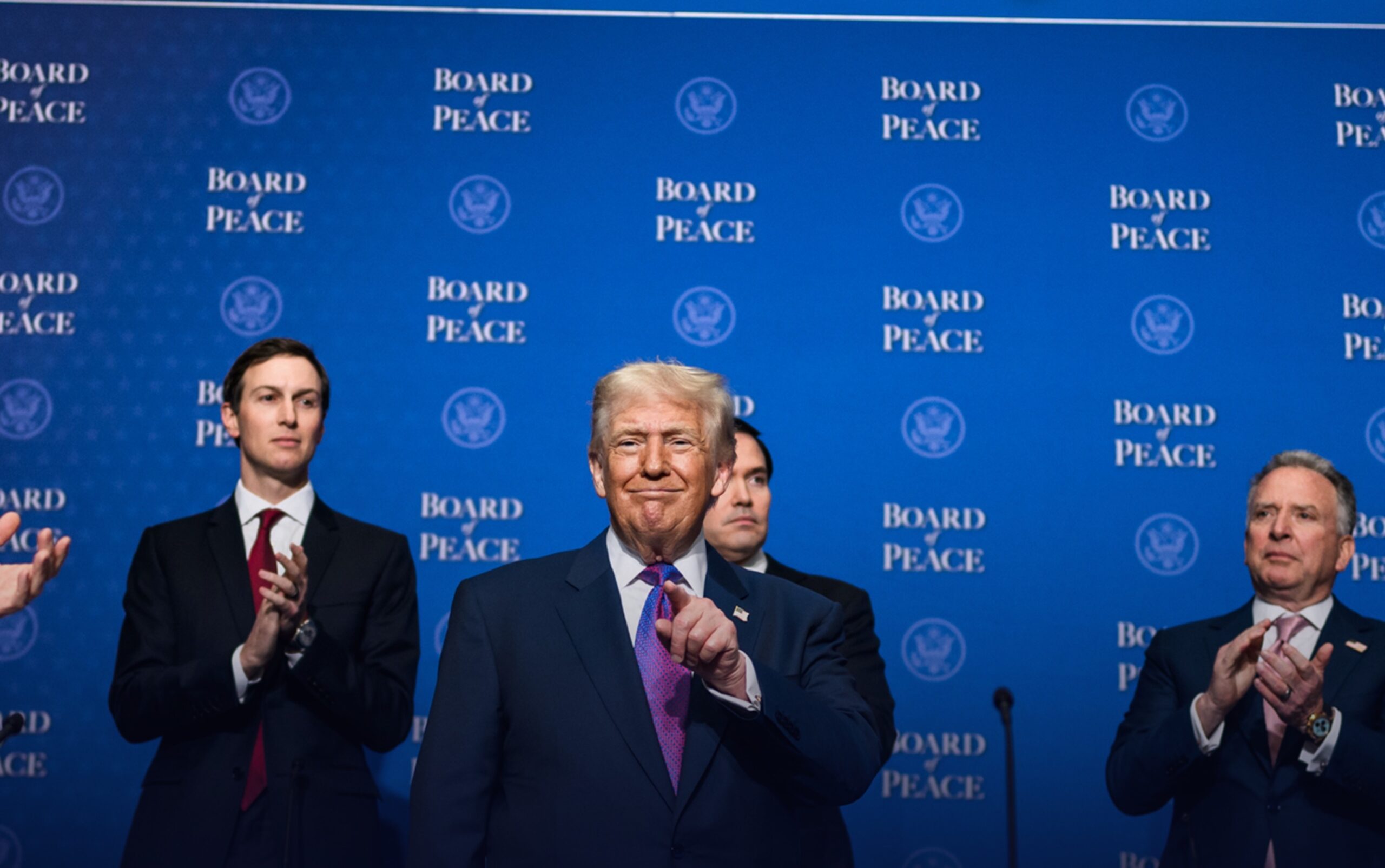
US President Donald Trump has once again claimed that he prevented a major escalation between India and Pakistan during the 2024 conflict, asserting that his threat to impose a “200 per cent tariff” on both nations led to a halt in hostilities.
Speaking at his Board of Peace, Trump said he warned both countries that trade deals would be off the table if the fighting continued. “I said, if you fight, I’m going to put 200 per cent tariffs on each of your countries. They both wanted to fight. But when it came to money, it’s nothing like money,” he remarked.
Trump also escalated his earlier claims regarding aerial losses during the conflict, stating that 11 jets were shot down, compared to his previous assertion of eight. “That war was raging. Planes were being shot down… 11 jets were shot down. Very expensive jets,” he said.
The US President further stated that he personally spoke to Prime Minister Narendra Modi and Pakistan’s leadership to defuse tensions. “I knew Prime Minister Modi very well… I called them and said, listen, I’m not doing trade deals with you two guys if you don’t settle this up,” Trump said.
The remarks refer to tensions following the April 2024 Pahalgam terror attack, in which 26 people were killed. In response, India launched targeted strikes on terror infrastructure in Pakistan under Operation Sindoor.
Pakistan Prime Minister Shehbaz Sharif praised Trump’s role in the de-escalation, calling him a “man of peace” and a “saviour of the people of South Asia.” Sharif said Trump’s “timely and very effective intervention” potentially averted large-scale loss of life.
However, India has consistently rejected claims of third-party mediation. New Delhi maintains that the ceasefire understanding was reached bilaterally through established military communication channels between the Director Generals of Military Operations (DGMOs) of both countries.
India has also reiterated its long-standing position that all outstanding issues with Pakistan, including matters related to Jammu and Kashmir, must be resolved bilaterally without external involvement.
