


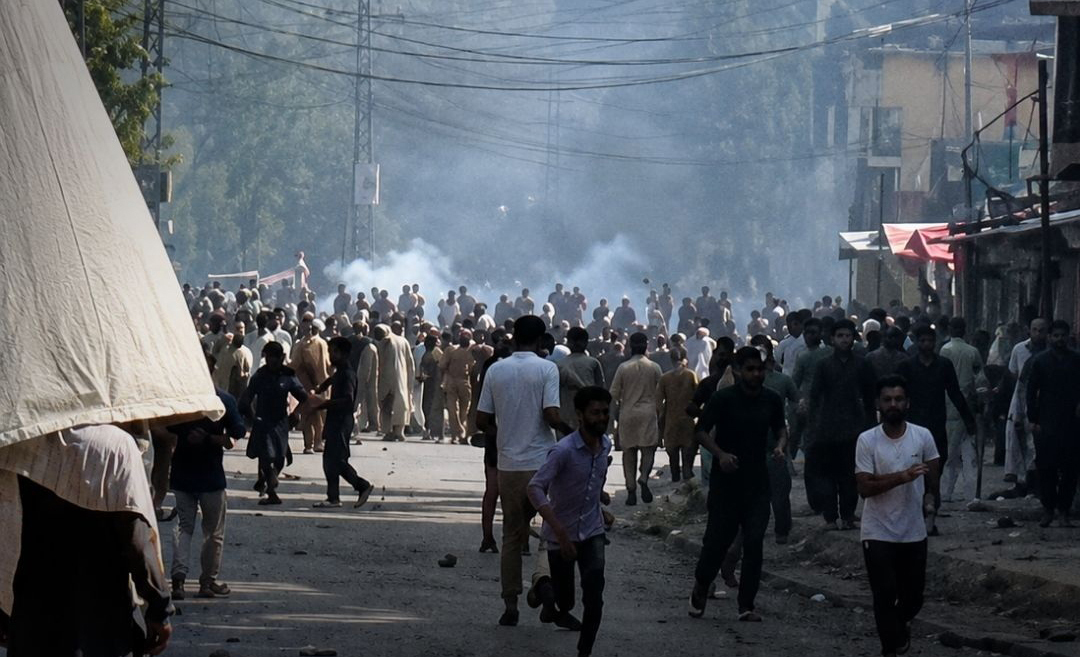
MUZAFFARABAD, June 10: More than 30 people were killed and around 200 others injured in violent clashes between protesters and security forces in Pakistan-occupied Jammu and Kashmir (PoJK) following the ban imposed on the Joint Awami Action Committee (JAAC), a prominent civil society alliance that has led protests over economic and political issues in the region.
Authorities declared the JAAC an outlawed organisation on Friday, citing concerns related to public order and security. The move triggered widespread unrest, with the most intense clashes reported from Rawalakot.
According to reports, tensions escalated after the death of a trader who was allegedly shot during a confrontation with law enforcement personnel on Friday night.
Reuters quoted Rawalakot Commissioner Sardar Waheed Khan as saying that JAAC supporters had gathered outside a hospital mortuary on Sunday, where the body of another group member, who was reportedly killed in police firing, had been brought.
The commissioner said security forces attempted to disperse the protesters, following which JAAC activists allegedly used automatic rifles, petrol bombs and other weapons against law enforcement personnel.
“As a result of the law enforcers’ response, six protesters were killed,” Khan said, adding that several arrests were also made during the operation.
However, local residents and supporters of the JAAC have disputed the official version, claiming that the number of civilian casualties was significantly higher than what authorities have acknowledged.
The violence erupted a day before a planned protest strike called by the JAAC against the reservation of 12 seats for refugees in the July 27 elections to the region’s legislative assembly, where 45 seats are being contested.
The JAAC has strongly opposed its designation as a “terror” organisation, describing the move as an act of oppression. Members of the group maintain that their movement is focused on securing legitimate economic and political rights for the people of the region.
The unrest has further heightened tensions in PoJK, where protests over governance, rising prices, unemployment and political representation have intensified in recent months.
