


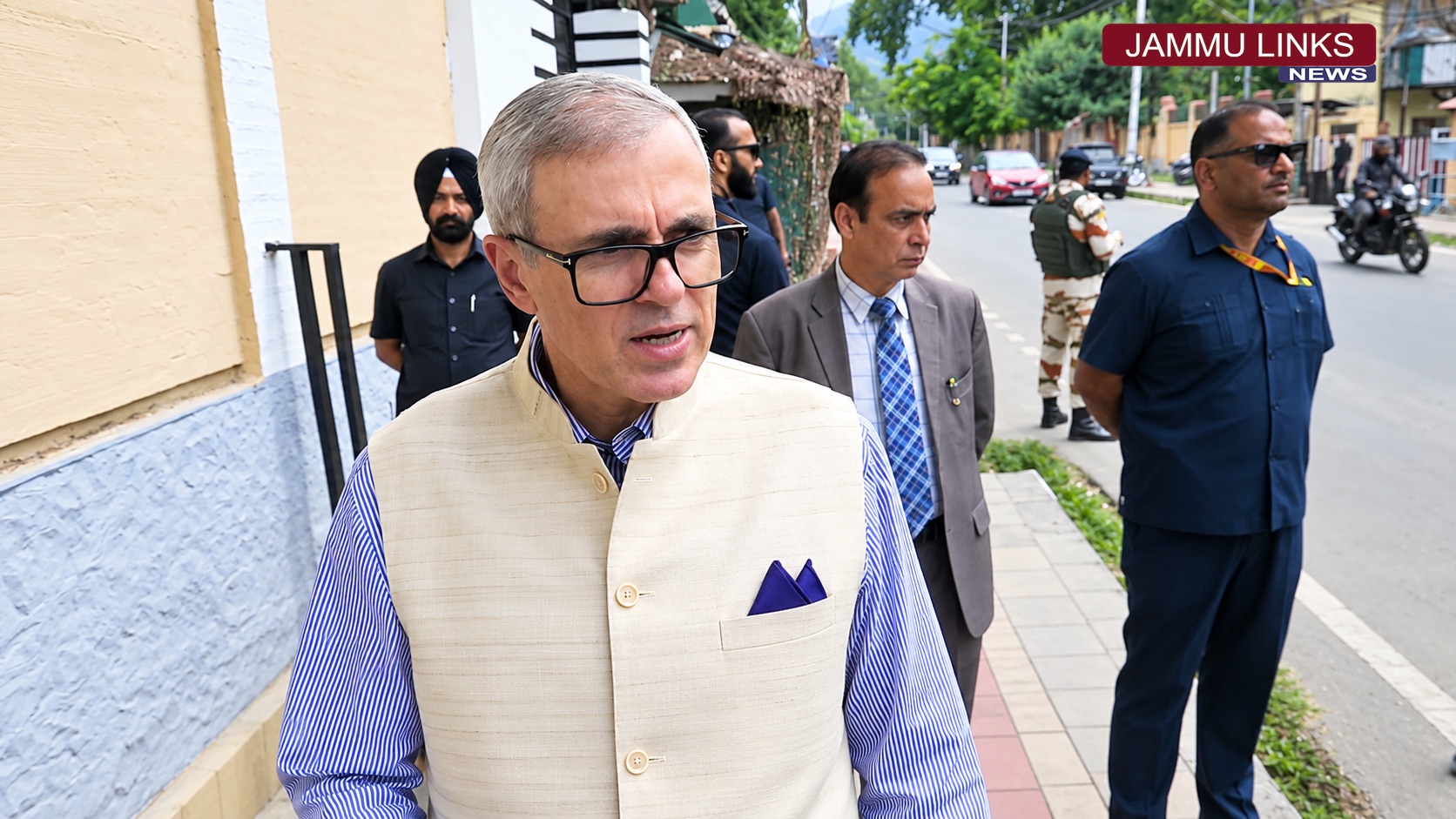
SRINAGAR: Jammu and Kashmir Chief Minister Omar Abdullah on Tuesday challenged the BJP to introduce the Uniform Civil Code (UCC) Bill in Parliament if it has the numbers to secure its passage, questioning the move to pursue the legislation through individual states.
Speaking to reporters in Srinagar, Abdullah said that if the BJP has the required majority, it should bring the UCC before Parliament rather than pursuing it separately through states. He also pointed to reported differences within the NDA, saying some allies were not in favour of implementing the proposed law in their respective states.
“The way their own allies are not in favour of it, I don’t think they will be able to get it passed in Parliament. That is perhaps why they are taking this route,” Abdullah said, accusing the BJP of attempting to bring the UCC “through the backdoor”.
He argued that the law could not be considered truly universal if implemented only in states governed by the BJP, as the party does not govern every state and Union Territory in the country. According to Abdullah, legislation of such a nature should be decided at the national level through Parliament rather than by individual state governments.
The Chief Minister also criticised the BJP over other legislations it had previously spoken about, including ‘One Nation, One Election’ and reservation-related measures, claiming that these had not been brought to Parliament as previously projected.
On the reported de-escalation along the Line of Actual Control (LAC), Abdullah termed the development welcome, saying any reduction in tensions would particularly benefit people living close to the LoC and LAC. He also expressed hope that the situation along the Line of Control would improve gradually.
Commenting on China’s appreciation of India’s foreign policy, Abdullah said India’s foreign policy had always been independent and argued that New Delhi should not seek validation from other countries, whether their comments were favourable or critical.
He said the BRICS summit’s condemnation of the Pahalgam terror attack was itself a significant achievement for India’s foreign policy, particularly as several countries considered close to Pakistan were part of the grouping.
