


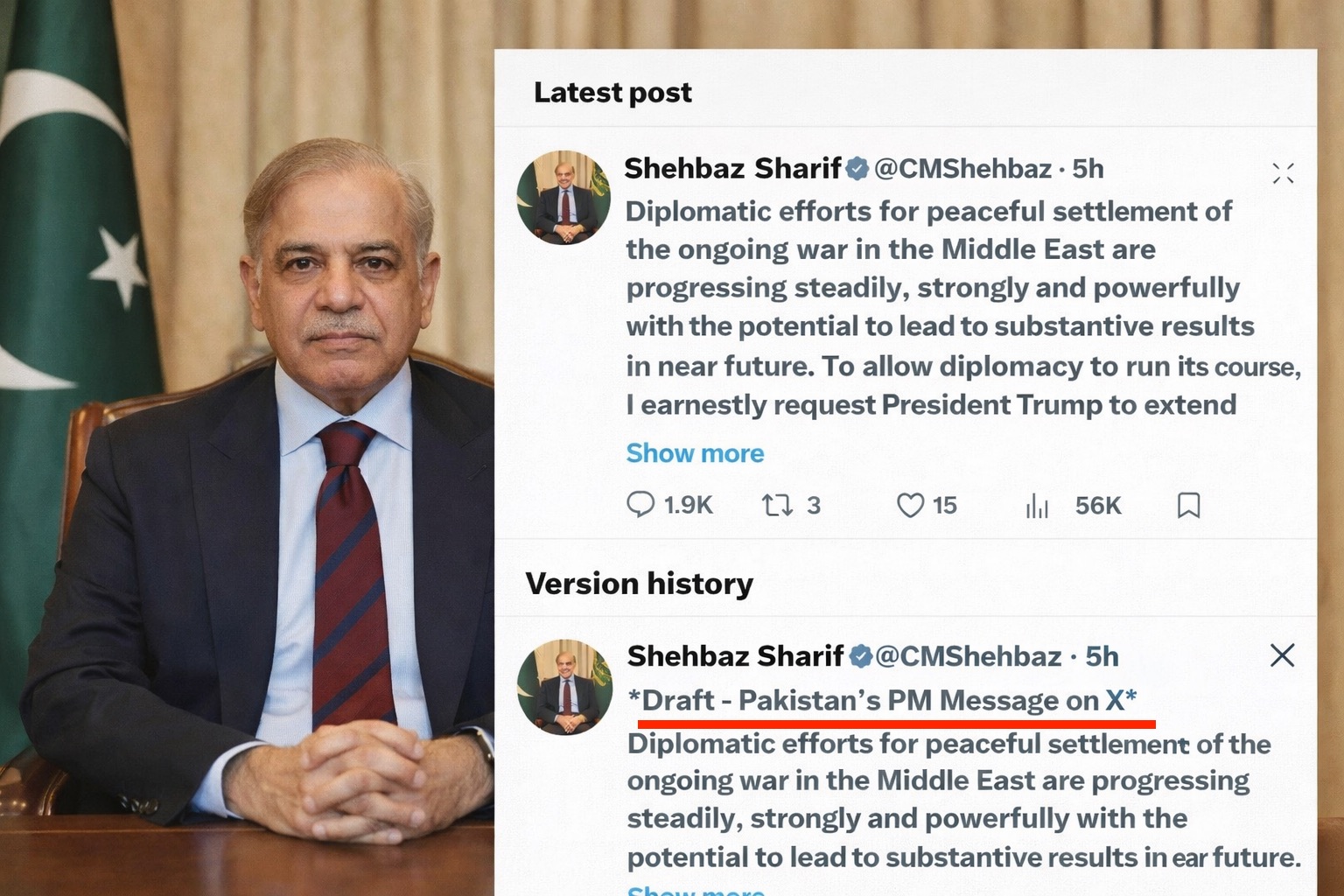
A fresh controversy has erupted around Shehbaz Sharif after social media users flagged what appears to be an edited post on X, raising questions over Pakistan’s diplomatic positioning in the ongoing tensions involving Iran.
Sharif had urged Donald Trump to extend his deadline on Iran, calling for a two-week pause to allow diplomacy to progress. In his message, he also appealed to Tehran to reopen the Strait of Hormuz as a goodwill gesture.
However, the focus soon shifted to the post’s edit history. Screenshots widely circulated online appeared to show an earlier version labeled “Draft – Pakistan’s PM Message on X,” sparking speculation about whether the statement had been pre-scripted.
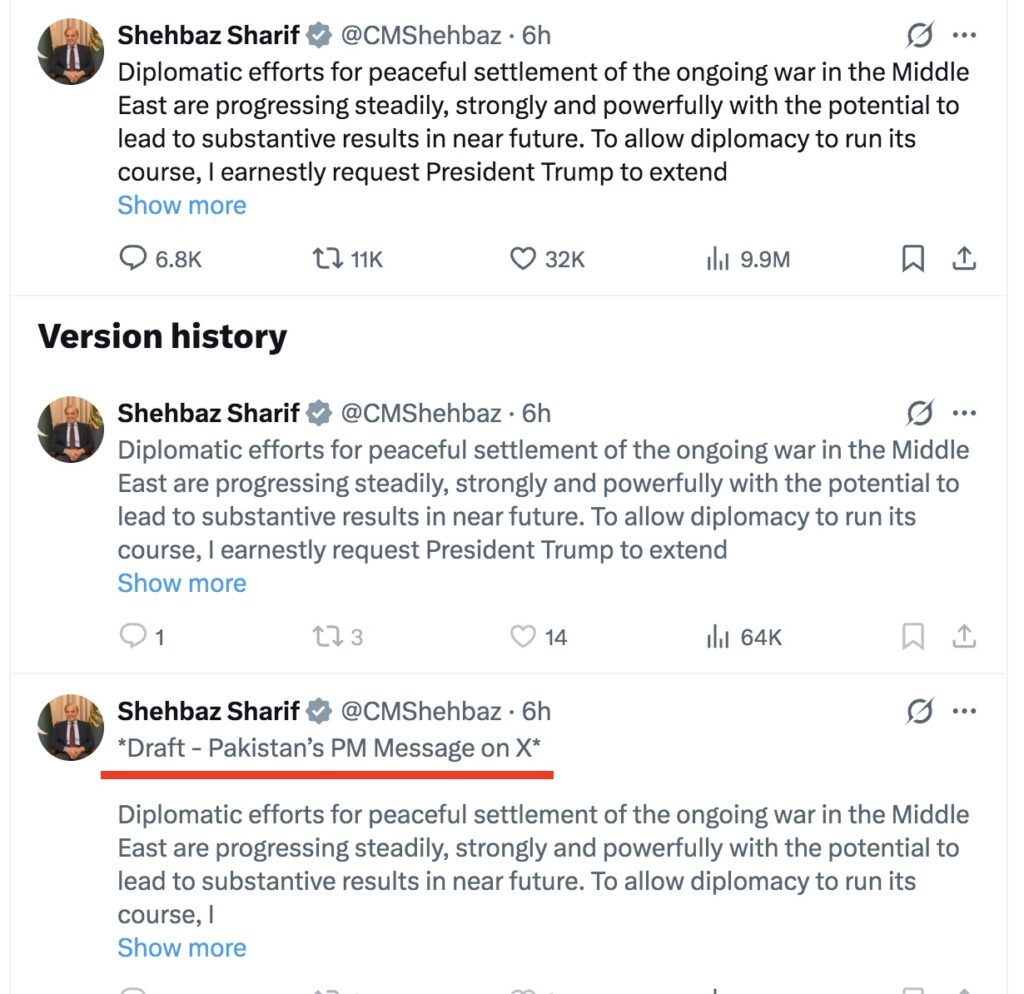
The apparent draft version echoed similar calls for diplomatic engagement and de-escalation in the Middle East conflict. Its presence, however, has fueled debate over the origin and authorship of the message.
Several users on X questioned whether Pakistan’s diplomatic messaging was independently crafted or influenced externally. One viral post alleged that Sharif had “forgotten to remove what looks like a White House instruction,” while another pointed to the phrasing “Pakistan’s PM” as unusual for an internal draft.
Some went further, claiming that the message may have been prepared outside Pakistan, even suggesting undue influence by Washington—though these allegations remain unverified.
There has been no official response from Islamabad or Washington regarding the controversy.
Pakistan has recently positioned itself as a mediator in the crisis, relaying proposals between the United States and Iran. However, no concrete breakthrough has been announced so far.
Sharif, in his original message, maintained that diplomatic efforts were “progressing steadily, strongly and powerfully,” urging restraint and a pause in hostilities to allow negotiations to reach a conclusive end.
As scrutiny intensifies over the edited post, the episode adds a new layer of controversy to Pakistan’s role in the high-stakes diplomatic efforts amid escalating regional tensions.
