


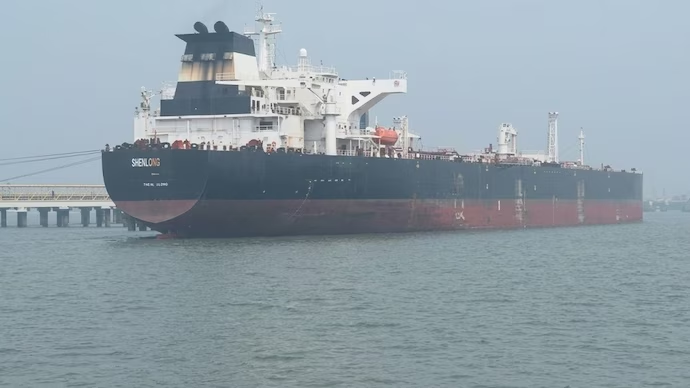
MUMBAI: A Liberia-flagged crude oil tanker captained by an Indian reached Mumbai Port after safely transiting the strategically vital Strait of Hormuz amid escalating tensions in the Middle East.
The tanker Shenlong Suezmax, carrying crude oil loaded at Ras Tanura Port in Saudi Arabia, arrived in Mumbai on Wednesday after receiving clearance from Iran to pass through the narrow waterway, according to the Mumbai Port Trust.
Sources said the development followed talks between India’s External Affairs Minister S. Jaishankar and his Iranian counterpart Abbas Araghchi, after which Tehran allowed Indian oil tankers to transit the Strait of Hormuz. The Liberia-flagged vessel had departed Ras Tanura on March 1 before navigating the sensitive maritime corridor.
The Strait of Hormuz is one of the world’s most critical shipping chokepoints, through which a substantial share of global crude oil and natural gas supplies passes. Regional tensions have escalated after military operations launched by United States and Israel against Iran on February 28, raising fears of disruptions to global energy supplies.
Amid the situation, India — the world’s third-largest oil consumer — has also been exploring alternative sources, including increasing crude imports from Russia.
Meanwhile, India’s Shipping Ministry said that 28 Indian-flagged vessels are currently operating in the Persian Gulf region. Of these, 24 vessels carrying 677 Indian seafarers are located west of the Strait of Hormuz, while four vessels with 101 Indian seafarers are east of the strait.
The ministry said the safety and security of Indian vessels and seafarers are being closely monitored. A 24-hour control room has been functioning at the Shipping Ministry and the Directorate General of Shipping since February 28 to track developments and coordinate assistance.
On Wednesday, a Thai vessel heading to Kandla Port in Gujarat was attacked in the strait, drawing strong criticism from New Delhi.
According to reports, Iran has targeted at least 16 ships in the passage since hostilities intensified in late February. The attacks have included strikes on a container vessel off the coast of Dubai, a blaze near Bahrain International Airport, a drone strike on a major Saudi oil field, and an attack on the port of Basra in Iraq that forced the suspension of oil terminal operations.
Tehran has also warned that global oil prices could surge to nearly USD 200 per barrel, almost double current levels, if tensions in the region escalate further.
