


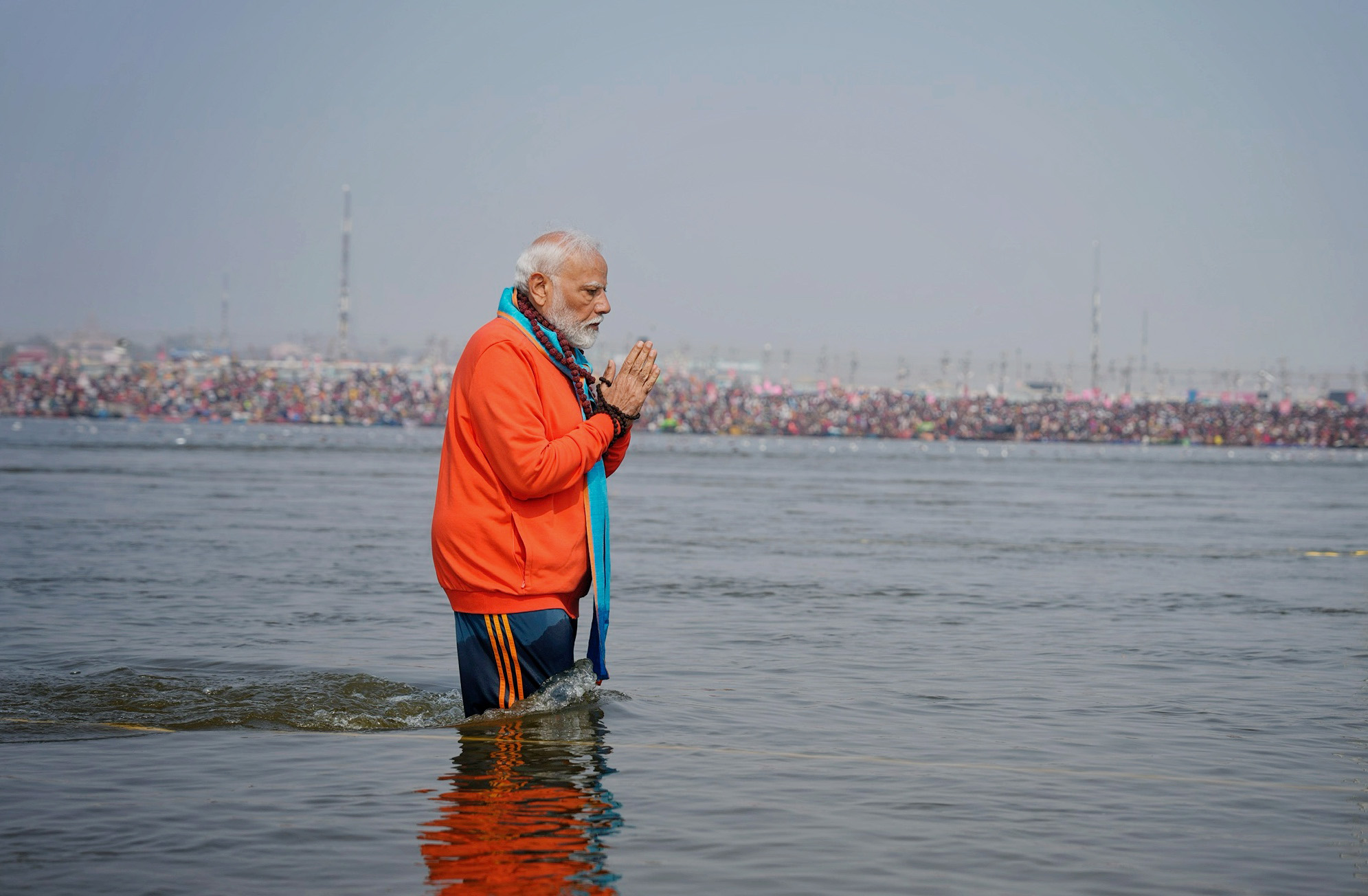
NEW DELHI: From the grand Maha Kumbh in January–February to the launch of year-long celebrations marking 150 years of “Vande Mataram” in November, 2025 proved to be a packed and defining year for the Ministry of Culture.
The year concluded on a high note with Deepavali being inscribed on UNESCO’s Representative List of the Intangible Cultural Heritage of Humanity, a recognition that underscored India’s living cultural traditions on the global stage.
India’s vast cultural heritage was prominently showcased at the Maha Kumbh in Prayagraj through ‘Kalagram’, a cultural hub set up across a sprawling 10.24-acre area in the tent city. Designed as a sensory journey, Kalagram brought together tangible and intangible aspects of India’s heritage, while the Maha Kumbh logo was projected on several centrally protected monuments to mark the occasion.
In November, the Ministry launched year-long celebrations to commemorate 150 years of the national song “Vande Mataram”. The year also saw grand commemorations of the 300th birth anniversary of Ahilyabai Holkar in Bhopal and the 150th birth anniversary of Sardar Vallabhbhai Patel across the country.
The second half of the year brought two major UNESCO recognitions. In July, during the 47th session of the World Heritage Committee in Paris, the ‘Maratha Military Landscapes of India’ were added to the World Heritage List. The listing includes 12 historic forts—Salher, Shivneri, Lohgad, Khanderi, Raigad, Rajgad, Pratapgad, Suvarnadurg, Panhala, Vijaydurg and Sindhudurg in Maharashtra, and Gingee Fort in Tamil Nadu.
On December 10, Deepavali was inscribed on UNESCO’s Intangible Cultural Heritage list, becoming the 16th Indian element to receive the honour. Other Indian inscriptions include the Kumbh Mela, Durga Puja of Kolkata, Garba of Gujarat, yoga, Vedic chanting and Ramlila.
Union Culture Minister Gajendra Singh Shekhawat said the inscription honours “the eternal human longing for renewal, peace and the triumph of good,” adding that while the recognition is an honour, it also carries a responsibility to ensure Deepavali remains a living tradition sustained by artisans and communities.
In December, India hosted the 20th session of the Intergovernmental Committee for the Safeguarding of the Intangible Cultural Heritage at Delhi’s Red Fort—marking the first time the country hosted this key UNESCO meeting.
Looking ahead, the Ministry plans to organise an exposition of holy relics of Lord Buddha in Colombo, Sri Lanka, in February, featuring the Devnimori relics excavated in Gujarat and currently housed at Maharaja Sayajirao University in Vadodara. India has held several such international expositions in recent years, including in Bhutan and Thailand.
Another major milestone in 2025 was the launch of ‘Gyan Bharatam’, a national initiative aimed at preserving, digitising and disseminating India’s manuscript heritage. Prime Minister Narendra Modi launched the Gyan Bharatam portal on September 12, with the initiative culminating in the Delhi Declaration, reaffirming India’s cultural vision in line with Viksit Bharat 2047.
The year also witnessed the closing ceremony of the 150th advent commemoration of Srila Prabhupad, founder of the Gaudiya Mission, held at Science City in Kolkata in February, showcasing artefacts and milestones from his life.
