


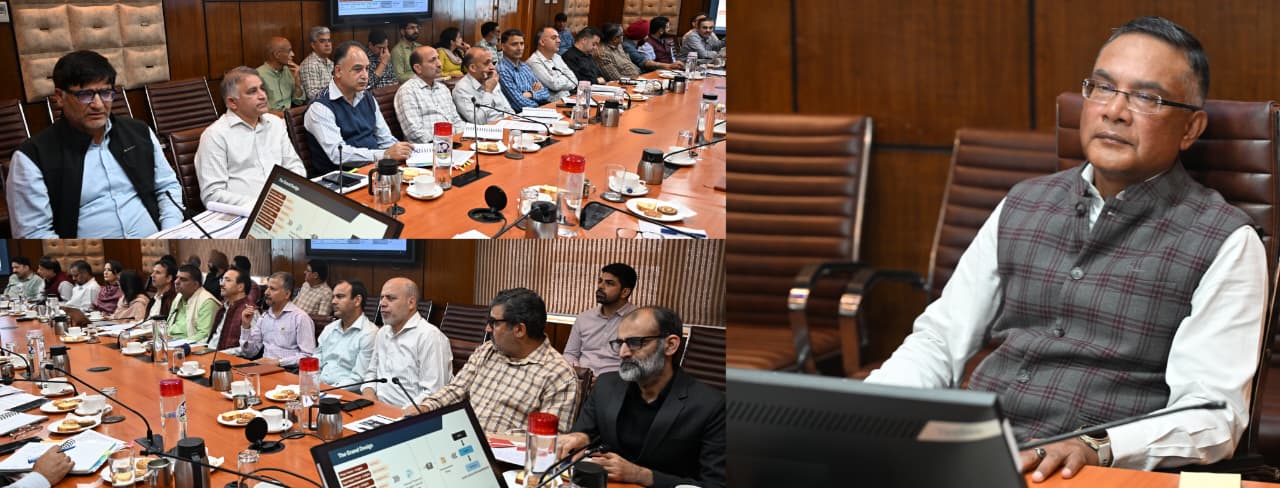
SRINAGAR: A workshop on “SDG Budget Tagging & Outcome-Oriented Financing Framework” was held today at Civil Secretariat, here with the objective of strengthening the linkage between the public expenditure, budgetary allocations and the Sustainable Development Goals (SDGs).
The workshop was presided over by the Additional Chief Secretary (ACS), Finance, Shailendra Kumar and attended by senior officers including DG Budget, DG Codes, DG Resources, DG Audit & Trainings (A&T), Director SDG, Director DED-II, Directors Planning and Directors Finance of various Administrative Departments, besides resource persons from United Nations Development Programme (UNDP).
The event focused on the need to move from SDG monitoring to SDG financing by linking identified development gaps with appropriate schemes, budgetary allocations and measurable outcomes. It was emphasised that SDG Budget Tagging would not involve creation of a separate SDG budget. It would instead bring an SDG perspective to the existing budgetary framework, enabling better assessment of whether public expenditure is addressing the identified development gaps and delivering intended outcomes.
The participants deliberated on mapping of existing UT Schemes, Centrally Sponsored Schemes and Central Sector Schemes with relevant SDG Goals and Targets to promote convergence, avoid duplication and identify financing gaps. The exercise is aimed at strengthening the linkage between resources, expenditure and development outcomes.
Emphasis was also laid on outcome-oriented planning, with departments to prepare SDG-wise Action Plans covering identified gaps, targets, interventions, beneficiaries, responsibilities, resources, indicators and timelines. These Action Plans are proposed to be aligned with the Annual Budget formulation process, so that SDG priorities become an integral part of the regular planning and budgeting cycle.
The workshop also deliberated on integration of the existing SDG Dashboard with IFMIS for improved tracking of expenditure against SDG priorities, without creating any parallel financial system.
The UNDP Team apprised the participants of its proposal covering three broad pillars including Evidence-to-Action, SDG Financing and Institutional & Capacity Building. The proposal is presently under examination.
The workshop highlighted the important role of Master Trainers in operationalising the SDG Budget Tagging framework at the departmental level. They will facilitate departmental sensitisation, scheme and expenditure mapping, outcome-based budgeting and inter-departmental convergence.
The workshop concluded with a clear roadmap to measure progress, identify gaps, plan interventions, converge resources, finance priorities, implement actions and measure outcomes.
The departments will prepare SDG-wise Action Plans aligned with the Annual Budget cycle, along with scheme mapping, sensitisation and integration of the SDG Dashboard with IFMIS.
