


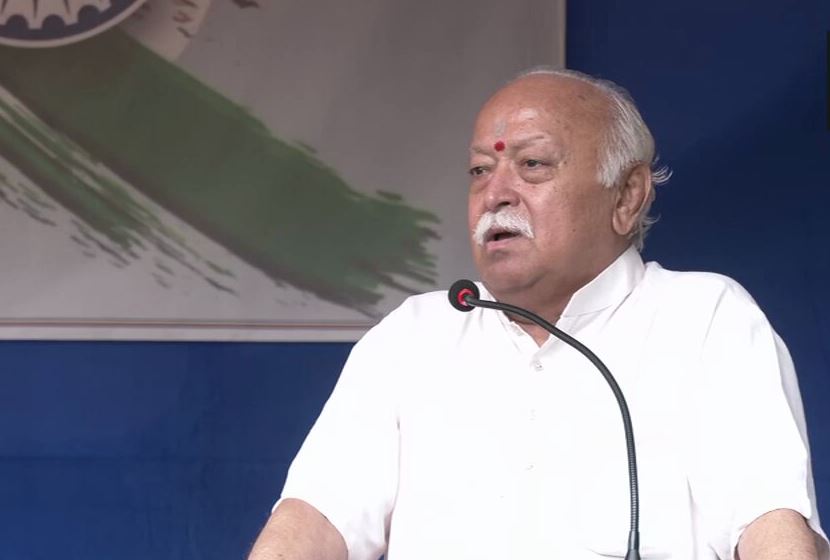
NAGPUR: RSS chief Mohan Bhagwat on Saturday called on citizens to strengthen India’s independence by making the country happy, prosperous and secure so that it can contribute meaningfully to the world and emerge as “Vishwaguru”, while noting that many people and forces are working against this goal.
Addressing a gathering at the RSS headquarters in Nagpur after hoisting the Tricolour on the occasion of the 80th Independence Day, Bhagwat urged people to strengthen the nation without compromising on its core principles and to confront challenges facing the country.
He said Independence Day was a matter of pride and celebration for all Indians. If the freedom struggle was counted from 1857, the country’s ancestors made continuous sacrifices for nearly 90 years to secure independence, he said.
“We feel proud of their sacrifices and are happy that their struggle reached a successful conclusion. But along with this, we must also remember that preserving the freedom achieved through so much effort and sacrifice is our responsibility,” he said.
Citing Hindutva ideologue V D Savarkar, Bhagwat said it was the duty of citizens to ensure that all the noble, progressive and positive outcomes of freedom became part of the nation.
He also spoke about the symbolism of the national flag and said its colours convey important messages that citizens should reflect on while celebrating Independence Day.
According to Bhagwat, saffron represents action, knowledge and sacrifice.
“The freedom of a nation is achieved through hard work and sacrifice, and after independence, these qualities help make the nation prosperous and secure. The saffron colour reminds people of the need for sacrifice and dedication,” the Sarsanghchalak said.
He said that when sacrifice, commitment, hard work and knowledge became part of people’s lives, society remained peaceful and minds became pure.
Bhagwat said the white colour of the national flag represents purity and inspires people to follow discipline while continually examining whether they are adhering to it.
The outcome of these efforts is prosperity, which is represented by the green colour of the national flag, he added.
He also spoke about the Ashoka Chakra and its significance, using it to underline the relationship between individual freedom, social responsibility and discipline.
Bhagwat said individuals were different and could therefore hold different views, but this diversity did not necessarily undermine unity.
“However, this diversity also expresses unity. The Ashoka Chakra has many spokes, but all of them emerge from a single central point,” he added.
He said the wheel represented individual and social awareness, while its spokes were kept within the limits of dharma, or discipline, so that society could function properly.
“That is why we have placed this Dharma Chakra at the centre of our national flag. While hoisting the national flag, we should reflect on the ideas represented by these symbols. We must bring the essence of that reflection into our own lives. This is extremely necessary,” he added.
Bhagwat said there was no doubt that India would remain an independent nation but stressed that the country needed to build prosperity, security and social well-being while contributing to the wider world.
“However, we must make the nation happy, prosperous and secure, and ensure that it makes its rightful contribution to the world. However, many people and forces are working against this goal and stand in our way. However, without abandoning our principles, we must face these challenges across the world and make India a nation that serves as a ‘Vishwaguru’, a guide to the world,” he added.
He called on citizens to remain committed to the country’s core principles while addressing challenges and working towards India’s long-term goals.
Bhagwat said India’s ambition to become a global leader should also be linked to its contribution to humanity.
He added that the country should aspire to become a nation capable of making a meaningful difference in the lives of people around the world.
“This is our duty today. Let us reflect on it with this message,” he said.
