


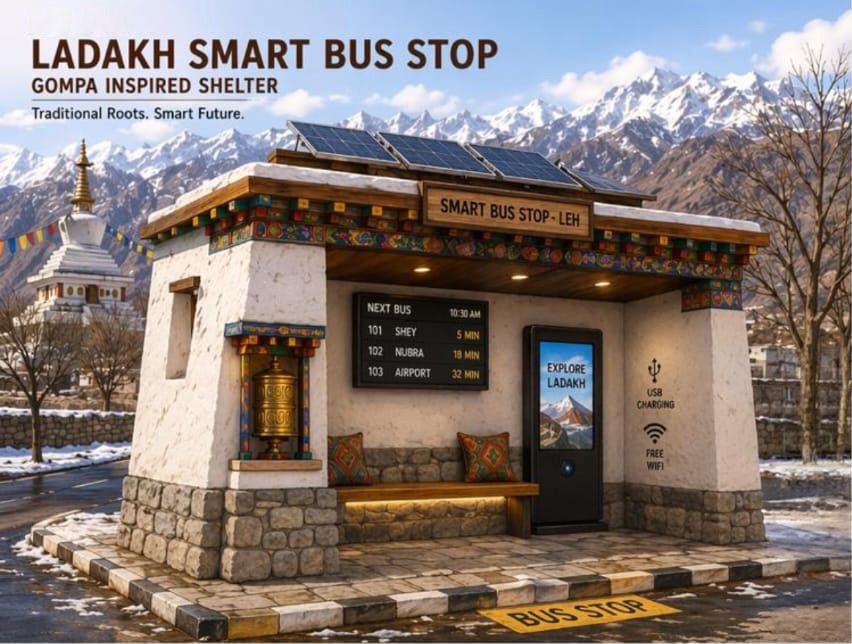
LEH: Leh is set to witness a major upgrade in urban public transport infrastructure with the introduction of 30 Ladakhi Smart Bus Shelters designed to combine modern passenger amenities with the region’s traditional architectural heritage.
Vinai Kumar Saxena has approved the construction of the smart bus shelters in Leh. The project will be implemented by Sindhu Infrastructure Development Corporation Limited.
The bus shelters are architecturally inspired by traditional Ladakhi Gonpas and will incorporate cultural elements such as Shingtsak woodwork, decorative finishes, traditional Pentsak paintings, mud plastering, lime whitewashing, prayer wheels and artistic wall murals.
Officials said the initiative aims to address the shortcomings of existing bus stops in Leh, which currently lack proper shelter, comfortable seating and protection from extreme weather conditions.
The new smart bus shelters will feature GPS-enabled real-time bus information systems, heated seats, Wi-Fi connectivity, CCTV surveillance systems, solar power facilities and SOS emergency response buttons.
Advanced Intelligent Transport System (ITS) and ICT-enabled facilities will include 55-inch Passenger Information Display Systems (PIDS), LED display boards, GPS-based real-time bus tracking and cloud-based estimated time of arrival (ETA) software.
Additional passenger amenities will include mobile and laptop charging stations, first aid kits, emergency oxygen cylinders, fire safety systems, seating arrangements and tactile tiles for visually impaired passengers.
Each bus shelter will also be equipped with a 2 kWp solar photovoltaic system with battery storage, hybrid inverter systems and grid connectivity provisions aimed at reducing carbon emissions and dependence on conventional energy sources.
According to officials, the project was conceptualised by Lieutenant Governor Vinai Kumar Saxena in response to the growing demand for efficient and comfortable public transport infrastructure in Leh, which serves as a major tourist destination and regional hub.
“The initiative aims to transform public transport infrastructure in Leh by creating modern, sustainable and people-centric urban infrastructure while preserving Ladakh’s unique cultural and architectural identity,” Saxena said.
He added that the smart bus shelters would improve passenger comfort during extreme winters and serve as a model for climate-responsive and eco-friendly infrastructure development in high-altitude regions.
One of the key highlights of the project is the incorporation of heated seating, thermally insulated walls and roofs and wind-protected enclosures to help passengers during harsh winter months when temperatures in Ladakh often fall below freezing point.
Officials said the project is expected to improve passenger convenience, encourage greater use of public transport and promote sustainable urban mobility solutions in the climate-sensitive region.
