


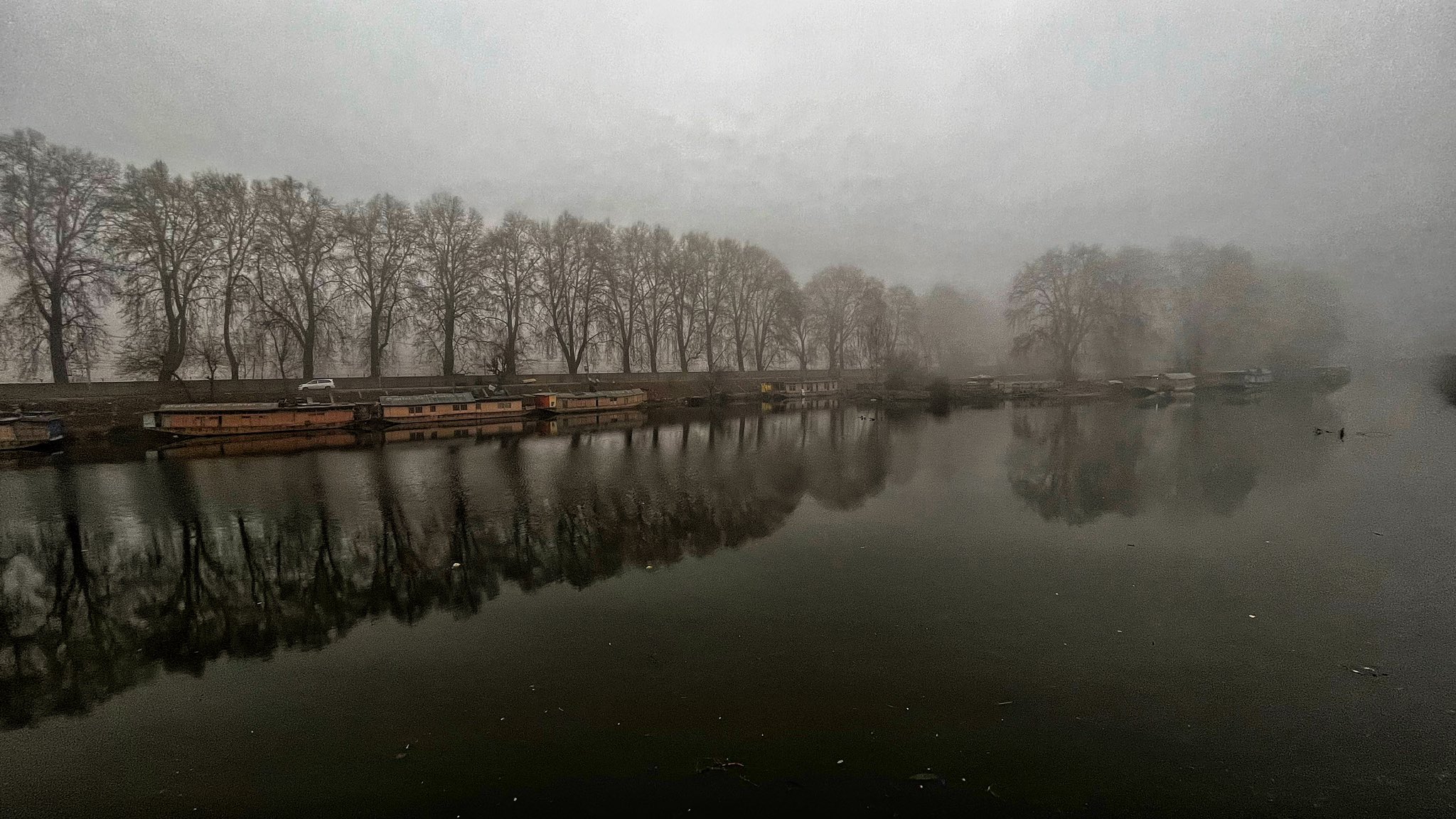
JAMMU: Jammu and Kashmir continues to reel under an extended dry spell, with the rainfall deficit widening dramatically to around 86 percent, triggering widespread concerns over diminishing water levels and heightened forest fire vulnerability.
According to data from the Meteorological Department (MeT), the Union Territory recorded only 6.1 mm of rainfall between November 1 and December 9, against the normal average of 43.1 mm for this period. This marks one of the driest early winter phases in recent years.
The overall deficiency stands at 82.6 percent in the Jammu division and 82.1 percent in the Kashmir division. In Srinagar, the deficit reached 83.3 percent, while Jammu city recorded a shortfall of 71.5 percent.
Several districts show alarming precipitation gaps. In Kashmir, Kulgam and Shopian registered the highest deficits at 90.5 percent each, followed by Ganderbal (88%), Baramulla (87.7%), Bandipora (81.5%), Budgam (77.5%), Kupwara (77.4%), Anantnag (75.5%), and Pulwama (60.7%).
In the Jammu division, Kathua and Kishtwar witnessed a complete 100 percent deficit, while Rajouri (93.5%), Poonch (90.4%), Doda (90.2%), Samba (88%), Udhampur (83.1%), Ramban (72.9%), and Reasi (31.2%) continue to face severe shortfalls.
Water Bodies Recede Sharply
The prolonged dryness has already begun impacting vital water bodies across the region.
The water level of the River Jhelum at Sangam has fallen to -0.59 feet, dipping below the zero-gauge mark.
Several key tributaries are flowing at critically low levels—or have dried up in stretches—including:
- Vaishaw (Khudwani), originating from Kausarnag–Aharbal in Kulgam
- Brengi (Kokernag)
- Sandran and Veth-Vethastu (Verinag)
- Aaripal (Tral)
- Tongri and Romshi nallahs (Pulwama)
The falling levels have triggered drinking water shortages in multiple localities, with officials warning that the situation may worsen if the dry spell persists.
Forest Fire Risk Intensifies
Meteorologists report a rise in forest fire incidents across vulnerable zones in J&K.
“The combination of dry vegetation, lack of moisture, and increased surface heating has created conditions favourable for fire outbreaks,” said independent weather forecaster Faizan Ahmad.
Worsening Outlook
With no significant rain or snowfall expected in the coming week, the water levels are projected to decline further. Experts warn that a continued precipitation deficit could severely impact agriculture, water storage, winter snowfall accumulation, and the overall ecological balance in the region.
Meteorological officials also caution that the cold wave across J&K and Ladakh is likely to intensify, as no major weather system is expected to bring immediate relief.
