


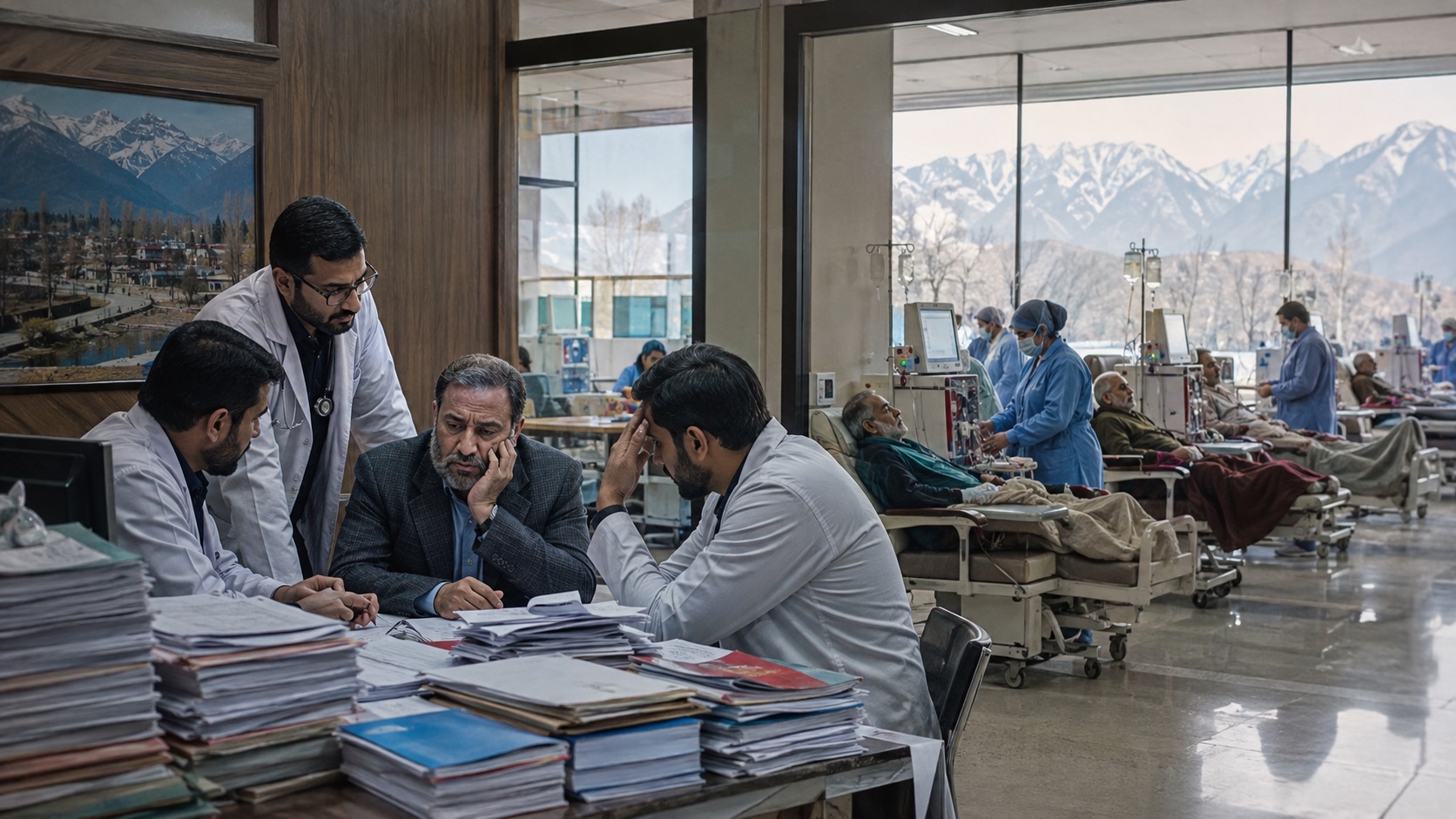
JAMMU: Private hospitals and dialysis centres empanelled under the Ayushman Bharat-Pradhan Mantri Jan Arogya Yojana (AB-PMJAY)/SEHAT Scheme in Jammu and Kashmir are facing a serious financial crisis, with hospital owners claiming that reimbursements have remained pending for the past eight months.
A group of private hospital and dialysis centre owners expressed concern over what they described as a financial breakdown of the State Health Agency (SHA), which implements the Ayushman Bharat/SEHAT Scheme in the Union Territory.
According to the hospital owners, payments due to private healthcare institutions empanelled under the scheme have remained pending for around eight months. They further claimed that salaries of district-level SHA staff have not been released for the past four months.
The owners alleged that incentives and travelling and dearness allowances of SHA staff have also remained pending since 2022, which, they said, reflected an acute shortage of funds with the implementing agency.
They claimed that after around 10 to 15 per cent of the outstanding dues were released about a month ago, further payments were again stopped.
“If the implementing agency itself cannot pay salaries to its own district staff for four months and incentives for years, how can it be expected to pay private hospitals?” one of the hospital owners said, alleging that the situation pointed towards a severe fund crunch in the SHA.
The private hospitals said they were being forced to rely on loans to continue providing cashless treatment to beneficiaries under the SEHAT Scheme.
They warned that prolonged delays in reimbursements were making it increasingly difficult to pay doctors and nurses and maintain critical healthcare services, particularly dialysis facilities.
The hospital owners appealed to Lieutenant Governor Manoj Sinha and the Commissioner Secretary, Health and Medical Education Department, to intervene and ensure immediate release of pending payments.
They cautioned that failure to release funds within a week could lead to a crisis-like situation in private hospitals, particularly dialysis centres, potentially affecting continuity of treatment for patients dependent on such services.
Note: The supplied account mentions eight months of pending hospital payments, while the suggested headline mentions 10 months.
