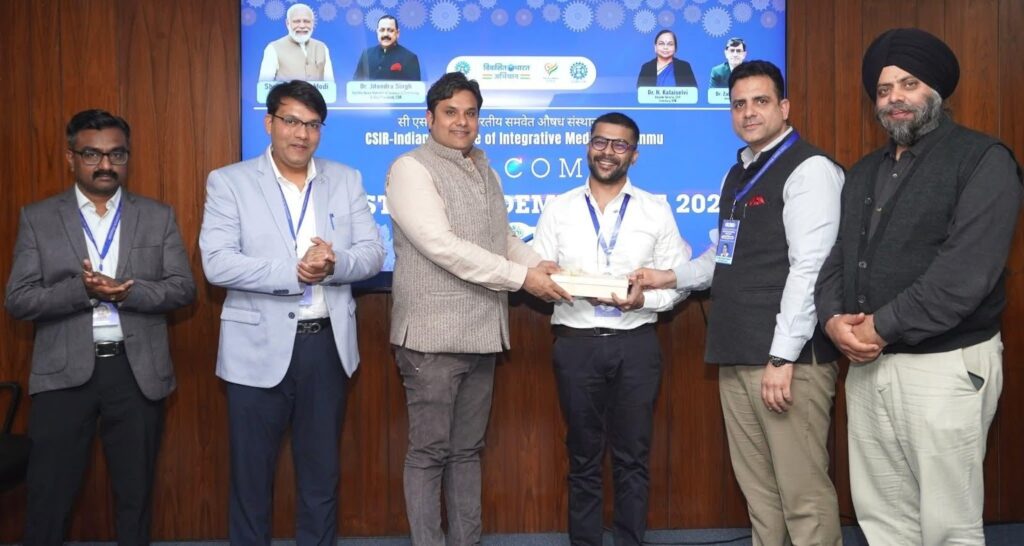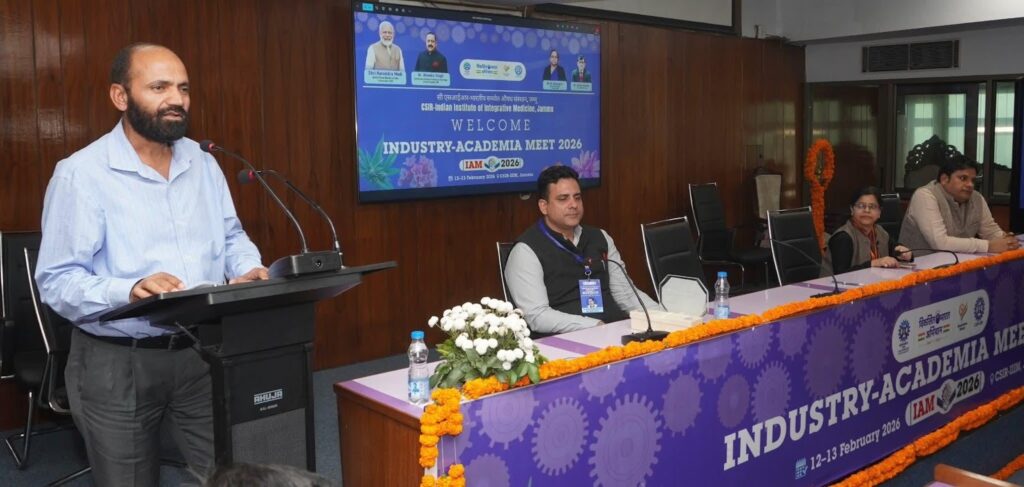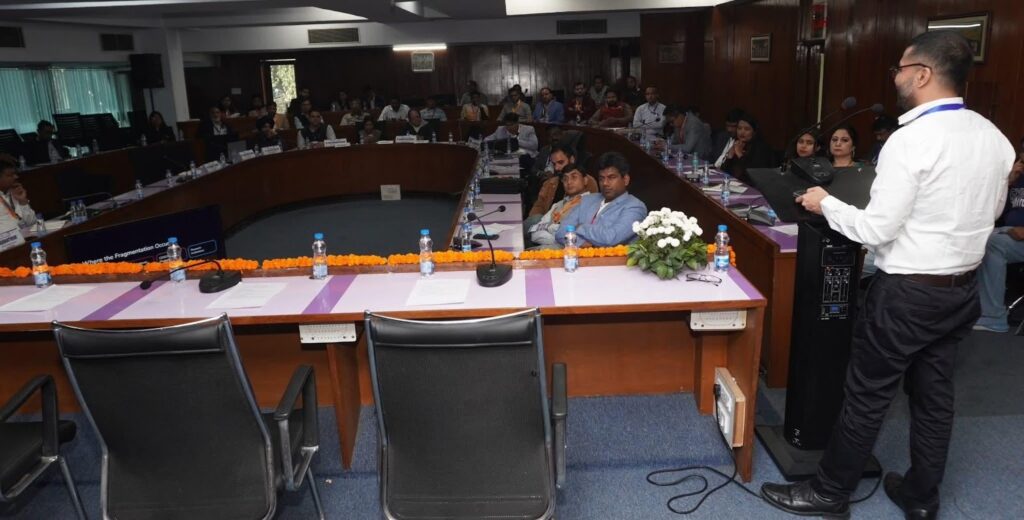


JAMMU: The second day of the Industry–Academia Meet (IAM-2026) at CSIR-Indian Institute of Integrative Medicine featured in-depth deliberations on fermentation technologies, cannabis and hemp policies, and bioprocess scalability, culminating in a valedictory session that laid out actionable recommendations to strengthen India’s biotechnology and pharmaceutical innovation landscape.
The day opened with Session III on “Fermentation Technologies & APIs,” which underscored the importance of stronger industry–academia partnerships in bio-pharmaceutical manufacturing.
Dr. Syed Khalid Ali, Chief Scientific Officer at Panacea Biotech, spoke on bridging the gap between academic research and commercial product development, stressing that early alignment with industry needs can significantly improve translational success.
Joining virtually, Dr. Ishwar Bajaj of Biocon Ltd. highlighted the promise of industry–academia synergy in advancing bio-pharmaceutical manufacturing.
He discussed scalability bottlenecks, process optimisation and the need for robust technology transfer frameworks to move innovations from pilot to commercial scale.
Showcasing in-house expertise, Dr. Asha Chaubey and Dr. Amol B. Gade presented CSIR-IIIM’s core capabilities in fermentation and API development, detailing advanced facilities, microbial platforms and ongoing R&D projects.
The session concluded with a technical panel on bioprocess scalability, APIs, KSMs and technology transfer, with participation from experts representing Zydus Life, Venture Center NCL Pune, Tirupati Group and CSIR-IIIM scientists. Discussions revolved around cost-effective scale-up, domestic API self-reliance and risk-sharing models.
Session IV shifted focus to “Cannabis Policies, Industrial Hemp & Regulatory Hurdles,” reflecting rising scientific and commercial interest in cannabis-based therapeutics. Dr. Vikram Mitra, Co-Founder and Managing Director of Delta Botanicals, presented a policy and market overview, outlining regulatory complexities, compliance requirements and emerging opportunities in medical cannabis and hemp.
Industry perspectives were complemented by Gaurav Mehta of Mehta Ayurvedic Sanstha, who shared practical regulatory experiences and called for clearer, streamlined frameworks. From the academic side, Dr. P.P. Singh detailed CSIR-IIIM’s initiatives on harnessing cannabis for healthcare, highlighting therapeutic research, standardisation efforts and the need for enabling policies. A panel on policy gaps and research enablement also included Divya Padhya from Cannzo India Pvt. Ltd., with discussions focusing on responsible commercialisation and evidence-based regulation.
The afternoon featured parallel breakout sessions that enabled focused, solution-oriented dialogue. The phytopharmaceuticals group examined translational research pathways, clinical validation requirements and strategies for industry collaboration to take products from lab to market. The APIs and fermentation group deliberated on scale-up science, development of critical APIs and KSMs, and structured mechanisms for technology transfer.
These smaller forums allowed direct interaction between researchers and industry stakeholders, resulting in identification of concrete action points, potential collaborative projects and knowledge-sharing pathways.
The valedictory session consolidated the two-day deliberations. Rapporteurs presented summaries of key insights, challenges and collaboration opportunities emerging from each session.
Major recommendations included establishing joint working groups for phytopharmaceutical development, creating shared infrastructure for scale-up and API production, advocating streamlined regulations for cannabis-based therapeutics, promoting co-development and risk-sharing models, and strengthening clinical validation and claims substantiation for AYUSH products.
The programme concluded with a vote of thanks delivered by Er. Abdul Rahim, Chief Scientist & Head of RMBD&IST and Head of the Branch Laboratory, Srinagar, who thanked speakers, industry partners and participants for their active engagement over the two-day meet.
IAM-2026 brought together over 100 participants from pharmaceutical companies, biotechnology firms, academic institutions and regulatory bodies. The meet facilitated multiple MoUs, initiated collaborative proposals and set the stage for continued engagement through follow-up workshops and joint development projects.
The roadmap evolved during the discussions is expected to guide future collaborations in natural products research, fermentation technology and phytopharmaceutical development, contributing to India’s growing pharmaceutical innovation ecosystem.