


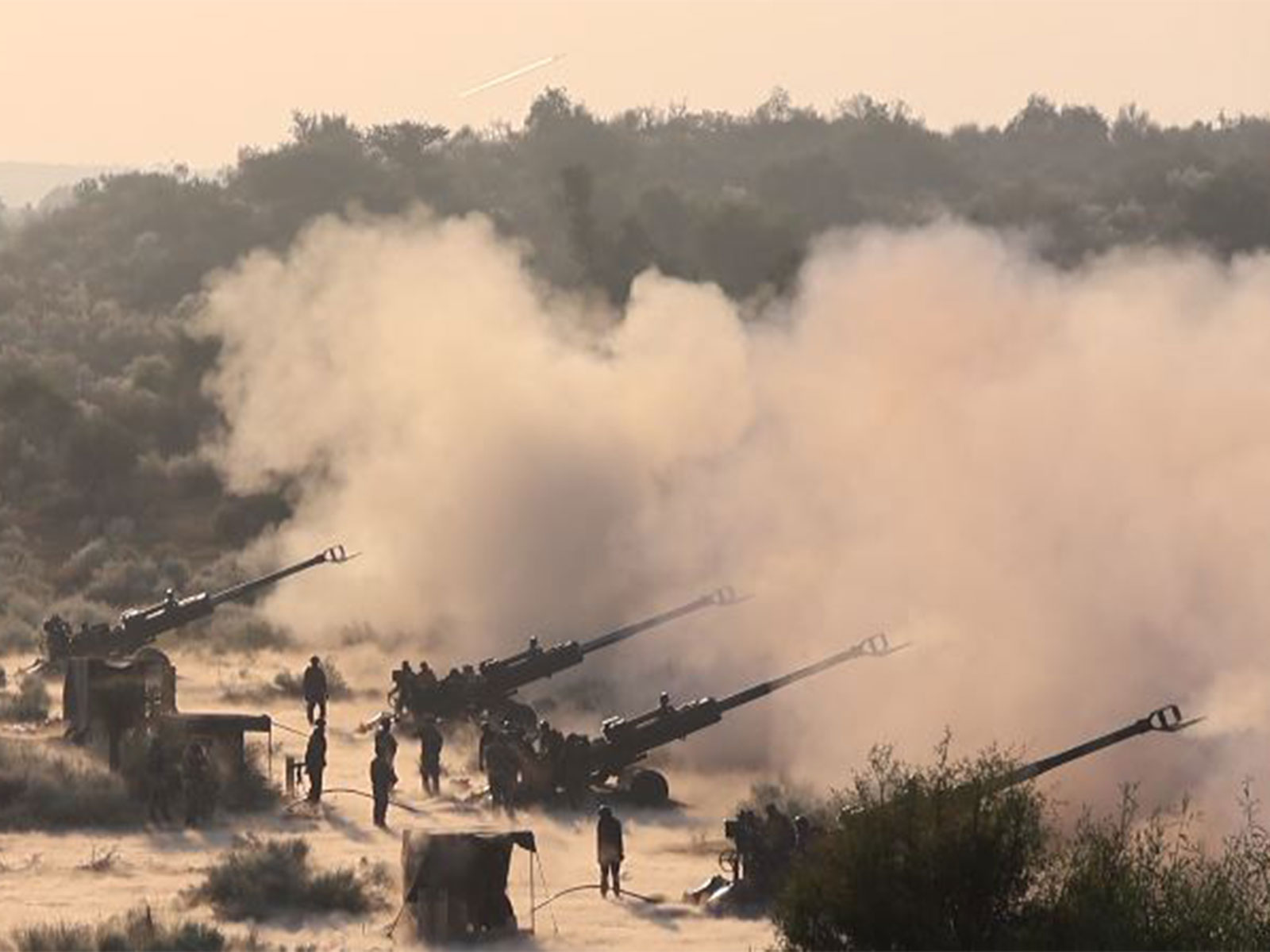
NEW DELHI: The Mahajan Field Firing Range echoed with artillery fire as troops of the Indian Army and the US Army conducted joint firing drills across multiple weapon systems during Exercise Yudh Abhyas 2026, focusing on interoperability, precision and coordination in battlefield fire support.
The joint training featured the M777 Ultra-Light Howitzer, Dhanush artillery gun and Pinaka multi-barrel rocket launcher, while L70 air-defence guns and M-LIDS systems were also employed during the practice sessions.
A key focus was on strengthening interoperability in the planning, coordination and execution of fires. Observation Post teams from both armies trained together in landmark indication, target identification, engagement procedures, transmission of fire orders and correction of fire, providing the troops practical exposure to each other’s gunnery techniques and communication drills.
From identifying targets at Observation Posts to engaging them through different firing platforms, the integrated exercises enabled both contingents to practise the complete chain of battlefield fire support. The drills emphasised precision, responsiveness and coordination while developing a common understanding of procedures required for combined operations.
The joint firing and Observation Post training reflected the practical orientation of Exercise Yudh Abhyas, with soldiers exchanging operational experience, refining interoperability and strengthening their ability to operate together in complex battlefield conditions.
Contingents of the Indian and US armies are currently undergoing intensive joint training across multiple platforms and operational scenarios as part of the exercise. The 22nd edition of Exercise Yudh Abhyas began on September 15 and focuses on combat tactics, joint operational readiness and refinement of tactical procedures between the two forces.
The annual exercise provides troops from both countries an opportunity to train side by side, refine tactics, techniques and procedures (TTPs), and exchange operational best practices across diverse environments.
