


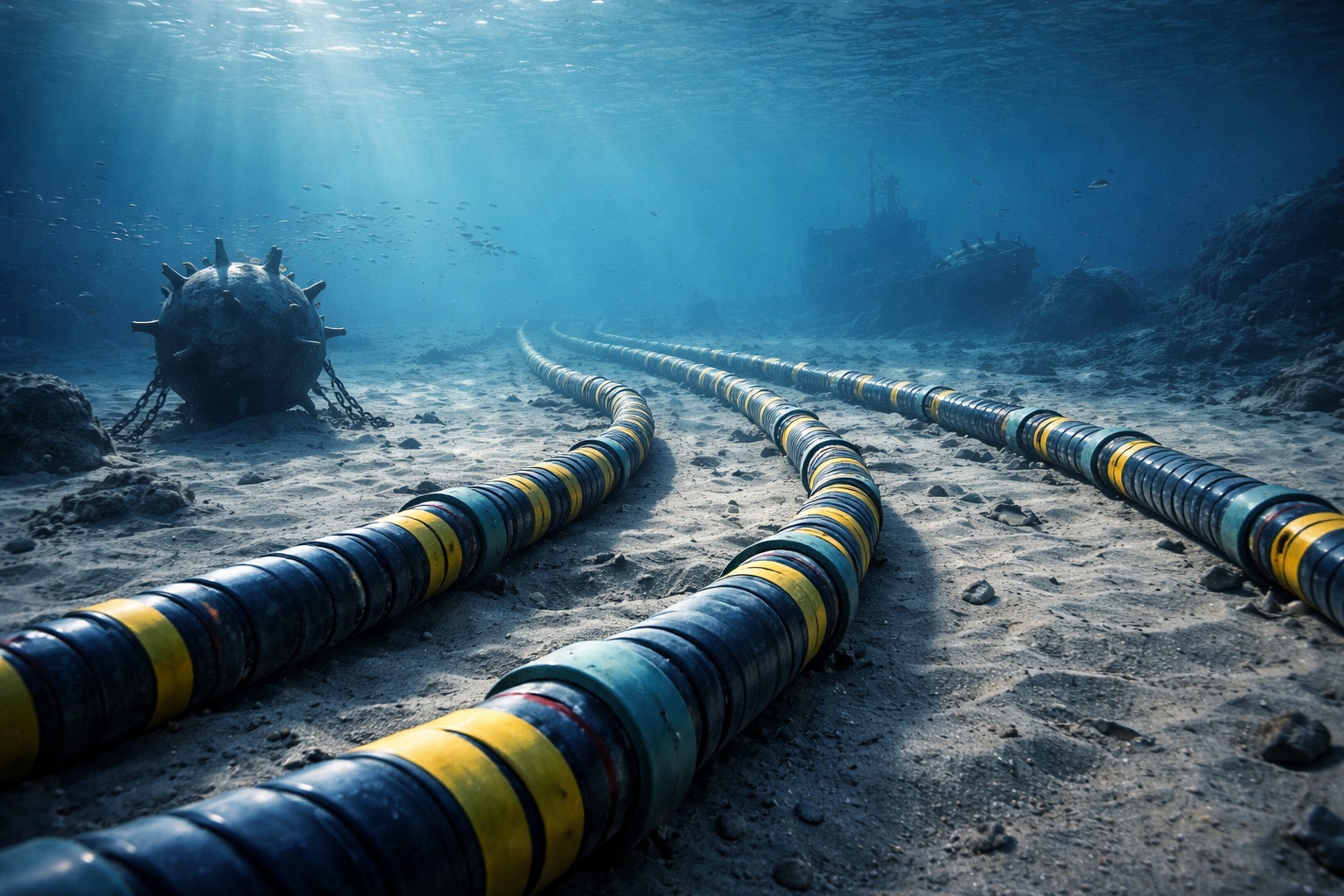
Amid the ongoing conflict involving Iran, Israel and the United States, fresh concerns have emerged over the safety of critical undersea internet infrastructure passing through key maritime choke points.
Tensions have intensified around the Strait of Hormuz and the Bab el-Mandeb, both of which host a dense network of subsea fibre-optic cables that carry the bulk of global internet traffic linking Europe, Asia and Africa.
According to industry estimates, at least 17 submarine cables run through the Red Sea, while key systems such as AAE-1, FALCON, Gulf Bridge International and Tata-TGN Gulf pass through the Persian Gulf region, forming a backbone for international data connectivity, including links critical to India.
The situation has worsened with reported mining of waters in the Strait of Hormuz, disrupting shipping and raising fears of potential damage to these cables. In the Red Sea, Iran-backed Houthi groups have targeted vessels, further heightening risks in another vital corridor.
Experts warn that repair operations in such conflict zones are extremely difficult, as specialised cable-repair ships are unable to operate amid active military threats. Even a single incident—whether accidental or deliberate—could disrupt connectivity for weeks or months.
Past incidents highlight the vulnerability. Attacks in 2024 linked to regional tensions had damaged multiple Red Sea cables, causing internet slowdowns across parts of Asia and Africa and delaying repairs due to security concerns.
The stakes are high, as these cables underpin not just communication services but also banking systems, stock markets, healthcare networks and emerging technologies such as artificial intelligence. Gulf nations would be the first to feel the impact, but countries like India could also experience slower connectivity and rerouted data traffic.
Major tech companies including Amazon, Microsoft and Google have invested heavily in data infrastructure across the Gulf, aiming to transform the region into a global digital and AI hub—an ambition now facing uncertainty amid rising geopolitical risks.
While the cables remain operational for now, analysts caution that simultaneous disruption of both choke points could trigger a significant global internet crisis, with far-reaching economic and technological consequences.
