


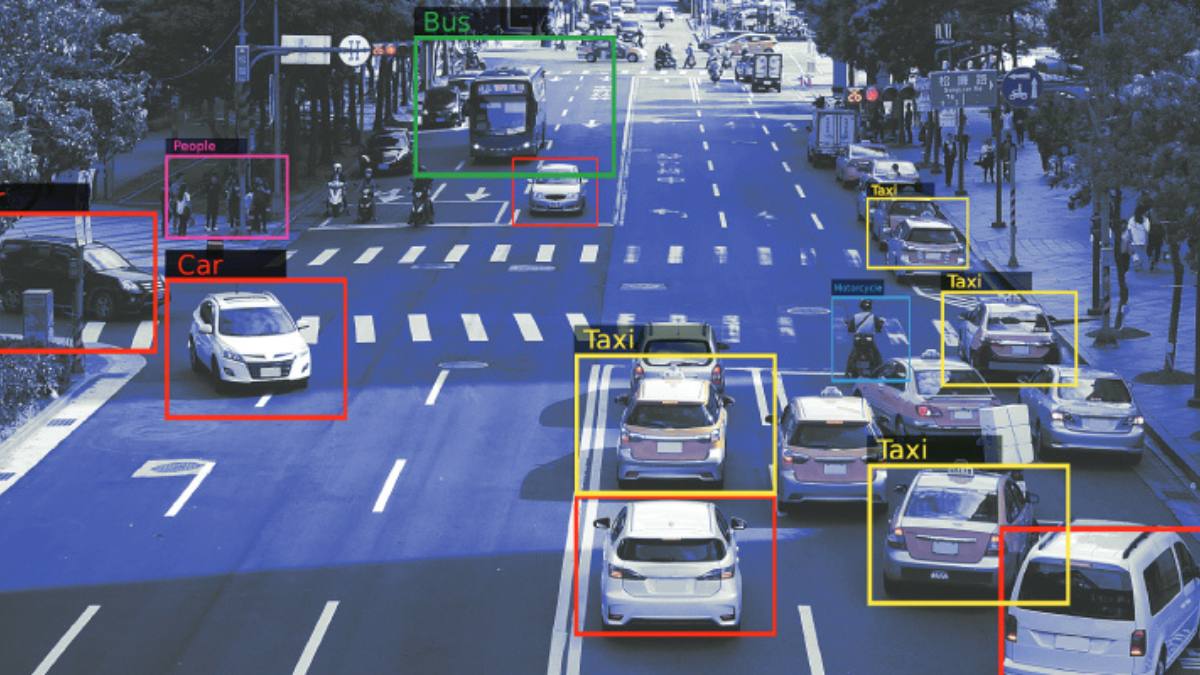
According to the data published by the Indian Government, over 29,000 people died in national highway accidents in the first six months of 2025, which is more than 50% of last year. Besides that, traffic congestion is another serious issue in our country’s traffic management, as Indian cities rank among the top 50 most congested cities in India.
In this environment, problems like accidents, traffic rule violations, and pollution require smarter solutions over traditional, outdated systems. AI-driven Automated Traffic Enforcement Systems (ATES) have become a powerful innovation for improving traffic flow, safety, and even in e challan issuance. Let us go through to know more.
How Automated Traffic Enforcement Systems (ATES) Work?
ATES use a mix of advanced technologies such as high-resolution cameras, Automatic Number Plate Recognition (ANPR), artificial intelligence (AI) tools, and connected software systems.
- The traffic department installs these systems in key areas such as busy intersections, major highways, and accident-prone zones to monitor road activity in real time.
- For example, overspeeding, not wearing a helmet, or jumping a red light, it automatically captures an image and records the details.
- The captured data is then matched with the central vehicle registration database to identify the vehicle owner.
- Once verified, a digital challan is instantly generated and sent to the violator through SMS or email.
Metro cities like Bangalore can use this automatic method to issue Bangalore traffic fines easily and reduce traffic violations.
Key Benefits of Automated Traffic Enforcement Systems
Though humans can be biased when deciding against the offender, the AI will mark each offender and reduce the chance of misses. The key benefits include:
- Continuous and Reliable Monitoring
These systems operate around the clock without fatigue or breaks and ensure uninterrupted traffic surveillance in all conditions.
- Evidence-Based Penalties
Each violation is automatically documented with clear images or video clips that include the exact time and location, making verification simple and transparent.
- Improved Safety and Compliance
The use of automated monitoring has encouraged better adherence to safety measures like helmet use and seat belt compliance.
- Reduced Violations and Accidents
Over time, monitored areas have seen fewer repeat offences and a marked decline in major road accidents, leading to safer roads and more responsible driving behaviour.
- Uniform and Transparent Enforcement
Automated traffic systems promote fairness by applying the same level of scrutiny to every vehicle, removing the chances of human bias or selective policing.
Technology Behind Automated Traffic Enforcement Systems
ATES blends different systems to optimise the congested traffic flow in metro cities:
- Command Centers
Centralised command hubs receive live video feeds and data from across the network. These centres monitor traffic activity, analyse violations, and coordinate enforcement responses in real time.
- AI-Powered Cameras
These cameras have advanced imaging capabilities and capture high-resolution visuals. They can automatically detect various traffic violations, such as overspeeding, red-light jumping, or not wearing a helmet.
- Central Processing and E-Challan Systems
Once the system detects a violation, it cross-verifies the vehicle details against official registration records. The system issues a digital challan, automatically generates it, and delivers it to the violator, eliminating the need for manual handling.
- ANPR (Automatic Number Plate Recognition)
This technology accurately identifies vehicle number plates even in fast-moving or congested traffic. It integrates seamlessly with national databases, enabling tracking of repeat offenders and ensuring enforcement across states.
Which Metro Cities in India are Adopting ATES?
Major metro cities like Bengaluru, Delhi, Pune, Kolkata, and other cities have already opted for the ATES system:
- Bengaluru: Adaptive Traffic Control System (BATCS)
The Bengaluru Adaptive Traffic Control System manages 165 signals across 136 intersections, using AI and sensor-based cameras to study vehicle flow and adjust signal timings in real time.
Its “green wave” coordination helps reduce frequent stops, improving both traffic speed and travel time. City authorities plan to extend this system to another 400 junctions to further ease rush-hour congestion.
- Delhi: Dwarka Expressway ATMS
India’s first Advanced Traffic Management System (ATMS), deployed along the 56.46 km Dwarka Expressway, features 110 high-resolution PTZ cameras and a Vehicle Incident Detection System (VIDES) that tracks 14 types of violations.
The system sends real-time alerts to the NIC e-challan portal, while a central command centre integrates with emergency response systems, VASD, and VMS boards to efficiently handle congestion, accidents, and road hazards.
- Pune: Multi-Corridor AI Traffic Systems
Pune has rolled out AI-powered traffic monitoring across key corridors. On Fergusson College Road, smart cameras detected 742 violations in just 13 days, including double parking, illegal parking, and wrong-side driving.
The Pune Expressway also operates an Intelligent Traffic Management System (ITMS) to track vehicle movement, identify violations, and improve road safety through proactive monitoring.
The Future of ATES in India
From basic traffic signalling control, congestion reduction, to traffic violation detection and evidence-based challan issuance, the AI-powered traffic system is reducing the burden of manual processes.
Though the system may sometimes report false violations, with continuous training on real-time data, it will improve over time.
