


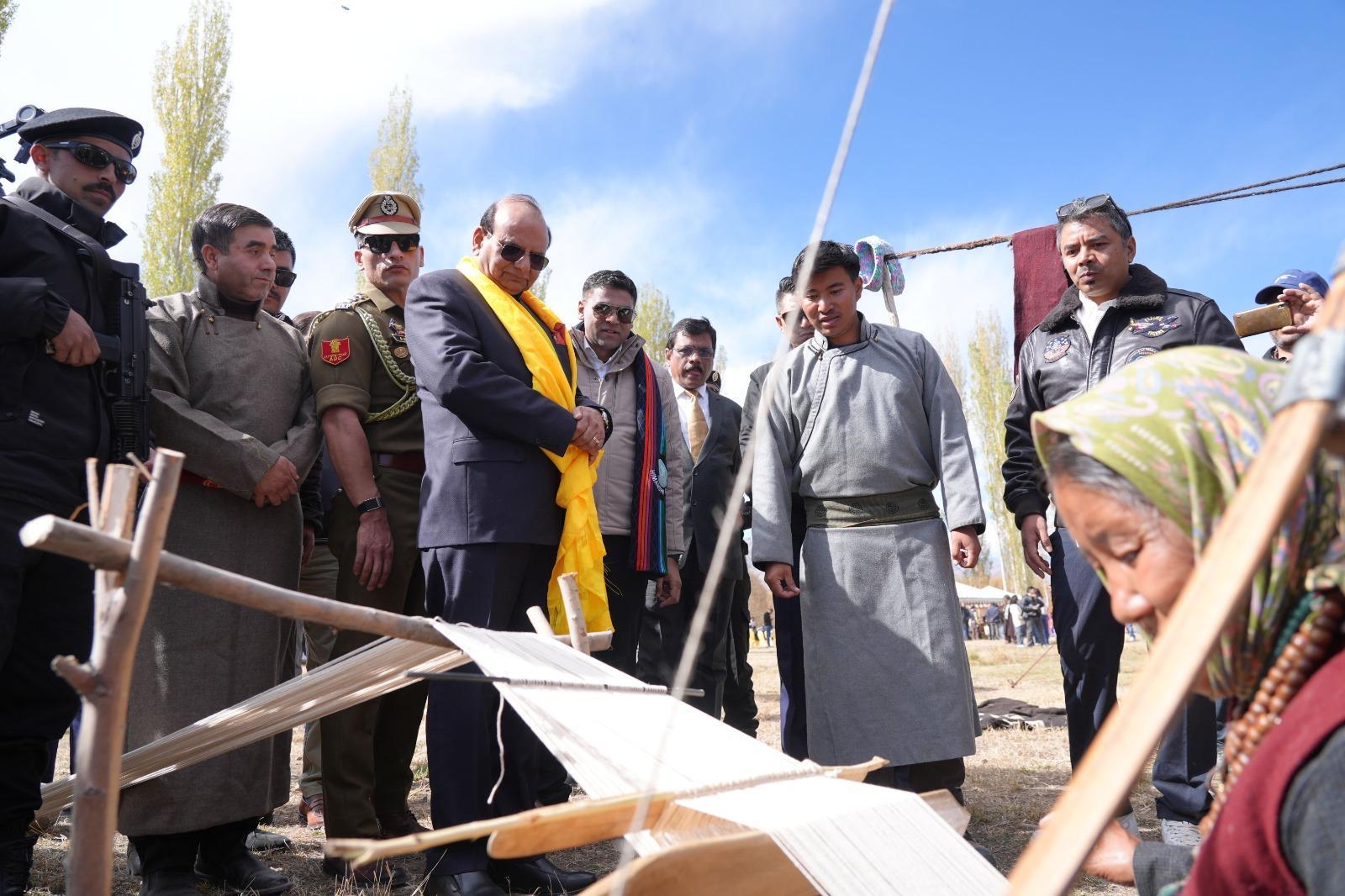
LEH: Lieutenant Governor Vinai Kumar Saxena on Friday inaugurated the two-day Ladakh Pashmina Conclave: Reverse Buyer-Seller Meet in Leh, bringing together herders, artisans, entrepreneurs, industry representatives, designers and buyers to promote Ladakh’s prized “Golden Fibre” in international markets.
Delegates from Mongolia, Japan and Thailand also participated in the conclave, creating opportunities for international cooperation, knowledge exchange and stronger market linkages for Ladakh Pashmina.
On the occasion, a Memorandum of Understanding (MoU) was signed between the Ministry of Textiles, Government of India, and the Department of Industries and Commerce, Union Territory of Ladakh, to strengthen cooperation for the promotion and development of the Pashmina sector. The Lieutenant Governor also released a postal stamp dedicated to GI-tagged Ladakh Pashmina, recognising its distinctive identity, traditional craftsmanship and cultural heritage.
The Reverse Buyer-Seller Meet aims to connect local Pashmina producers and enterprises directly with buyers, textile manufacturers, designers and other market stakeholders. The platform is expected to help producers understand market requirements, showcase their products and explore commercial partnerships, while improving awareness of quality, grading, processing and traceability standards.
Addressing the gathering, Saxena stressed that the recognition of Ladakh Pashmina must translate into tangible economic benefits for the people involved in its production.
“Our vision is clear: Pashmina must be produced in Ladakh, processed in Ladakh, branded as Ladakh Pashmina, and taken to the world from Ladakh,” he said.
He emphasised the need to strengthen local value addition and ensure that the benefits reach Changpa herders, artisans, women-led self-help groups and young entrepreneurs.
The Lieutenant Governor also highlighted initiatives to promote scientific breeding, improve shearing and combing practices, ensure cleaner fibre collection and encourage sustainable pasture management. He said the Administration was working to increase the Pashmina goat population from approximately two lakh to four lakh within three years.
The participation of international delegates added a global dimension to the event, with discussions focusing on traditional pastoral livelihoods, fibre quality, processing techniques, craftsmanship, product design and access to international markets.
Saxena urged delegates from Mongolia to facilitate exchanges of herders, technicians and researchers between Changthang and the Mongolian steppe to share expertise and strengthen traditional pastoral practices.
He also invited Japanese partners to collaborate with Ladakh in precision spinning and finishing, quality certification, traceability, design partnerships with Japanese brands and the development of direct links with buyers in Japan.
Emphasising the scope for international collaboration in the natural-fibre sector, the Lieutenant Governor said, “We are not competitors. We are partners in the story of fine natural fibre.”
The conclave seeks to strengthen Ladakh Pashmina’s global identity while creating better market opportunities and improving economic prospects for the herders, artisans and enterprises that sustain the region’s traditional fibre industry.
