


JAMMU: Parts of Jammu and Kashmir have warmed by nearly 1°C over the past two decades, with high-altitude regions experiencing the fastest rise in temperatures, according to a new study by researchers at the Indian Institute of Technology (IIT) Kharagpur.
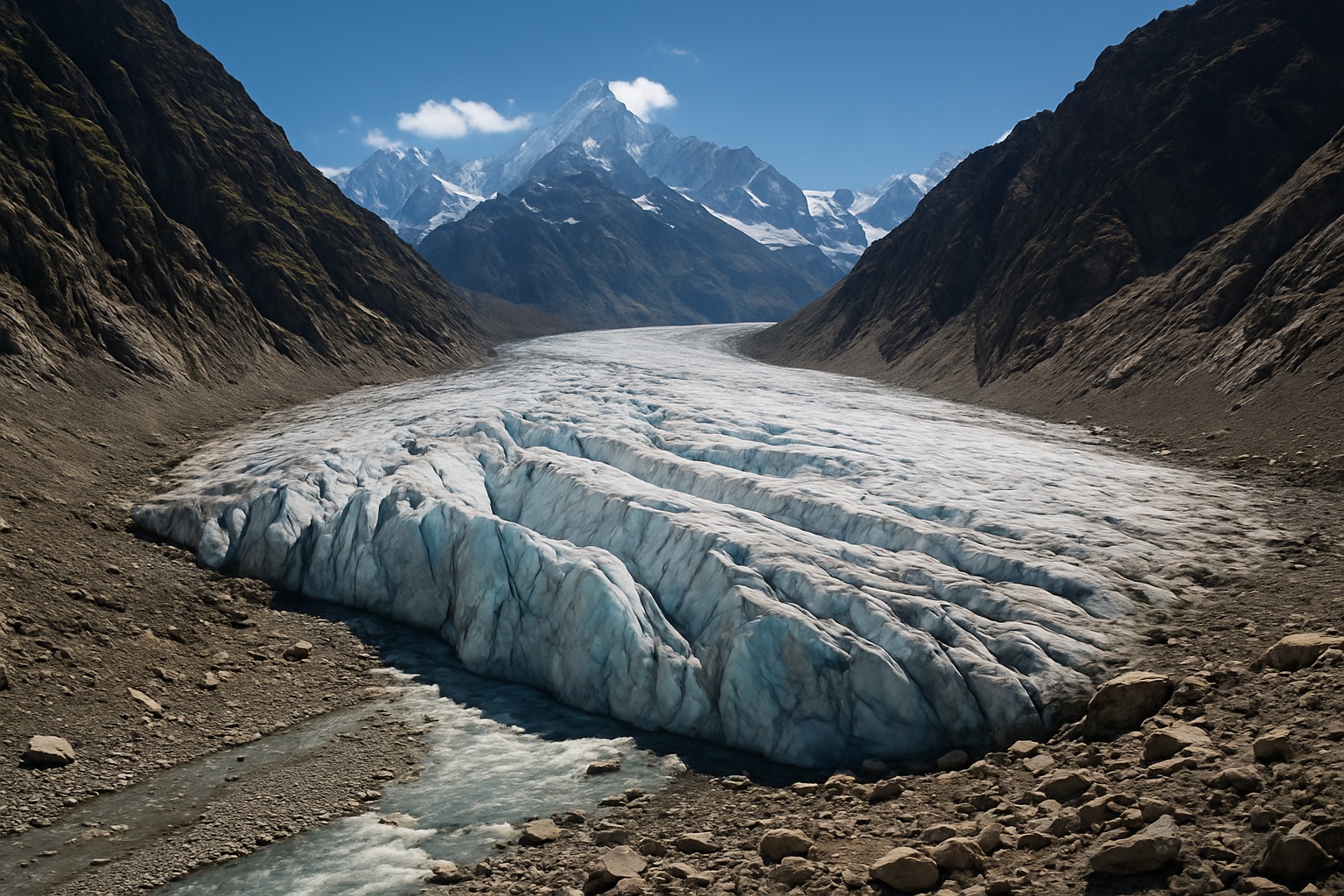
The study, conducted by scientists from the Centre for Ocean, River, Atmosphere and Land Sciences (CORAL), warns that the accelerating warming trend could hasten glacier melt, disrupt river flows and pose a serious threat to water security for millions of people dependent on Himalayan river systems.
The researchers found that mountain towns such as Bhaderwah, Pahalgam and Gulmarg are warming significantly faster than lower-altitude areas like Jammu, highlighting a phenomenon known as elevation-dependent warming, in which higher elevations heat up more rapidly than surrounding plains.
According to the study, average temperatures at some mid-altitude locations have increased by up to 0.3°C per decade, while pre-monsoon nighttime temperatures have risen by as much as 0.6°C per decade. Scientists say warmer nights are particularly concerning because they reduce the natural cooling required to preserve snow and glaciers.
The study attributes the rapid warming partly to the snow-albedo feedback, where shrinking snow cover exposes darker land surfaces that absorb more solar heat instead of reflecting it back into space. Rising atmospheric moisture is also trapping more heat near the Earth’s surface, further accelerating the warming process.
Often referred to as the “Water Tower of Asia,” the Himalayas feed major river systems that sustain hundreds of millions of people across northern India and neighbouring countries. Scientists warn that continued warming could accelerate glacier retreat, reduce seasonal snow storage, alter river flow patterns and increase the risks of floods, landslides and long-term water shortages.
The findings add to growing scientific evidence that the Hindu Kush-Himalayan region is warming faster than the global average, placing one of the world’s most climate-sensitive ecosystems under increasing pressure.
Researchers have called for enhanced climate monitoring, stronger adaptation strategies and timely policy interventions to help vulnerable mountain communities cope with the impacts of climate change already underway.
