


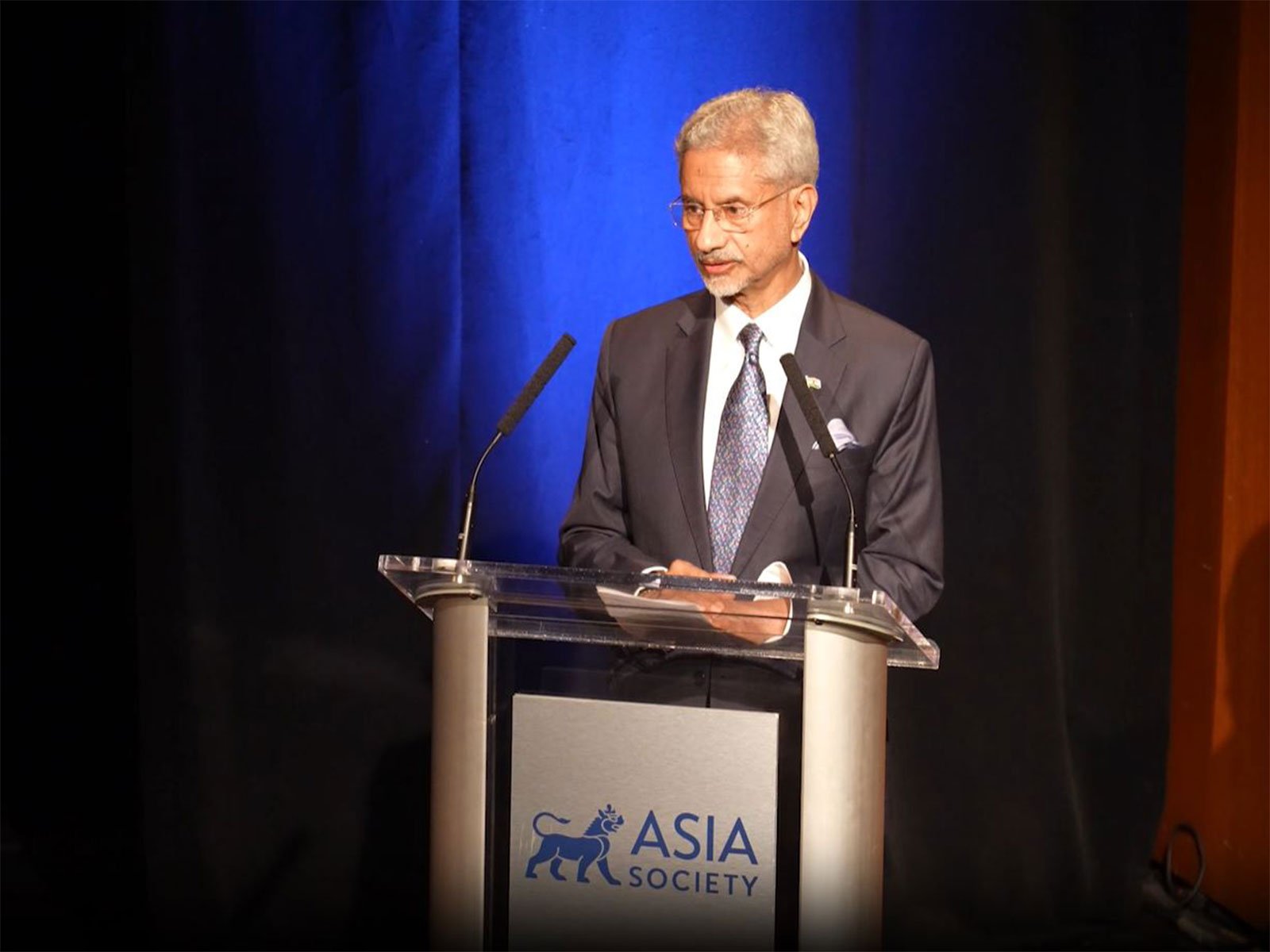
External Affairs Minister S Jaishankar has noted that a trade agreement between India and the US, if finalised, would foster “better” bilateral ties, observing that initial optimism regarding swift progress had been “tested” against a far more intricate ground reality.
Addressing prominent members of the Indian-American diaspora alongside policy experts on Monday during a special interaction hosted by the Asia Society, EAM Jaishankar delivered the remarks as the high-level week of the 81st session of the UN General Assembly wrapped up in New York.
Moderated by former American diplomat and distinguished fellow at the Asia Society Policy Institute Daniel Russel, the discussion featured questions regarding India-US dynamics, specifically revolving around trade and tariff shifts over the past year and the requirements for placing the bilateral association on a “better track”.
Commenting on the broader international climate, EAM Jaishankar stated, “Well, I think if I stand back and look at the relationship,… I note that much of the world has had a more difficult relationship with the US. I mean that may not be a consolation, but that’s a reality.”
Outlining the primary obstacles affecting commercial ties, EAM Jaishankar drew attention to the “stakes” and “complexity” involved, remarking, “Bear in mind, India is a society of small producers, small agriculture producers, small factories. Apart from the per capita gap between India and the United States, the nature of production, nature of society is very different.”
He further observed, “A trade negotiation required a certain amount of … patience and detailing to see it through… The expectation that it could rapidly move forward, I think, was tested against a ground reality which was much more complex.”
Despite these challenges, EAM Jaishankar confirmed that “today, we have reached a situation where there is more or less an understanding on the trade agreement.”
While both nations previously announced the framework conclusion for the first phase of the bilateral pact back in February, subsequent modifications within the US tariff framework necessitated extended dialogue.
Following the US Supreme Court’s decision invalidating reciprocal tariffs enacted under emergency powers, Washington shifted towards an alternate tariff architecture. In July, the US introduced an additional 10 per cent tariff on Indian imports under Section 301 of the Trade Act following an inquiry into Indian measures regarding goods manufactured with ‘forced labour’.
Amid these shifts in the American tariff regime, both countries have maintained ongoing conversations concerning the trade accord.
Referencing statements made by Commerce and Industry Minister Piyush Goyal, EAM Jaishankar emphasised that the core question now involves assessing what has evolved on the American side and determining how the unfolding Section 301 mechanism will impact the agreement.
Addressing the status of the negotiations, EAM Jaishankar stated, “The 301 process is still in the works, it’s still unfolding. So the issue for us is at what point do you close out an agreement which is very, very far advanced.”
He added, “But the period that it took to reach it, that did create bumps last year for the relationship. So presumably, if that agreement is closed out, that would be one point which would contribute to a better relationship.”
Additionally, EAM Jaishankar highlighted that bilateral ties encountered internal pressures shaped by domestic developments inside the US.
Discussing shifts in professional movement, he noted, “For many years mobility was seen as an economic gain. Now, today the economics of mobility and the politics of mobility are at odds with each other.”
He stressed that modern diplomacy extends well beyond conventional state-to-state channels, stating, “In a social media era, there is a very big public opinion factor,” particularly concerning how public sentiment functions within open democracies.
Offering perspective on the forward trajectory of bilateral engagement, EAM Jaishankar stated, “So I think that’s a reality we have to take into account. So yes, we would certainly hope for and expect the relationship to move on an upward trajectory. But I have to be real about the issues that we confront, and to the extent we are able to move ahead on some of these issues, I think we’ll have a better relationship.”
Previously, Commerce Minister Goyal described the bilateral trade pact as “done and dusted,” noting it would advance once Washington extends appropriate competitive advantages to India relative to regional competitors in the American market, including ASEAN nations, China, and Bangladesh.
