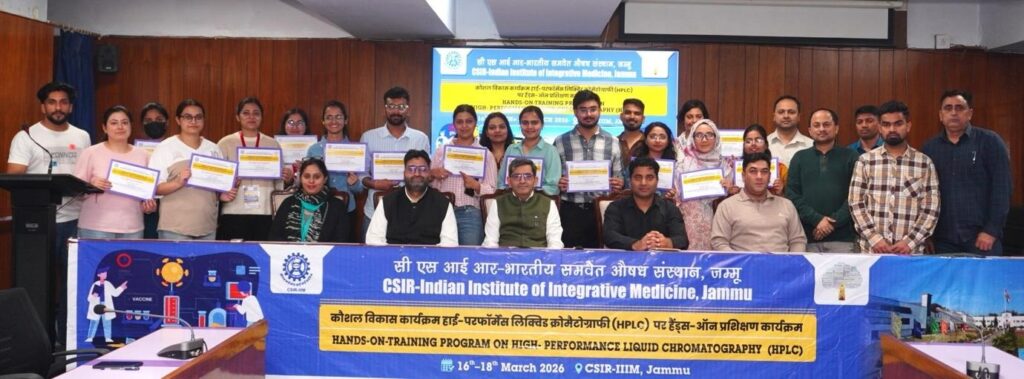


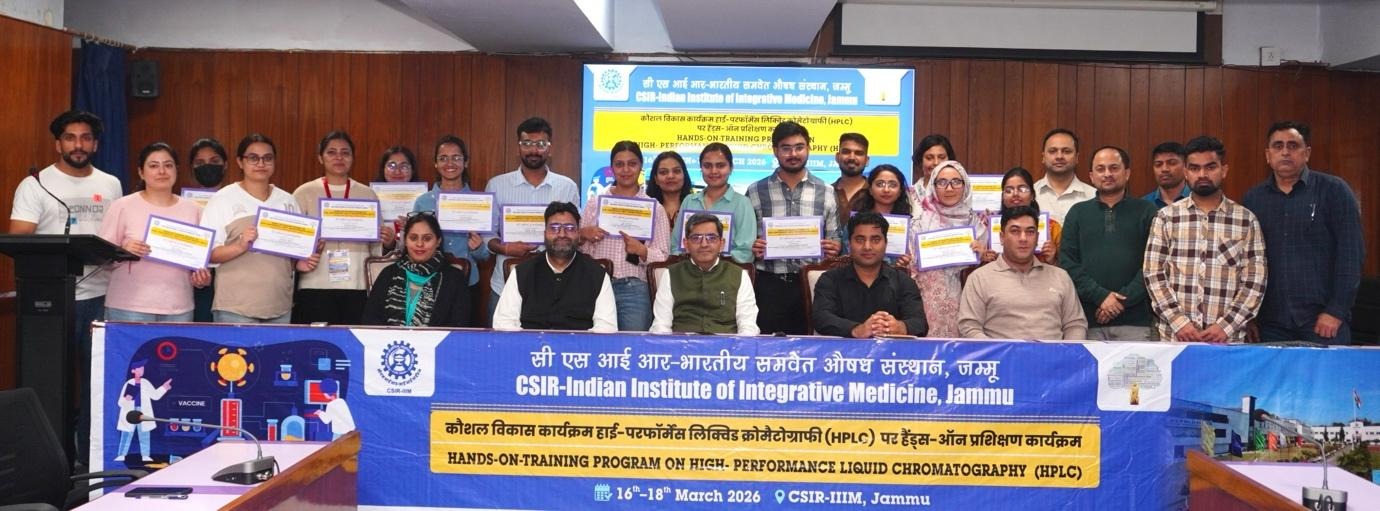
JAMMU: The CSIR-Indian Institute of Integrative Medicine successfully concluded its three-day hands-on training programme on High Performance Liquid Chromatography (HPLC) on Wednesday, aimed at strengthening scientific skills and practical expertise among researchers, scholars and students.
Organised under the CSIR Integrated Skill Initiative, the programme witnessed enthusiastic participation from premier institutions across Jammu and Kashmir and other parts of the country, including AIIMS, SKUAST, Central University of Jammu and BGSBU, among others.
The training, which began earlier this week, focused on bridging the gap between theoretical knowledge and practical application of HPLC—an essential analytical technique widely used in pharmaceutical research, natural product chemistry and quality control of medicinal formulations.
During the valedictory session, Director Dr. Zabeer Ahmed expressed satisfaction over the successful conduct of the programme and appreciated the active engagement of participants.
Reflecting on the feedback received, he noted that while the training was short in duration, it served as a crucial introductory platform for advanced analytical chemistry techniques.
He emphasized that such hands-on programmes are designed not just to impart knowledge but to build long-term scientific collaboration and research capacity.
Highlighting future opportunities, he informed participants about extended training modules ranging from one to six months and encouraged them to stay connected with the institute for advanced learning and research exposure.
Dr. Ahmed also reiterated the institute’s commitment to integrating traditional medicinal knowledge with modern analytical tools to develop globally competitive phytopharmaceutical products.
He assured participants of continued academic and technical support, even beyond the duration of the training.
Providing an overview of the programme, Senior Scientist Dr. Maqsood Ahmed elaborated on the structured learning approach adopted during the three-day training.
He said the first day covered fundamental principles, instrumentation and operational aspects of HPLC, including column selection and system components.
On the second day, participants were given hands-on exposure to operating HPLC systems, including sample preparation, method execution and analysis of plant extracts and other samples.
The final day focused on data interpretation, peak identification, calculation of parameters such as concentration and area, and preparation of analytical reports.
“The objective was to equip participants with practical skills that are directly applicable in research and industry, enabling them to independently handle analytical instruments and interpret results with confidence,” he said.
Participants, while sharing their feedback, described the programme as highly informative and skill-enhancing.
Many appreciated the balance between theory and practical sessions, along with the supportive learning environment at the institute.
Some participants expressed interest in attending longer-duration courses and internships to further deepen their expertise.
A participant from Haryana highlighted not only the academic value of the training but also the welcoming atmosphere at the institute, noting that the interactive environment encouraged open discussion and curiosity-driven learning.
Another participant, a postgraduate student, termed the training as a crucial opportunity for building a foundation in analytical chemistry, particularly for research in phytochemistry and metabolite analysis.
Earlier, Principal Scientist Nasir ul Rasheed welcomed the participants and underscored the importance of such skill-based programmes in enhancing employability and research capabilities.
He also announced plans to organise a dedicated week-long advanced training programme for medical professionals in the coming months, in response to growing demand.
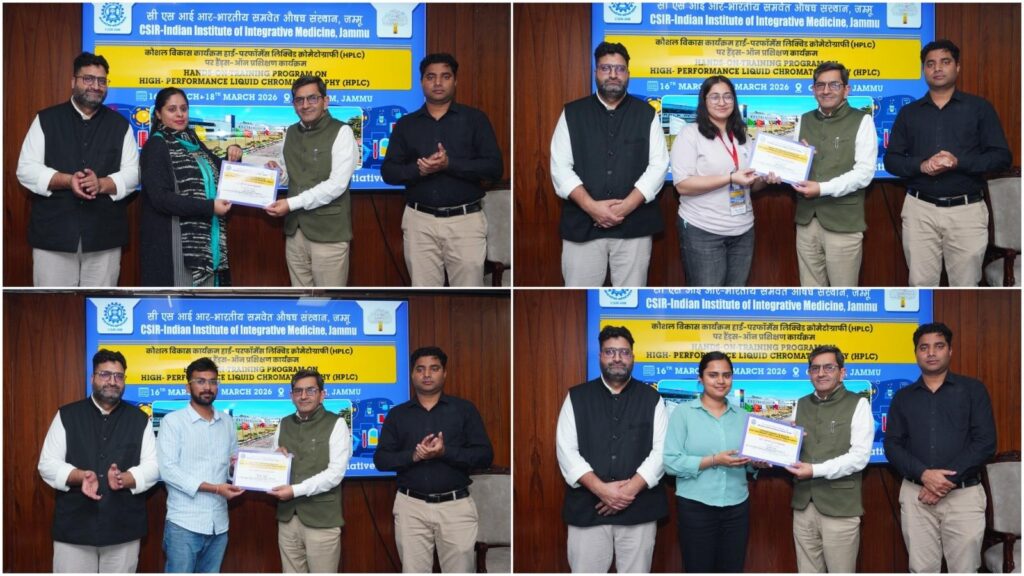
The valedictory session included presentation of certificates to participants, followed by a formal vote of thanks by Dr. Nasir ul Rasheed, who acknowledged the efforts of the organising team and participants in making the training a success.