


SRINAGAR: The Jammu and Kashmir Government is set to introduce a new Media Policy, 2026, aimed at regulating online news platforms and addressing concerns over unregistered social media news handles accused of disseminating misleading or fabricated information.
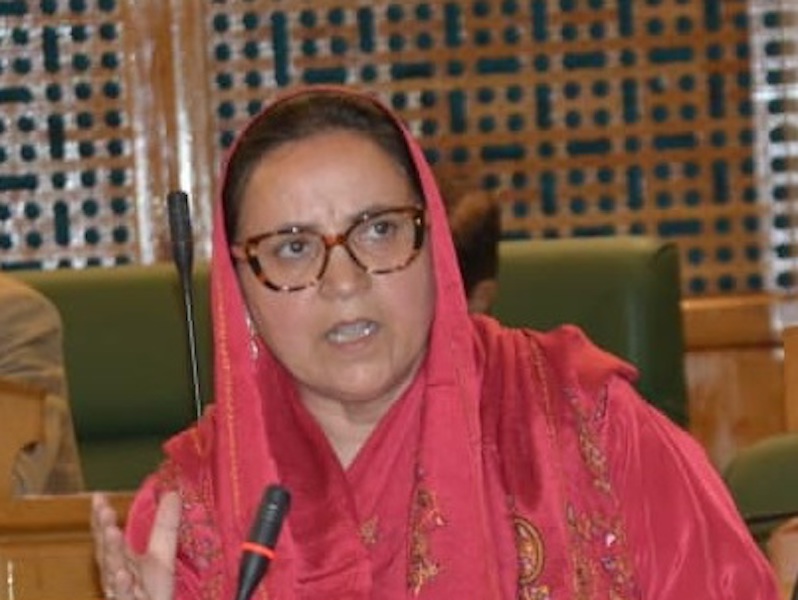
Minister for Information and Public Relations Sakina Itoo informed the Legislative Assembly that the proposed policy would include provisions for the registration and regulation of online news media platforms, along with mechanisms to establish accountability for misleading content.
The issue was raised by MLA Bashir Ahmed Shah Veeri during proceedings on the regulation of social media news platforms. The discussion subsequently widened, with several legislators expressing concern over the growing number of unregistered digital news portals and social media handles.
According to the government, the issue had already been discussed during the previous Budget Session. It said the Information Department would soon issue the New Media Policy, 2026, incorporating provisions for online media alongside the existing framework for print media.
The government further said that, following directions issued during a July 30, 2026 meeting of the House Committee on Government Assurances, comprehensive guidelines and Standard Operating Procedures (SOPs) would be framed. District administrations would maintain lists of unregistered social media news handles operating within their respective jurisdictions.
Action would be taken under applicable laws against individuals or platforms found disseminating false, misleading or fabricated information, the government said, citing provisions of the Information Technology Act, 2000, Bharatiya Nyaya Sanhita (BNS), 2023, and Bharatiya Nagarik Suraksha Sanhita (BNSS), 2023.
Cybercrime centre to coordinate response
The government also informed the House that the J&K Cyber Crime Coordination Centre (JK4C) has been established under the supervision and control of the Director General of Police, J&K.
The centre will coordinate efforts to prevent, detect and investigate cybercrime across the Union Territory.
The Directorate of Information and Public Relations (DIPR) also operates a dedicated mechanism to monitor news published across print, electronic and social media. The government said fake or misleading reports are rebutted through the department’s social media handles, with rebuttals also shared with newspapers and uploaded on the official DIPR website.
Fake news, plagiarism among areas covered
The proposed policy is also expected to cover fake news, plagiarism and unethical or anti-national activities, besides provisions concerning the de-empanelment of media houses and withholding of government advertisements in certain circumstances.
The government referred to the existing legal framework, including the Information Technology Act and the Information Technology (Intermediary Guidelines and Digital Media Ethics Code) Rules, 2021, as well as relevant provisions of the BNS and BNSS.
It also stressed that any regulatory framework would operate alongside the constitutional guarantee of freedom of speech and expression under Article 19(1)(a), subject to reasonable restrictions under Article 19(2).
Regulation debate intensifies in Assembly
The proposed policy triggered a broader discussion in the Assembly, with NC MLAs Tanvir Sadiq, Altaf Kaloo and Bashir Ahmed Shah Veeri calling for greater regulation of unregistered digital platforms.
Speaker Abdul Rahim Rather said the media plays an important role as a bridge between the government and the people, while maintaining that those not functioning professionally should face action under an appropriate legal framework.
PDP MLA Waheed Parra also participated in the discussion, while NC MLA Ghulam Nabi Gurezi supported the need for a legal framework governing social media platforms.
Itoo said political parties and elected representatives themselves had contributed to the rapid expansion of social media by using platforms extensively to publicise their activities.
She also expressed concern over accounts allegedly operating in the names of other individuals and said the growing gap between registered and unregistered journalists had become a concern.
The minister’s remarks came as the government seeks to frame a regulatory mechanism that, according to its stated objective, would strengthen accountability in the digital news ecosystem while retaining the constitutional safeguards governing freedom of expression.
