


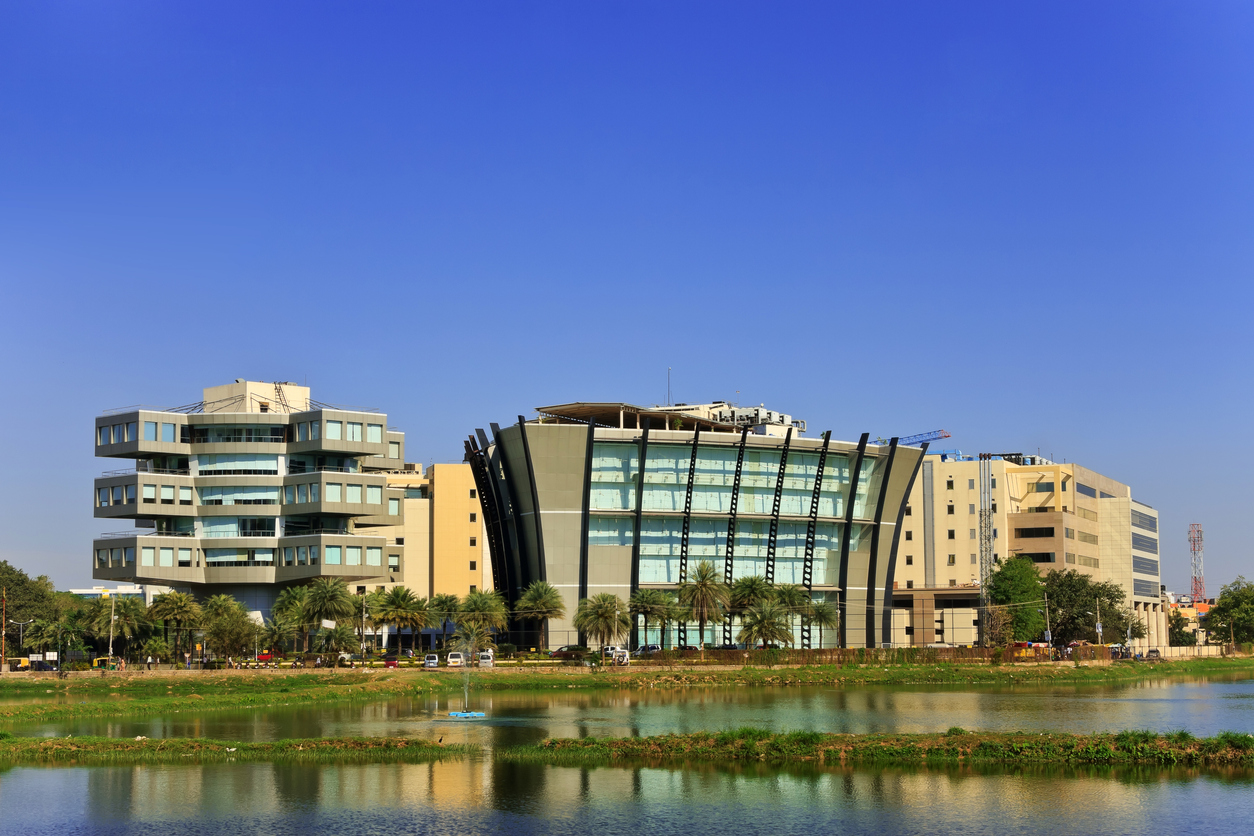
In 2026, there will only be one dominant figure in the commercial real estate space of India. That player is Bangalore. Global companies keep expanding their India operations through Global Capability Centres. As a result, the city continues to pull ahead of every other metro. It leads in leasing volume, tenant quality, and occupier commitment. Anyone tracking Office Space in Bangalore will notice a clear pattern. Demand has not just grown. It has matured. Occupiers now ask for larger floor plates. They want better infrastructure too. Most importantly, they want locations close to talent pools, not just the city centre. This shift is reshaping how developers plan new supply across the city.
The nature of these tenants sets this leasing cycle apart. GCCs are no longer just back-office support units, today, they control worldwide finance, cybersecurity, analytics, and product engineering from its Indian centers. The demand for scalable campuses has changed dramatically because of this shift. Such industrial parks are in great demand by enterprises. They want buildings that meet global certification standards. They also want neighbourhoods where employees can commute easily. Above all, they want a location that supports long term growth. In fact, the steady rise in Managed Offices at Outer Ring Road bookings this year reflects exactly that shift. This explains why the city’s share of national GCC leasing keeps climbing.
The Outer Ring Road Story
No conversation about the city’s office market is complete without this corridor. Managed Offices in Outer Ring Road have become the default choice for many enterprises. Companies use this option when they set up or expand their India presence. The stretch is often called ORR for short. It connects major residential clusters with a dense cluster of technology parks. As a result, talent supply and commercial supply genuinely align here. Companies across banking, healthcare technology, and consumer internet have all signed large deals along this belt recently. This reinforces its position as the benchmark address for serious occupiers.
What tenants see on the ground is corroborated by industry statistics. Vacancy rates in this district are persistently lower than the overall city average. In fact, this corridor alone makes up a large share of the city’s total office absorption, so developers have responded by building large integrated campuses. They favour these over standalone towers. This gives occupiers room to grow within the same address. They no longer need to relocate every few years. Much of the newer ORR Bangalore office space reflects this expansion pattern. It lets a single tenant occupy multiple floors as its team grows.
Why Global Capability Centres Keep Choosing This Market
Several factors explain the steady pull of this location. First, the area offers deep engineering and technology talent within a short commute. Few other Indian cities can match this depth. Second, supporting infrastructure keeps improving. Metro connectivity now reaches areas that once depended entirely on roads. Third, established peer companies already operate here. When a multinational sees its competitors or partners nearby, it feels less risk. So, it chooses the same neighbourhood too. This creates a critical mass effect that drives more tenants to this area.
Moreover, there is another, equally compelling aspect that is often overlooked. Occupiers increasingly prefer flexible or managed formats over long term leases. This is especially true when they test India as a new market. It also helps when they scale teams quickly. Ready to move workspaces speed things up. Built to suit floors and hybrid lease structures do too. Companies can expand seats without construction delays and because of this, ORR Bangalore office space appeals strongly to occupiers who need speed and scale. Many buildings here are already fitted out. So, tenants can move in almost immediately.
Grade A Supply and What Occupiers Actually Want
Quality now matters as much as quantity in this cycle. The newest Managed Offices in Outer Ring Road properties clearly reflect this shift. Tenants no longer settle for basic floor plates. Instead, they ask for green certified buildings. They want wellness amenities and ample parking too. They also want floor plates large enough for several hundred employees under one roof. Developers along this corridor have adapted quickly. They now deliver campuses with sustainability credentials, integrated retail, and infrastructure built for large technology and financial services occupiers.
This shift has changed how Office Space in Bangalore gets planned across the wider city. Even markets outside the traditional GCC belt now try to match this formula. They offer larger floor plates and better amenities to compete for attention. Still, the original corridor holds its lead. Part of this comes from its first mover advantage. Part of it comes from the ecosystem around it. Retail, residential, and educational facilities have all blossomed alongside the office space. The combination of these three is challenging for emerging corridors to replicate.
What This Means for 2026 and Beyond
Analysts predict that for the remainder of the year and beyond 2027, this trend will continue to dominate. Global Capability Centres will likely continue to expand their footprint in India. A large share of that growth will probably land in this city. That is because it already has a strong base of established centres. Occupiers who delayed decisions during earlier uncertainty are now moving ahead. Often, they take up ORR Bangalore office space in phases. This helps them match hiring timelines instead of committing to one large block upfront.
For companies still deciding where to place their next centre, the data points one way. As more multinational firms deepen their India strategy, this stretch of the city will likely stay the first stop for site selection teams. Its performance through 2026 will probably set the tone for the rest of the country’s commercial real estate market too. There is no sign of this growth slowing down.
The broader takeaway is simple. Bangalore is not leading by accident. It has built the talent pool, the infrastructure, and the supply pipeline that global occupiers need. Every fresh transaction involving Office Space in Bangalore only strengthens that position further.
