


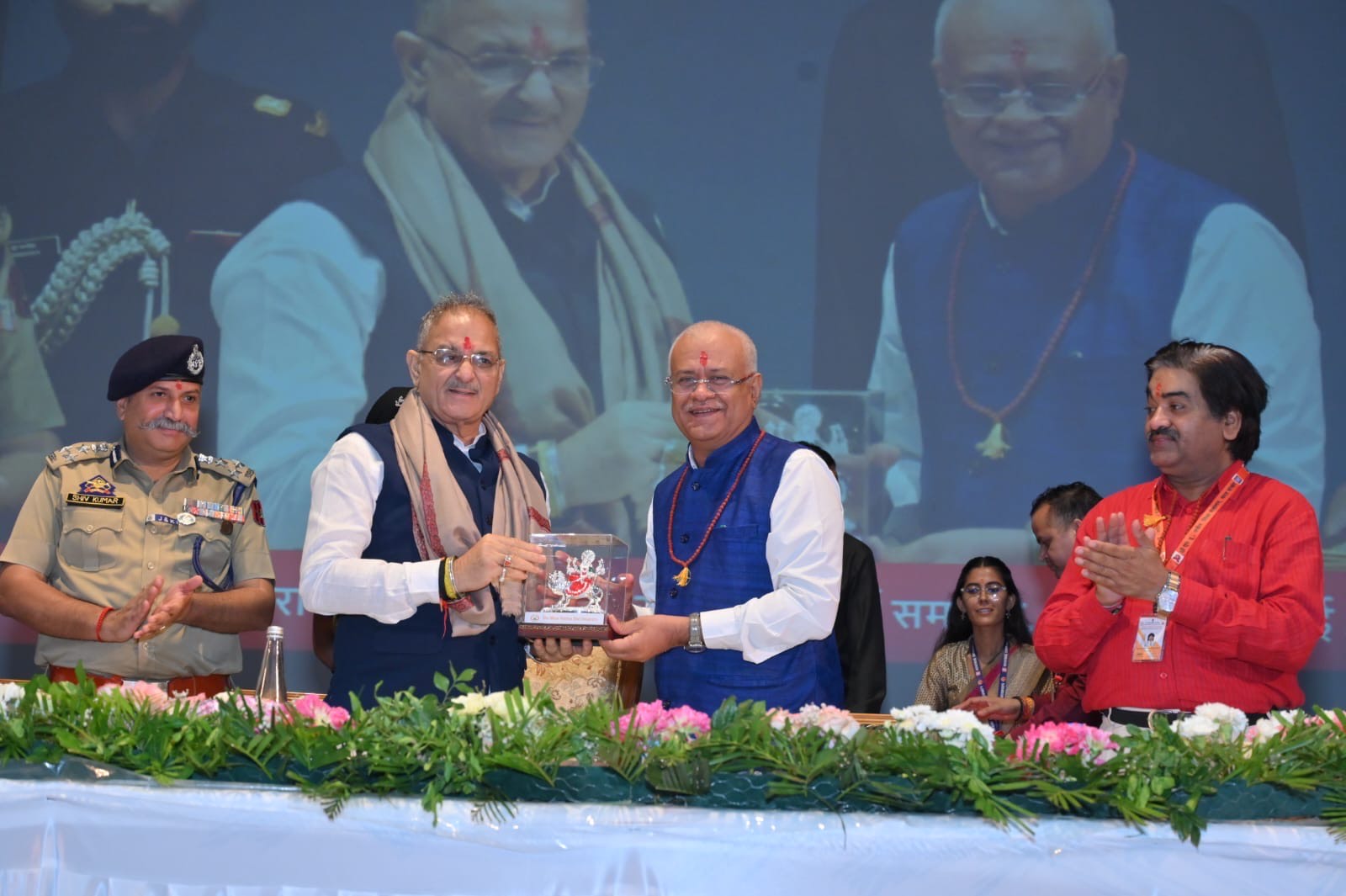
REASI Himachal Pradesh Governor Kavinder Gupta on Tuesday said that the 51 Shakti Peeths are not merely centres of religious faith but enduring symbols of India’s spiritual heritage, cultural continuity and national unity. He called for scientific research, systematic documentation and global promotion of India’s rich Shakti tradition.
The Governor was addressing the inaugural session of the four-day national seminar, “Shakti Mimansa”, on the theme “51 Shakti Peeths: Spiritual Pillars of India’s Heritage”, jointly organised by the Central Sanskrit University, Shri Maharaja Ranbir Singh Campus, Jammu, and the Shri Mata Vaishno Devi Shrine Board at Shri Mata Vaishno Devi University, Katra.
He said the Shakti Peeths reflect India’s timeless civilisational ethos and have strengthened the country’s cultural unity for centuries.
“Shakti is not merely an object of worship; it is the eternal force of creation, knowledge, compassion, courage and national consciousness. It represents the spiritual energy that has guided Indian civilisation through the ages,” the Governor said.
Emphasising the importance of research, Gupta said the seminar would provide an opportunity to study the concept of Shakti from philosophical, historical, cultural and civilisational perspectives. He stressed that the historical, archaeological and cultural significance of the Shakti Peeths should be researched in a scientific and authentic manner.
“Our heritage is preserved not only by protecting monuments but also by safeguarding the traditions, knowledge systems and cultural practices associated with them. Modern technology should be harnessed for the digital documentation and preservation of these sacred sites for future generations,” he added.
The Governor observed that at a time when the world is increasingly embracing India’s knowledge traditions, including yoga, Ayurveda and spirituality, the philosophy of Shakti offers a universal message of respect for women, harmony with nature, inner strength and global well-being.
Calling upon young scholars to actively engage in research on Sanskrit literature, Shakti traditions, Tantra philosophy and Indian Knowledge Systems, he said the National Education Policy (NEP) 2020 has created new opportunities to integrate India’s ancient wisdom with modern academic research.
“The future of India will be brighter when our youth remain connected to their cultural roots while pursuing excellence in modern education and research,” he remarked.
Expressing confidence in the outcome of the seminar, Gupta said the deliberations and research presented during the four-day event would make a meaningful contribution to the preservation, promotion and global recognition of India’s spiritual and cultural heritage. He congratulated the organisers for hosting the seminar and extended his best wishes for its success.
Among those present on the occasion were Rajendra Prasad Pokharel, representative of Dantakali Shakti Peeth, Nepal; Deputy Commissioner Reasi Kumar Abhishek; DIG Udhampur-Reasi Range Shiv Kumar; Prof. Pragati Kumar, Vice-Chancellor of Shri Mata Vaishno Devi University; Prof. Satish Kumar Kapoor, Director, Central Sanskrit University, Shri Maharaja Ranbir Singh Campus, Jammu; and N. Thivakaran, Vice Secretary, Sangaridevi Sakthi Peedam, Sri Lanka.
