


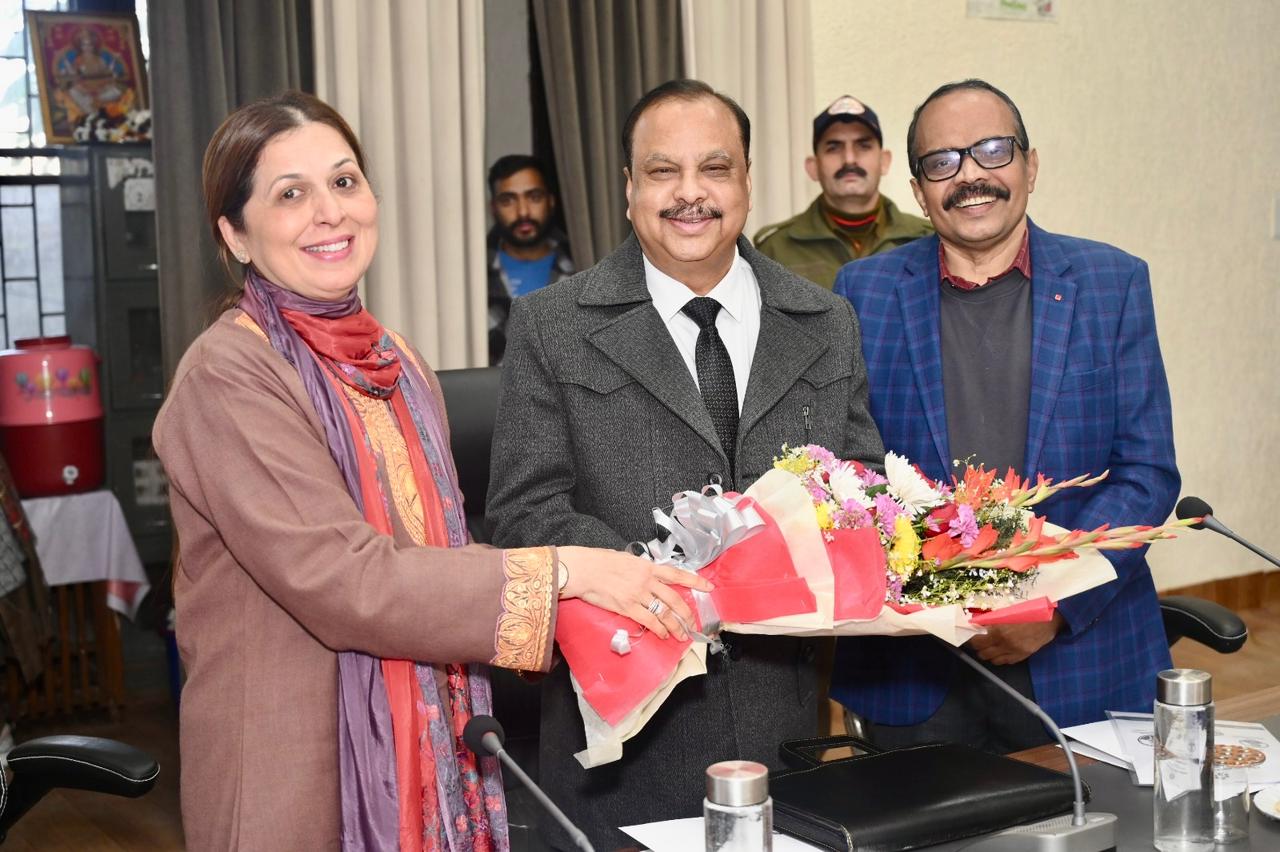
JAMMU: Cluster University of Jammu (CLUJ) today organised a one-day workshop on the Learning Outcomes-Based Curriculum Framework (LOCF) and the revised structure of One-Year and Two-Year Postgraduate Programmes at the Conference Hall of GGM Science College, Jammu.
The workshop was conducted in accordance with UGC guidelines and the National Education Policy (NEP) 2020, as part of preparatory measures for the implementation of the revised postgraduate programmes from the Academic Session 2026–27.
The programme was presided over by Prof. K. S. Chandrasekar, Vice-Chancellor, Cluster University of Jammu, while Prof. Mohammad Mobin, Vice-Chancellor, Cluster University of Srinagar, inaugurated the workshop as the Chief Guest.
The workshop commenced with a welcome address by Prof. (Dr.) Twinkle Suri, Dean, Academic Affairs, who outlined the objectives of the programme. She emphasised that the transition to one-year and two-year postgraduate programmes requires clarity in learning outcomes, assessment strategies, and thoughtful curriculum design. She expressed confidence that the workshop would help faculty align academic practices with national educational reforms.
Prof. Renu Nanda, Dean, Faculty of Education, University of Jammu, and Prof. J. N. Baliya, Department of Educational Studies, Central University of Jammu, served as the Resource Persons.
In her address, Prof. Renu Nanda highlighted that the revised postgraduate curriculum must be student-centric, engaging, and competency-based, with a strong focus on skills and holistic development in line with the vision of NEP 2020.
Deliberating on the LOCF, Prof. J. N. Baliya underscored that Outcome-Based Education focuses on clearly measurable knowledge, skills, and attitudes that learners are expected to achieve by the end of their academic journey. He stressed that the LOCF should comprehensively include the vision and mission, graduate attributes, qualification descriptors, programme learning outcomes, and course learning outcomes, ensuring coherence, transparency, and academic rigour.
In his address, Chief Guest Prof. Mohammad Mobin emphasised the need for academic rigour, flexibility, and coherence in postgraduate curricula under NEP 2020. He noted that LOCF provides a robust framework for ensuring quality, comparability, and transparency in higher education while empowering institutions to design programmes responsive to learners’ needs and societal demands.
In his presidential address, Prof. K. S. Chandrasekar highlighted the significance of outcome-based education in transforming higher education, stating that LOCF is central to ensuring academic flexibility, skill orientation, interdisciplinary learning, and global competitiveness, in alignment with NEP 2020.
The workshop witnessed enthusiastic participation from the Registrar, Controller of Examinations, Deans and Principals of constituent colleges, Directors of various university wings, Financial Advisor, Conveners of Boards of Studies, Heads and Coordinators of Postgraduate Programmes, and faculty members of PG schools and colleges.
The workshop was effectively coordinated by Prof. Zubair Kales, Dean, Faculty of Education. The proceedings were conducted by Dr. Sugandha, while Dr. Rajesh Kumar, Associate Dean, Academic Affairs, presented the formal vote of thanks.
The programme concluded with an interactive session, reaffirming the University’s collective commitment to strengthening postgraduate education under the NEP 2020 framework.
