


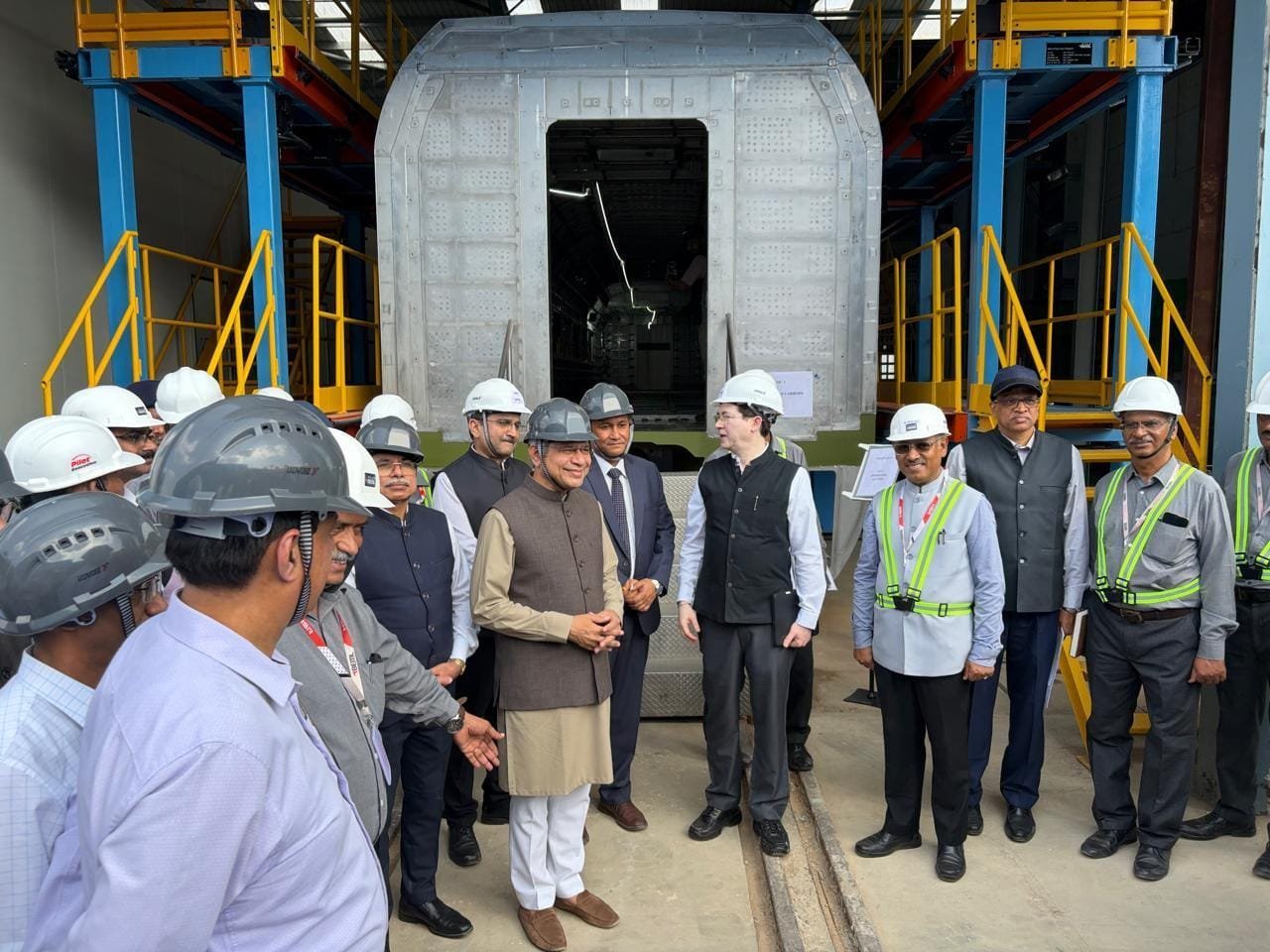
BENGALURU: India is moving closer to a major milestone in high-speed rail technology with the development of its first indigenously manufactured bullet train for the Mumbai-Ahmedabad High-Speed Rail corridor. The train is being manufactured at Bharat Earth Movers Limited (BEML) in Bengaluru, Karnataka, combining domestic engineering capabilities with advanced technology, passenger comfort and modern safety features.
According to the Ministry of Railways, the train has been designed specifically for Indian conditions, with a focus on passenger convenience, accessibility and operational efficiency. The project is expected to strengthen India’s domestic manufacturing capabilities in the high-speed rail sector.
The approximately 202-metre-long trainset will comprise eight coaches, including four motor cars and four trailer cars, with an estimated capacity of 557 passengers. It is designed to achieve a maximum test speed of 280 kmph, while its planned operational speed is 249 kmph. The train will also provide two designated spaces for Divyangjan and persons with reduced mobility (PRM).
The configuration includes seven standard-class coaches with 3×2 seating and one executive-class coach with 2×2 seating. Driver’s cabs at both ends will feature an intelligent onboard control system to support decision-making and coordination with the operation control centre. Two eight-coach trainsets can also be coupled to form a 16-coach formation to meet future operational requirements.
Passenger comfort has been prioritised through ergonomically designed seats, adequate legroom, LED lighting, overhead baggage racks, additional luggage stands and power outlets for electronic devices. Wide windows at every seating row will offer outside views, while sealed, single-piece gangways will allow passengers to move conveniently between coaches.
The train will feature modern bio-digester toilets designed to minimise effluent generation. A comprehensive passenger information system will provide journey updates through LCD screens in English, Hindi and regional languages, alongside public address systems and automatic audio announcements. Emergency talk-back units will enable passengers to communicate directly with train crew members when assistance is required. A Wi-Fi-based infotainment system will also allow access to preloaded entertainment content.
Accessibility features include level boarding through alignment of coach floors with platform height, retractable footsteps to reduce the gap between the train and platform, wheelchair-friendly doors, dedicated seating and toilet facilities, and Braille-enabled information signage.
Each coach will be equipped with two heating, ventilation and air-conditioning units to regulate temperature and humidity across varying climatic conditions. Noise-reduction measures, including sound insulation, noise-damping coatings, bogie covers, skirts and aerodynamic fairings, are intended to minimise noise and vibration during high-speed travel.
The train will operate on a 25 kV, 50 Hz single-phase alternating-current traction system supplied through a heavy compound catenary. Its regenerative braking system will recover energy during braking and feed it back into the electrical system, helping improve energy efficiency.
Aerodynamic performance has also been a key consideration in the train’s design. Computational Fluid Dynamics simulations have been used to optimise the nose and carbody profiles, reduce air resistance and turbulence, and mitigate tunnel pressure waves and sonic boom effects. Specially designed roof panels, airflow deflectors and exterior wind-guiding profiles will further support smoother airflow and passenger comfort during high-speed and tunnel operations.
The indigenous train development marks an important step in India’s efforts to expand domestic capabilities in advanced rail technology while delivering a modern, accessible and comfortable high-speed travel experience.
