


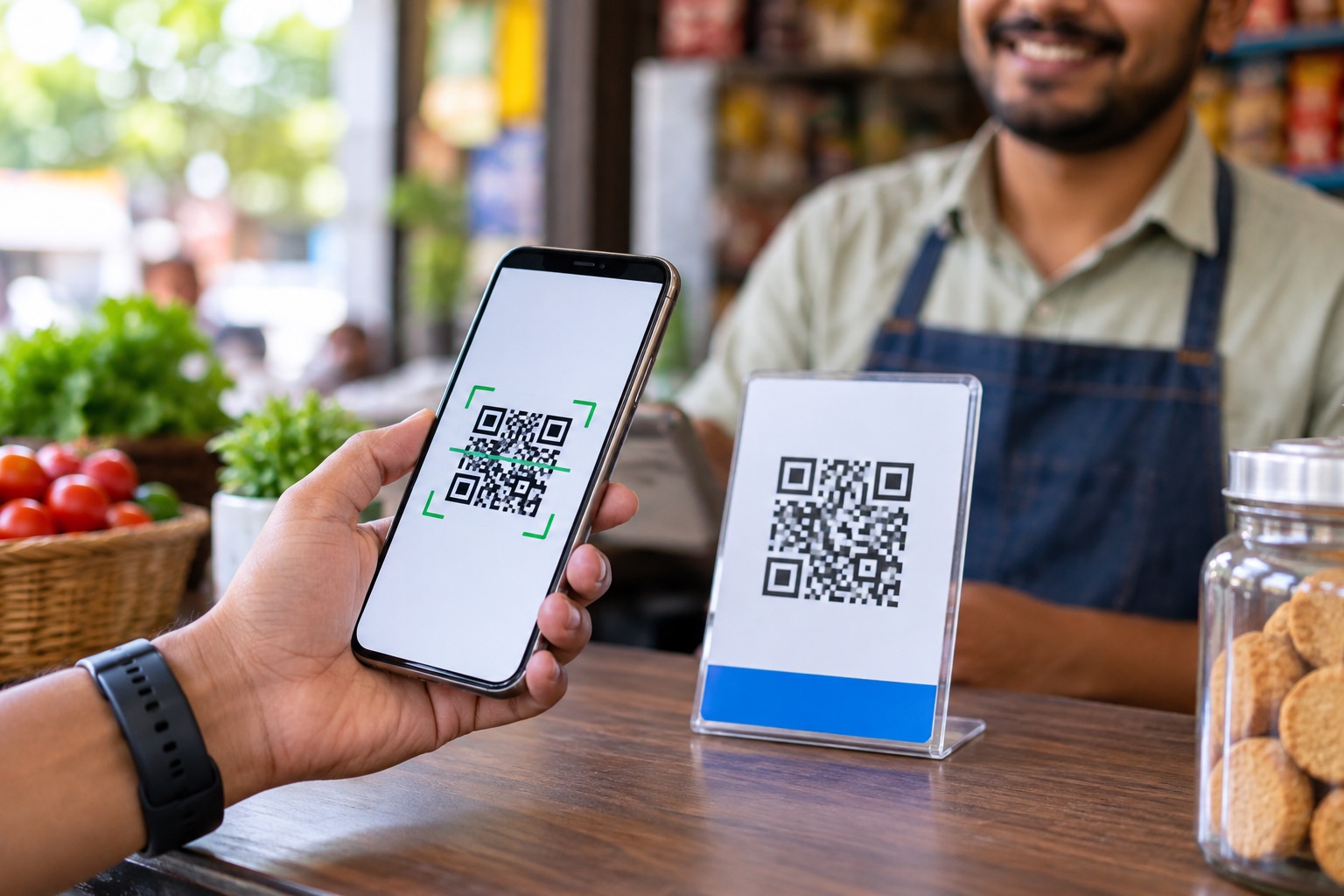
NEW DELHI: The government has clarified that all Person-to-Person (P2P) UPI transactions will remain completely free, with no restrictions based on the amount transferred and no platform, transaction or hidden charges, as part of a newly structured framework for digital payments.
According to a Ministry of Finance release, the framework introduced under the Payment and Settlement Systems Act, 2007, will also ensure that around 96 per cent of Person-to-Merchant (P2M) UPI transactions remain free, protecting consumers, small traders and micro-enterprises from additional payment costs.
Under the new framework, transfers between individuals, including payments to friends and family, will continue to attract zero charges irrespective of the transaction value. For everyday merchant payments, UPI transactions of up to ₹2,000 will also remain free, with neither customers nor merchants required to pay Merchant Discount Rate (MDR).
Small vendors and neighbourhood kirana stores will receive additional protection under the Person-to-Person-Merchant (P2PM) framework. Merchants receiving up to ₹1 lakh per month through UPI QR codes will continue to remain completely exempt from MDR on all transactions.
The framework was notified by the Central Government on September 14 and followed by an NPCI circular on September 15. The government said P2P transactions account for around 37 per cent of UPI transactions by volume and 70 per cent by value, making the continuation of zero charges significant for everyday digital payments.
For P2M transactions above ₹2,000, an MDR of 0.4 per cent will be levied and shared among payment ecosystem participants, including banks and app providers. For transactions of ₹75,000 and above, the MDR will be capped at ₹300 per transaction.
Certain essential sectors, including railways, telecom, insurance, fuel and agriculture inputs, will attract a flat MDR of ₹5 per transaction for payments above ₹2,000. These sectors account for nearly 17 per cent of UPI P2M transaction volume and around 46 per cent of merchant transaction value, according to the government.
Payments involving mutual funds, securities, stock brokers and dealers will attract a lower MDR of 0.02 per cent, subject to a cap of ₹300 per transaction.
The government also said UPI app providers would not be permitted to impose platform fees or hidden charges, while banks have been advised to ensure that merchants do not pass MDR costs on to customers.
According to the framework, only around 4 per cent of merchant transactions are expected to be impacted by the new MDR structure, with the overwhelming majority either falling below the ₹2,000 threshold or covered under the zero-MDR P2PM framework.
To further expand UPI adoption among smaller merchants, particularly in rural and semi-urban areas, the government has also proposed a dedicated fund to which 5 per cent of total MDR collections will be allocated.
The measures are aimed at preserving the low-cost nature of UPI for ordinary users while creating a structured mechanism to support the wider digital payments ecosystem and expand merchant adoption.
