


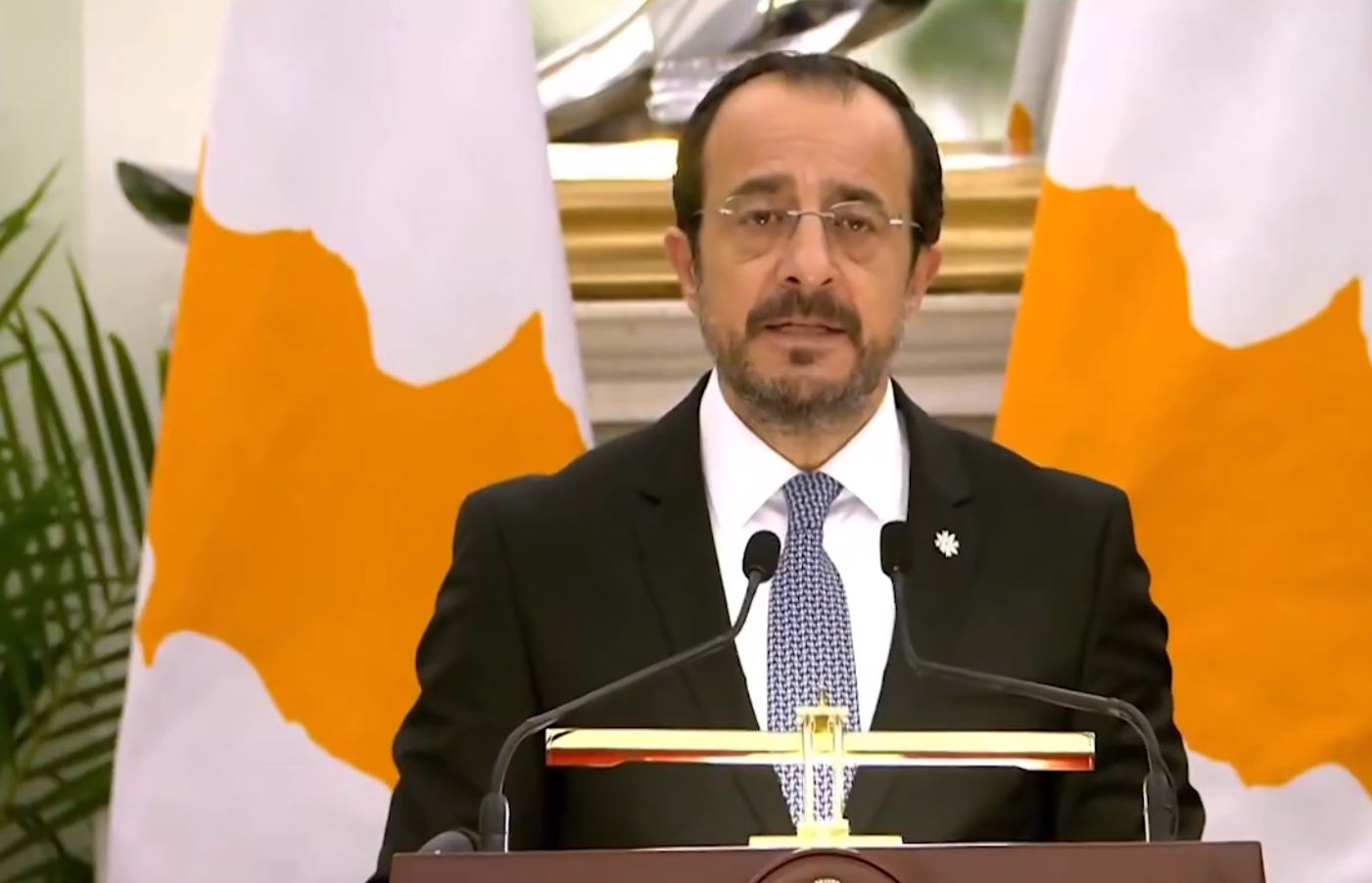
NEW DELHI: India and Cyprus further deepened their bilateral partnership as President Nikos Christodoulides announced that the meeting today saw the creation of a joint task force on cooperation in key sectors such as infrastructure, shipping, and economic cooperation between the two countries.
President Nikos Christodoulides, in his remarks, highlighted how during the discussions with PM Modi, the leaders reaffirmed that the ties have entered a new era, with results being seen across domains such as security, defence, tech and maritime cooperation.
“Over the past year, accelerated by the visit of Prime Minister Modi to Cyprus, our partnership has advanced with remarkable speed and determination. What began as a strategic vision is now evolving into a concrete partnership, a partnership already producing tangible results across key areas, including security, defence, technology, innovation, maritime cooperation, education, and economic connectivity”, he said.
He also announced that the meeting today saw the creation of a joint task force on cooperation in key sectors such as infrastructure, shipping, and economic cooperation.
He noted that discussions also took place on broader regional and international developments, as New Delhi and Nicosia reaffirmed their shared commitment to international law, the United Nations Charter, and effective multilateralism.
The President thanked PM Modi for the longstanding support on the reunification of Cyprus and said that Cyprus continues to support India’s place in the reformed United Nations Security Council.
“I thank the Prime Minister on behalf of Cyprus and the Cypriot people. We deeply value India’s long-standing support on our efforts to reunify Cyprus, and I wanted to thank you for your steadfast support for the independence, sovereignty, and territorial integrity of the Republic of Cyprus. In this regard, I wish to take this opportunity to reiterate that Cyprus also supports India’s growing global role, including its rightful place in a reformed United Nations Security Council, because global governance must reflect today’s realities.”
